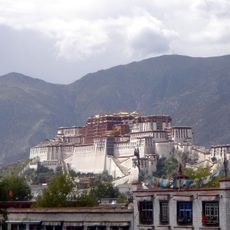
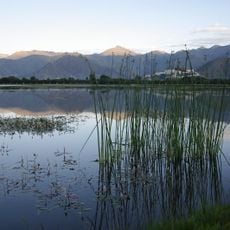
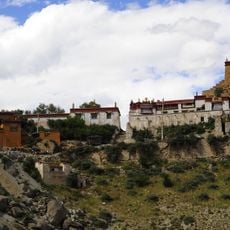
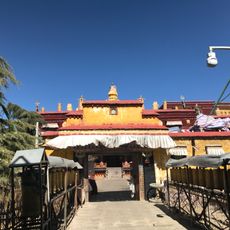
Sera Utsé Hermitage, Buddhist hermitage near Sera Monastery, Tibet, China
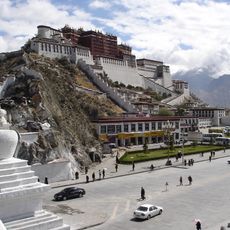
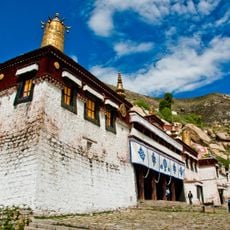
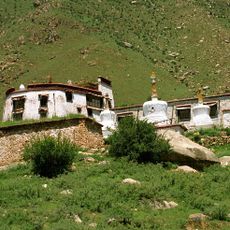
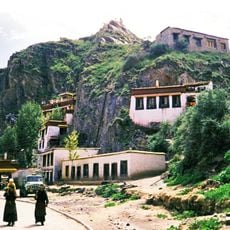
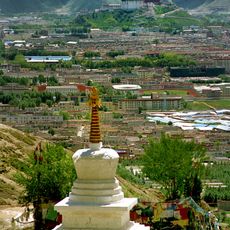
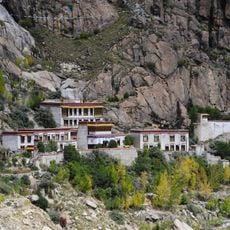
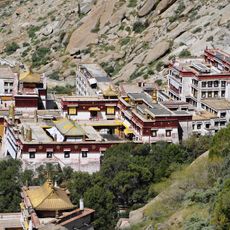
Sera Utsé Hermitage is a Buddhist retreat sanctuary located on a mountain behind Sera Monastery in Tibet at roughly 4,100 meters elevation. The site sits within a landscape of granite rock formations and overlooks the city of Lhasa and surrounding ridges.
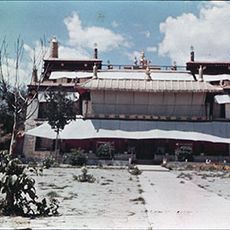
The hermitage was founded in 1407, when Tsongkhapa's disciples built it on the north side of the Sera peak for his retreats. Tsongkhapa (1357–1419) had lived in its meditation caves, and after his death the site became a tantric practice centre. In the late 17th to early 18th century, Drubkhang Gelek Gyatso (1641–1713) made it his retreat on the advice of Sera Jé abbot Joton Sonam Gyeltsen, becoming the first Drubkhang incarnation. The original complex was largely destroyed in 1959 and later partly rebuilt.
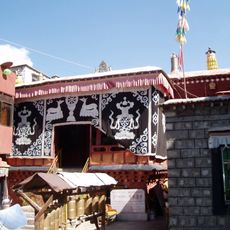
The name Drubkjang Tse comes from sgrub khang, Tibetan for 'retreat house', after the meditation huts where Tsongkhapa stayed. The upper gongkhang holds images of Pehar, who is said to possess the State Oracle during trances, and of Palden Lhamo, protectress of the Gelukpa sect. The hermitage is also called Sera Tse, 'Sera Peak'.
Access is by a roughly 90-minute walk from Tsongkhapa's hermitage along trails that wind through granite rock formations. The path requires moderate fitness and mountain terrain, so sturdy footwear and plenty of water are important preparations.
The protector chapel above the hermitage holds images of Pehar, the oracle spirit said to possess the State Oracle during trances, and Palden Lhamo, protectress of the Gelukpa sect. The original hermitage was gutted in 1959 and its frescoes defaced with white paint; only part has been refurbished.
The community of curious travelers
AroundUs brings together thousands of curated places, local tips, and hidden gems, enriched daily by 93,790 contributors worldwide.