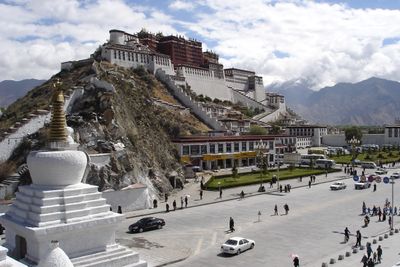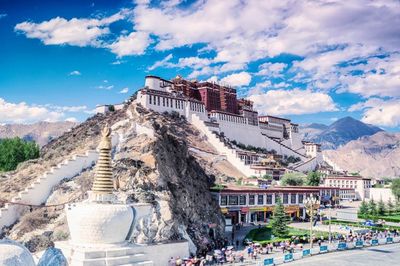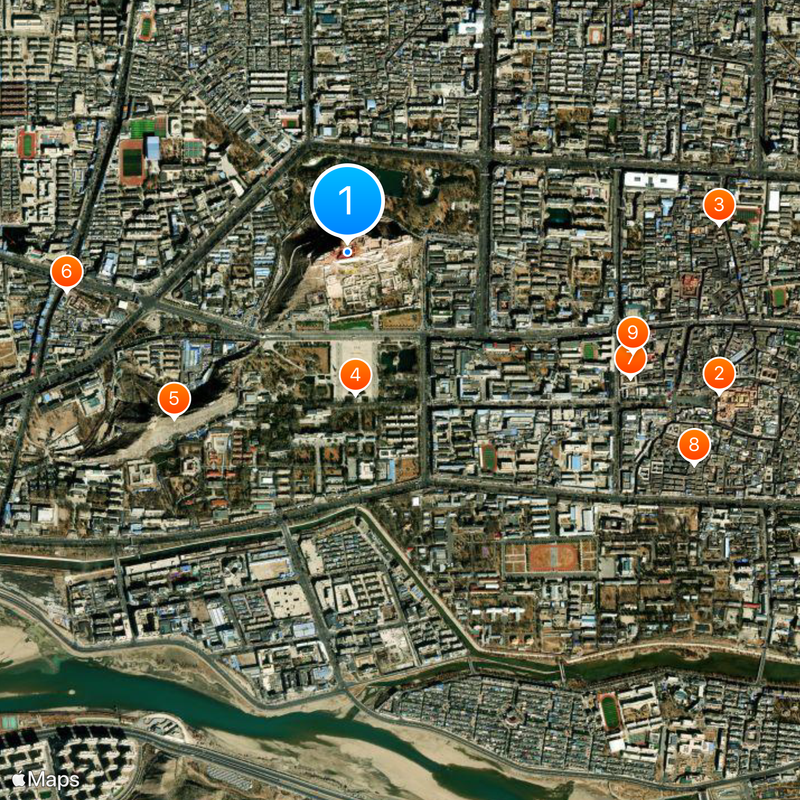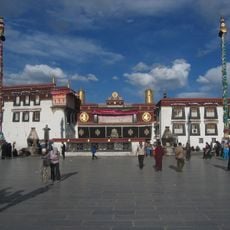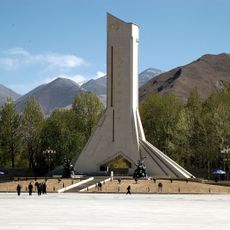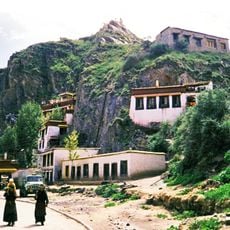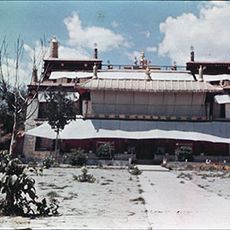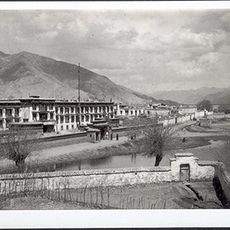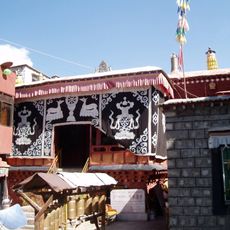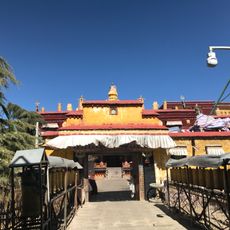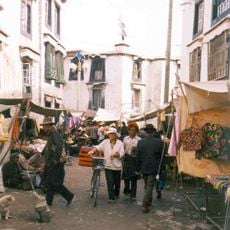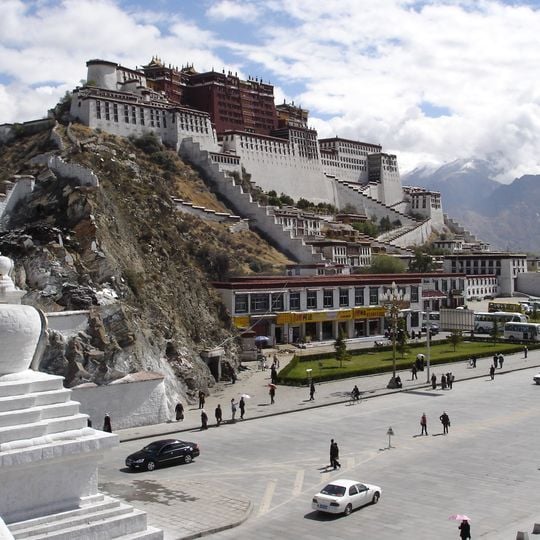
Potala Palace, Buddhist palace in Lhasa District, China.
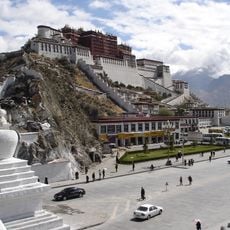
Potala Palace is a Buddhist palace in Lhasa District, China, with red and white painted sections stretching 400 meters (1312 feet) in length. The complex rises through multiple terraces and features thick stone walls, over 1,000 rooms, and gilded roofs that shine in the sunlight.
Construction began in 637 under King Songtsen Gampo, but most of the current structure was built in the 17th century under the Fifth Dalai Lama. The building served as both winter residence and political center until 1959.
The name derives from Mount Potalaka, the home of the deity Avalokiteshvara, and the building embodies this spiritual connection through its position high above the city. Pilgrims walk clockwise around the base, spinning the red prayer wheels while chanting mantras.
Access involves steep stairs and narrow passages, so good footwear is necessary and visitors should prepare for the thin mountain air. Guided tours are mandatory and visits typically last about one hour with limited daily entry.
The structure contains eight decorated tombs of former Dalai Lamas, the most notable being 14 meters (46 feet) high and covered with 3,700 kilograms (8,150 pounds) of gold. These burial sites are located in the red section and can be viewed during guided tours.
Location: Lhasa District
Inception: 637
Height: 117 m
Length: 400 m
Width: 350 m
Part of: World Heritage Sites in Tibet
Website: https://potalapalace.cn
GPS coordinates: 29.65778,91.11694
Latest update: December 4, 2025 14:20
Castles and palaces from different periods and regions reveal how architecture adapted to military needs, royal ambitions, or religious purposes. Some were built as fortresses, others served as residences or symbols of power. Construction styles range from medieval defenses to grand estates of later centuries. Each structure carries the mark of its time and its builders. This collection includes places such as Neuschwanstein in Bavaria, Edinburgh Castle in Scotland, and the Alhambra in Granada. It also features Himeji Castle in Japan, the Potala Palace in Lhasa, and Prague Castle. Some sites stand on cliffs or in mountains, others lie in river valleys or near towns. Visiting them shows how defense, living space, and display came together in one building.
Major temples worldwide display architectural and cultural achievements of ancient civilizations. From temples in Cambodia to pyramids in Mexico, these structures document religious practices, construction methods and social structures of their time. The complexes in Asia, Europe and America present different building styles, ornaments and ceremonial spaces.
Jokhang
1.5 km
Sera Monastery
4.6 km
Norbulingka
2.2 km
Nechung
6.2 km
Ramoche Temple
1.4 km
Lhasa Great Mosque
2.1 km
Monument to the Peaceful Liberation of Tibet
526 m
Chokpori
888 m
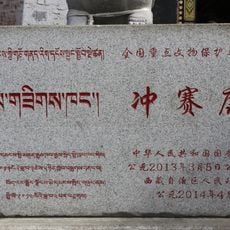
Chongsaikang
1.6 km
Kundeling Monastery
1 km
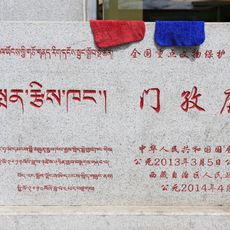
Mentsikhang
1.1 km
Pandatsang
1.7 km
Chupzang Nunnery
6.1 km
Gyume Dratsang
1.6 km
Trode Khangsar
1.5 km
Rakhadrak Hermitage
5.7 km
Potala Palace
40 m
Lalu Wetlands National Nature Preserve
3 km
Purbuchok Hermitage
6.6 km
Tsomon Ling
1.3 km
Muru Nyingba Monastery
1.6 km
Keutsang Hermitage
5.9 km
Shide Dratsang
1.1 km
Sera Chöding Hermitage
4.8 km
Catholic Church of Lhasa
1.9 km
Samdrup Podrang
1.6 km
Liuwu Bridge
3.7 km
Labrang Nyingba
1.6 kmReviews
Visited this place? Tap the stars to rate it and share your experience / photos with the community! Try now! You can cancel it anytime.
Discover hidden gems everywhere you go!
From secret cafés to breathtaking viewpoints, skip the crowded tourist spots and find places that match your style. Our app makes it easy with voice search, smart filtering, route optimization, and insider tips from travelers worldwide. Download now for the complete mobile experience.
A unique approach to discovering new places❞
— Le Figaro
All the places worth exploring❞
— France Info
A tailor-made excursion in just a few clicks❞
— 20 Minutes