Chongqing Temple, Buddhist temple in Zhangzi County, China
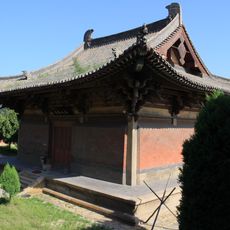
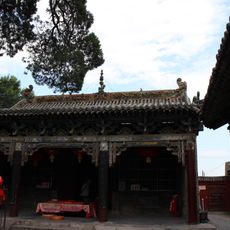
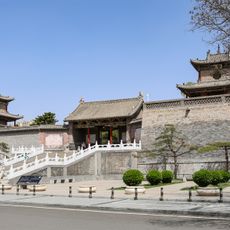
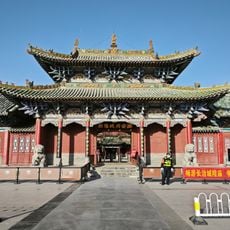
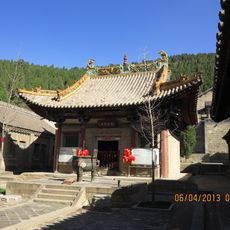
Chongqing Temple is a Buddhist temple on the slope of Mount Ziyun in Jucun Village, Zhangzi County, Shanxi. It faces south and is enclosed by hills on three sides, with the Taoqing River to the south. The central Thousand Buddha Hall is a Song-dynasty structure with a single-eave hip roof, three bays wide and six rafters deep; the Dashi Hall on the west has a Song-dynasty frame and a single-eave gable roof.
Founded in 1016, the ninth year of the Dazhong Xiangfu era of the Northern Song, Chongqing Temple was expanded during the Ming and Qing dynasties. Its Thousand Buddha Hall and the west Dashi Hall keep their original Song timber frames, and an inscription under the Dashi Hall altar is dated to 1079. The temple was listed as a Major Historical and Cultural Site Protected at the National Level in 1996.
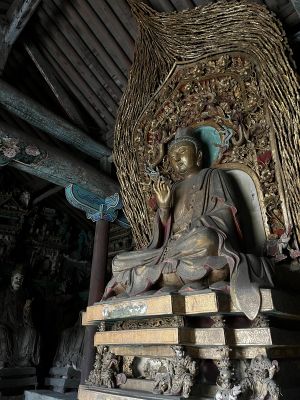
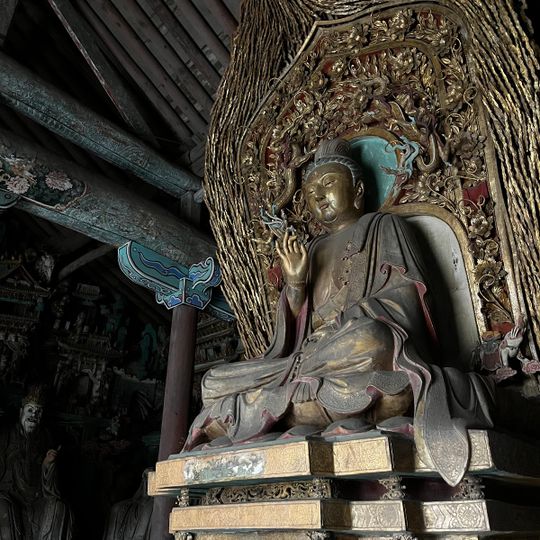
The Dashi Hall, the west side hall, holds the temple's best-known sculptures: Guanyin, Wenshu and Puxian riding their mounts, with an inscription dated to 1079, the second year of Yuanfeng, below the altar. The Eighteen Arhats flanking them were praised by sculptor Qian Shaowu as the finest of Song sculpture.
The temple sits in a hilly area and requires some climbing to reach its halls, so wear comfortable walking shoes. Visit during daylight hours when natural light best reveals the details of the carvings and paintings.
The clay figures here rank among the most skillfully crafted examples from the 11th century, displaying sculptural techniques rarely preserved in this region. For art historians and craft enthusiasts, these works offer a rare window into the specialized artistic traditions of that period.
The community of curious travelers
AroundUs brings together thousands of curated places, local tips, and hidden gems, enriched daily by 93,091 contributors worldwide.