Deutsches Jagd- und Fischereimuseum, Hunting and fishing museum in Altstadt-Lehel, Munich, Germany
The Deutsches Jagd- und Fischereimuseum is a collection space in Munich's old town dedicated to the history and practice of hunting and fishing. Its rooms display weapons, tools, mounted specimens, and educational panels showing the evolution of these crafts spread across multiple levels.
The museum's origins lie in the 1934 acquisition of the Arco-Zinneberg trophy collection, which was at risk of leaving for the Netherlands. On 22 October 1934, Christian Weber founded the association "Deutsches Jagdmuseum e. V." to establish a German hunting museum. It opened on 16 October 1938 in the north wing of Nymphenburg Palace. After World War II, the collection was reorganized and reopened on 3 November 1966 in the former Augustinian Church. In 1982, fishing was added and the museum received its current name.
The museum's name changed in 1982 when freshwater fish and fishing gear were added to the hunting collection. Among the exhibits are several Wolpertinger, fictional Bavarian creatures assembled from parts of different animals, which visitors often mistake for real specimens.
The visit fits well with a walk through the nearby old town, as the museum is centrally located and easy to reach on foot. The exhibition is laid out clearly, and visitors should allow about two to three hours to explore the contents without rushing.
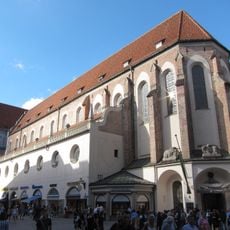
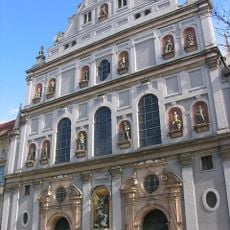
The museum holds a collection of Wolpertinger figures, fictional Bavarian creatures assembled from parts of different animals. It also keeps skeletons of an Irish elk and a cave bear, and mounts of native freshwater fish. The building itself was the Augustinian Church, part of a monastery that existed from the 13th century until 1803.
The community of curious travelers
AroundUs brings together thousands of curated places, local tips, and hidden gems, enriched daily by 94,107 contributors worldwide.