See the monuments around you in AROpen chests in the app
Around Us is built for your phone — point your camera at the streets and discover the monuments and places around you in augmented reality.Around Us is built for your phone — chests unlock when you walk, explore and capture nearby places.
Munich can also be explored beyond the usual routes. This collection brings together places where visitors are fewer, but where the city shows itself differently. You’ll find baroque churches like the Asam Church, modern art museums such as Haus der Kunst or Lenbachhaus with its expressionist paintings, and ancient collections in Königsplatz.
The city also hides unexpected surprises: the Eisbach wave in the middle of the English Garden, where people surf all year round, the roses in Westpark for a peaceful break, or the royal carriages in Nymphenburg Palace. Some monuments, like the Peace Angel, remind us of lesser-known parts of history. Each place tells a part of Munich that the usual guides don’t mention often.
Munich can also be explored beyond the usual routes. This collection brings together places where visitors are fewer, but where the city shows itself differently. You’ll find baroque churches like the Asam Church, modern art museums such as Haus der Kunst or Lenbachhaus with its expressionist paintings, and ancient collections in Königsplatz.
The city also hides unexpected surprises: the Eisbach wave in the middle of the English Garden, where people surf all year round, the roses in Westpark for a peaceful break, or the royal carriages in Nymphenburg Palace. Some monuments, like the Peace Angel, remind us of lesser-known parts of history. Each place tells a part of Munich that the usual guides don’t mention often.
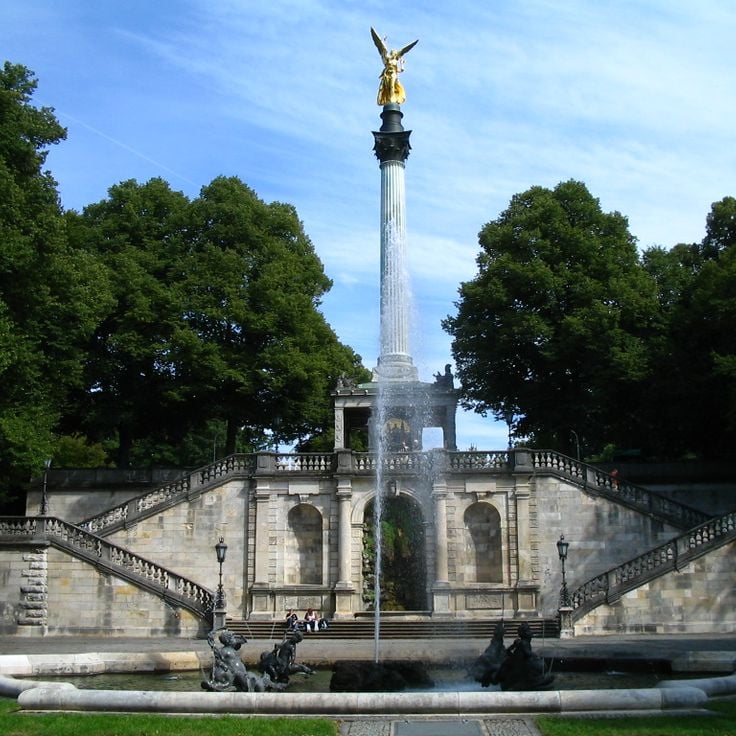
The Friedensengel stands on the banks of the Isar and marks the end of the war of 1870–71. A broad stairway leads to the column, rising through several levels. At the top, a golden angel figure catches the eye from far away. The terrace gives a view across the city and the river. Locals come here to walk or sit on the steps, especially on warm evenings. The area around it is calm, with houses from the turn of the century lining the nearby streets.
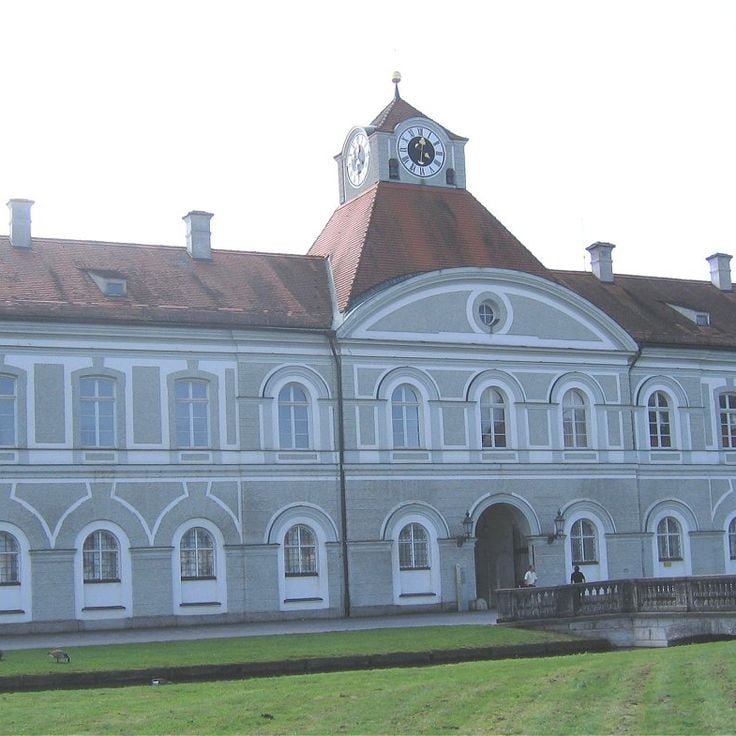
Nymphenburg Palace houses an extensive collection of historic carriages and sleighs belonging to the Bavarian kings in its former stables. The gilded ceremonial coaches used by the Wittelsbach family for official occasions stand alongside the travel wagons built for long journeys. The rooms also display sedan chairs, harnesses, and the sleighs that glided through Munich's snowy streets in winter. You can see how ornate these vehicles were and how royal daily life was organized. The exhibition is calm, with fewer visitors than the main palace rooms.
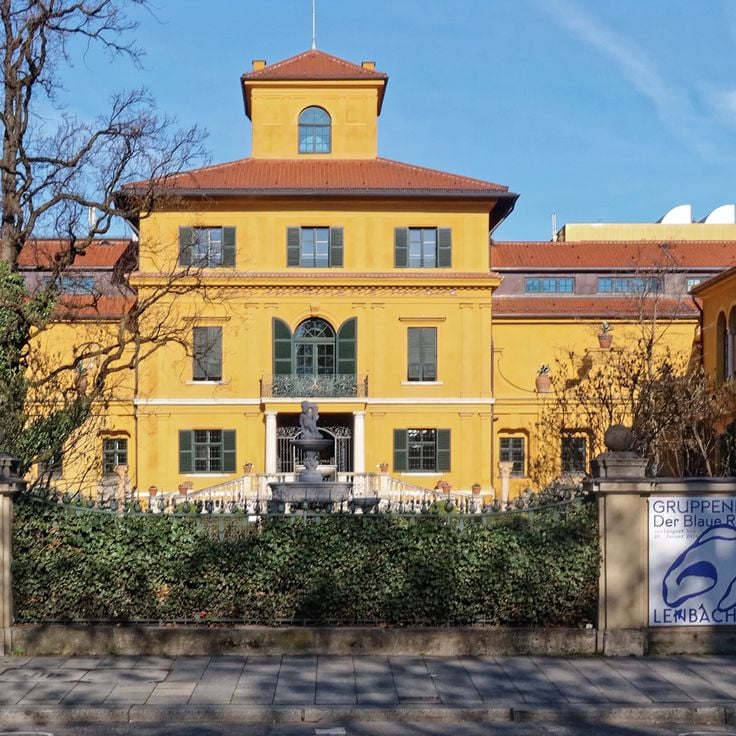
The Lenbachhaus holds one of the most important collections of early 20th century German expressionist painting, with a particular focus on the works of the Der Blaue Reiter artist group, which was founded in Munich and created much of their work here. The gallery also displays works from earlier periods of Munich art, from the 19th century to the present day, in a building that originally served as the residence of painter Franz von Lenbach and was later converted into a museum.
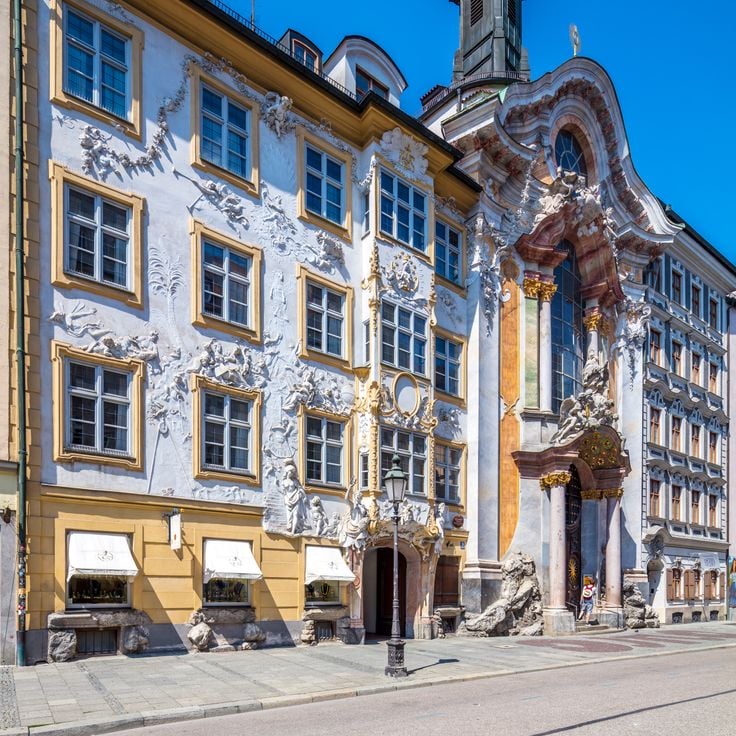
This church was built in the mid-18th century by the Asam brothers as a private place of worship and displays all the features of baroque art. The facade fits into a narrow row of houses, while the interior is filled with frescoes, stuccowork, and gilded figures. Light enters through oval windows and enhances the theatrical effect of the decoration. The Asam family lived in the adjacent house, and the church was initially for their own use before being opened to the public. The space is small, but the density of ornamental detail makes the visit an immersion into the baroque visual world.
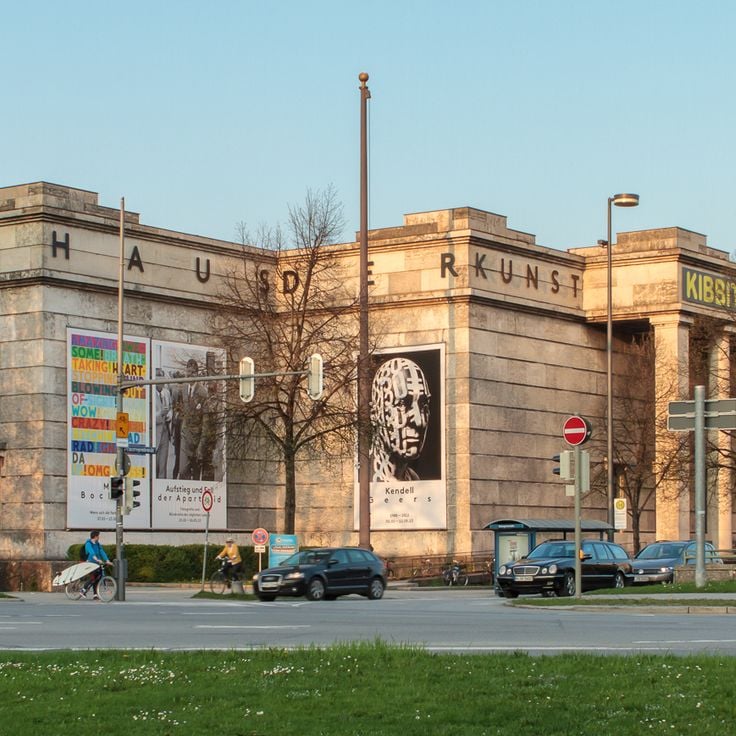
Haus der Kunst sits at the southern edge of the English Garden and hosts rotating exhibitions of 20th and 21st century art. The building dates from the 1930s and was later repurposed as a venue for international contemporary art. Inside, wide halls with high ceilings display installations, paintings, photographs, and video works from various countries and periods. The program changes several times a year. Visitors interested in movements beyond Expressionism will find shows that often feature experimental or political perspectives. The building itself recalls the era of its construction, though it now serves an entirely different purpose.
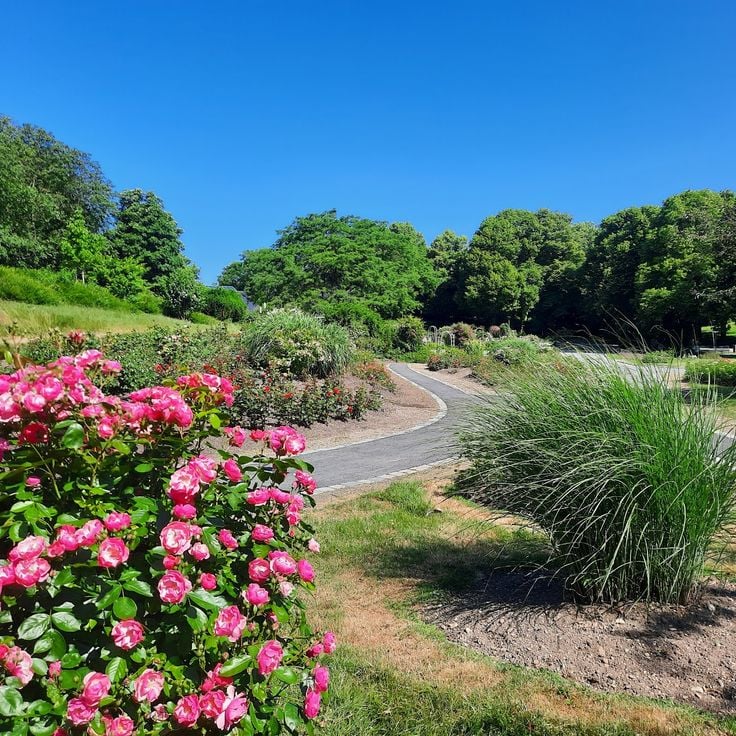
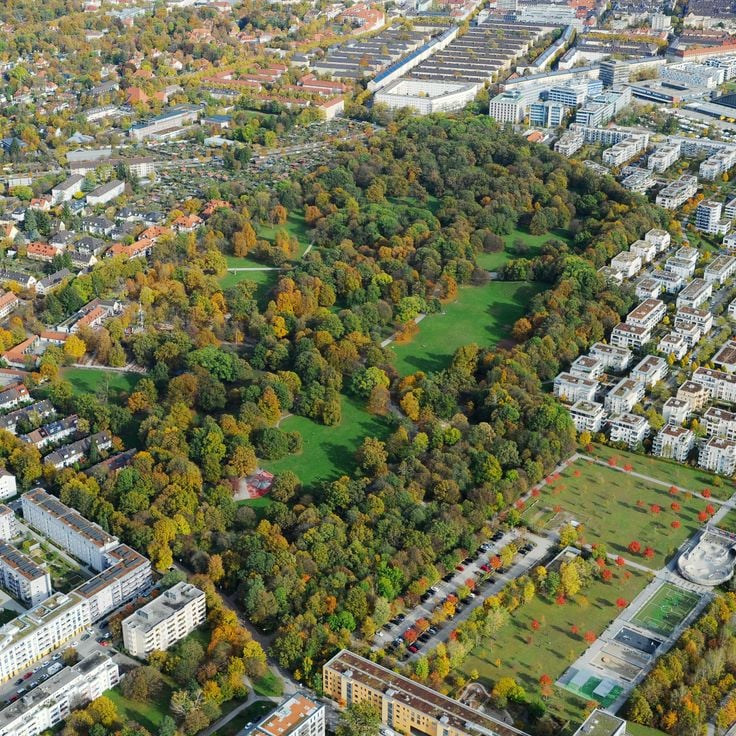
This rose garden sits in the western part of the city and offers a quiet place to rest. Over 500 varieties bloom here from May through October in every color. The paths wind through manicured beds, past benches and small patches of lawn. Locals come to read or take a break after work. The garden belongs to the larger Westpark but feels like a separate space tucked between meadows and old trees. On warm days the air smells of blossoms, and you mostly hear birdsong. It is a calm spot away from the usual routes through Munich.
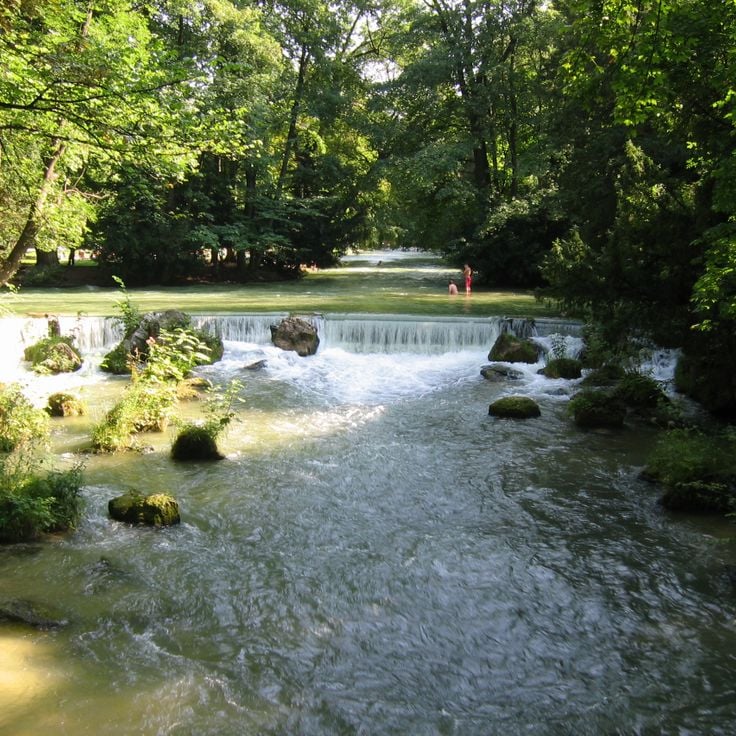
The Eisbach wave is an artificial standing wave in the English Garden that draws surfers from across the city and beyond throughout the year. The stream flows out of a concrete channel at the southern edge of the park, and the current there forms a permanent wave that can be surfed even in winter. The water is cold, the wave is steep, and surfers often queue along the bank. Many walkers stop to watch, and the spectacle has become a fixture that shows how the city uses its waterways and where sport and urban life cross paths.
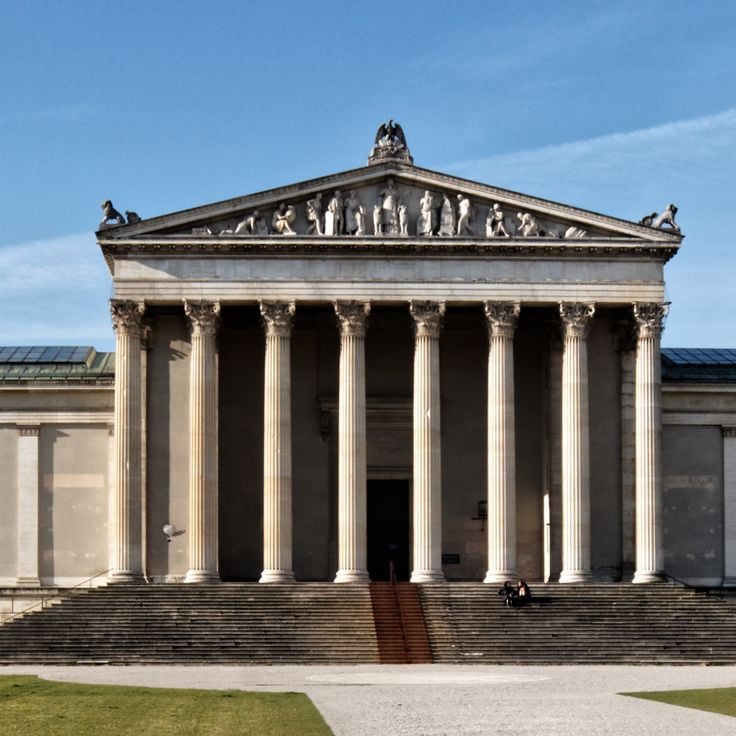
The three museums at Königsplatz show ancient sculptures, vases and gold jewelry from Greek and Roman times, from the 8th century BC to the 5th century AD. The collections are divided between the Glyptothek, the State Collections of Antiquities and the State Museum of Egyptian Art. You can see statues, reliefs, ceramics and everyday objects from antiquity. The buildings themselves date from the 19th century and form a neoclassical ensemble together with the square. The exhibitions are organized by period and theme. This part of Munich reveals a different side of the city, far from the beer gardens and Marienplatz.
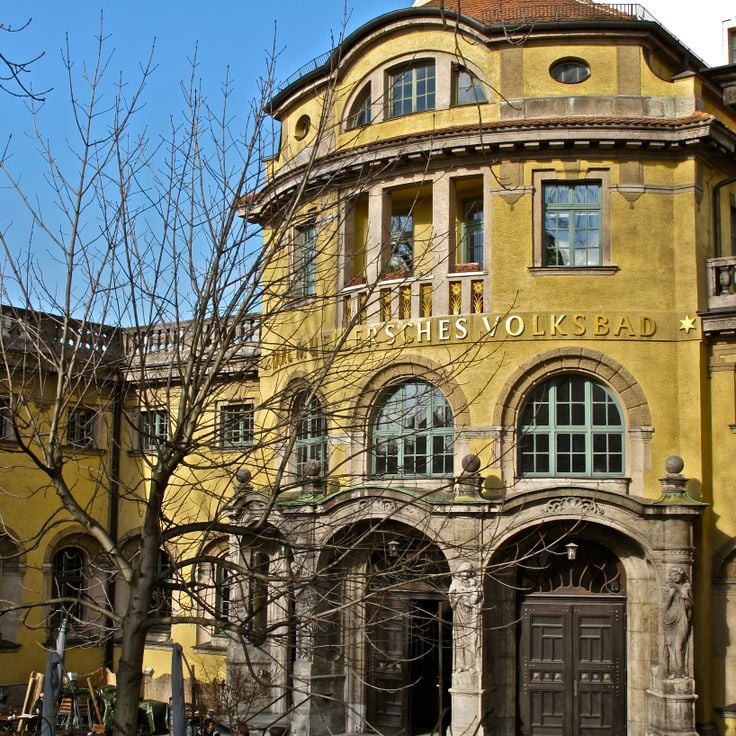
This public indoor pool opened in 1901 and combines sport with architecture in one of the finest swimming facilities in Europe. The Müller'sche Volksbad has several pools under high vaulted ceilings, surrounded by Art Nouveau decoration, stained glass windows, and hand-painted tiles. People come here to swim, but also to experience the atmosphere of a historic bathhouse. The saunas and steam rooms are located in the basement. Situated along the Isar River, a few steps from the old town, the baths are visited by Munich residents of all ages. It is a place where daily life and heritage preservation blend naturally.
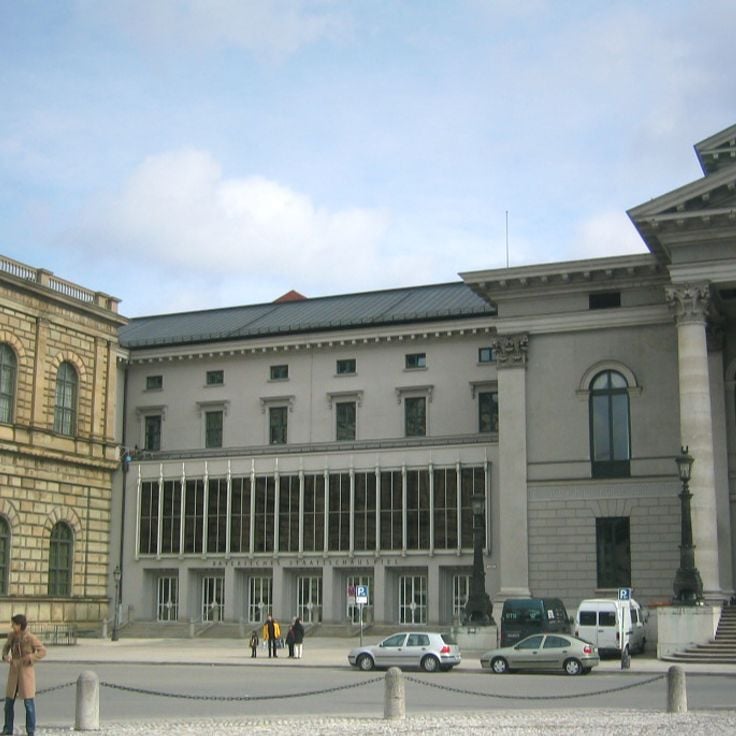
The Residenz Theater is one of Munich's quieter cultural venues, showing German plays and performances throughout the year. The hall itself carries the feel of another era, with its décor and intimate atmosphere. Within this collection, this place represents a side of Munich that goes beyond the big festivals and the opera house. Visitors come here to experience theater in a historic setting, away from the usual tourist circuits.
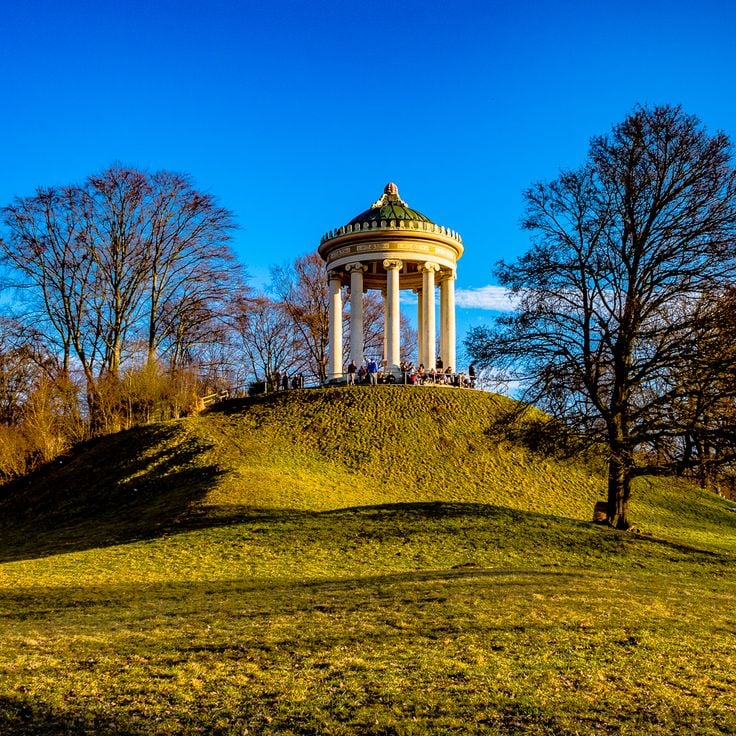
This circular temple stands on a hill in the English Garden and offers views over the trees and meadows of the park. The ten columns support a copper roof that gleams green in the sunlight. Visitors come here to sit on the steps, watch people passing by or simply take a break. On warm days the lawn around the structure is busy, with groups picnicking or making music. The temple was built in the early 19th century and has served as a meeting point ever since. From here you can see the park in its full expanse, without traffic or city noise.
This historic botanical garden was laid out in the 19th century as a research and teaching site, then redesigned as a public park. The grounds now show an English landscape garden with old trees, wide lawns and small ponds that offer calm in the middle of the city. At its center stands a glass pavilion with iron framework, used for concerts and exhibitions. You see Munich residents sitting on benches, walking by the water or reading on the grass. The café at the edge offers simple snacks for a break in the green. This botanical garden appeals not only to plant lovers but to anyone looking for a quiet corner away from busy streets.
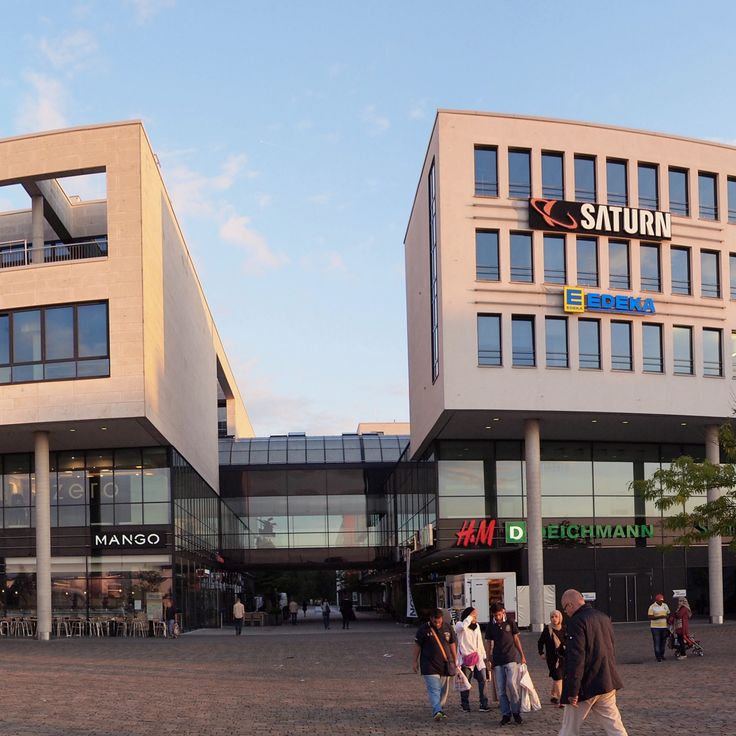
Riem Arcaden is a shopping center on the eastern edge of the city, built on the site of the former airport. Around 120 stores spread across several floors, from fashion chains to electronics shops. On the ground floor you find a food court with different restaurants. If you need a break, you can sit on benches in the central hall. Locals often come here on weekends when the center gets busy. The architecture is functional, with wide corridors and plenty of daylight through skylights. Outside you see large parking areas leading toward the trade fair and Riemer Park.
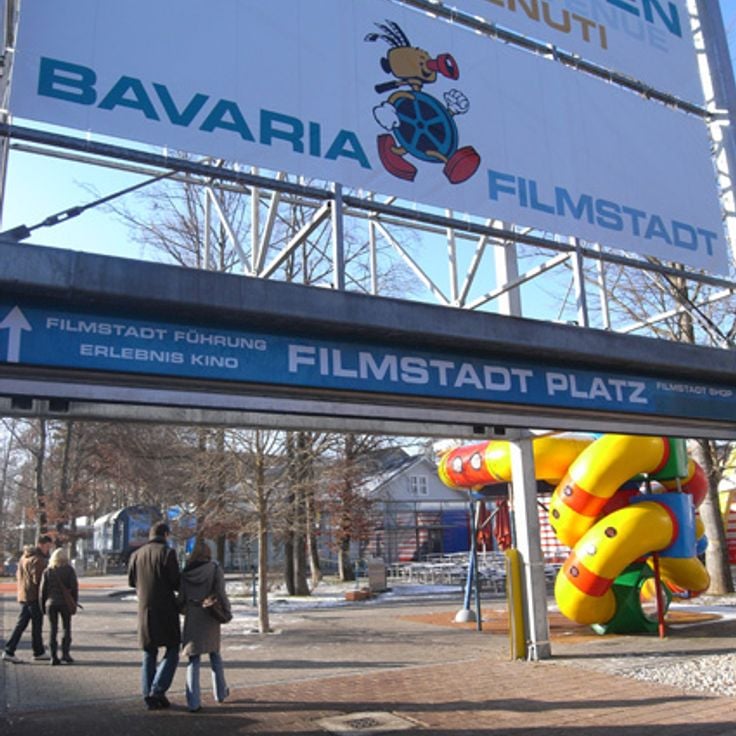
The Bavaria Filmstadt opens the doors to one of the largest film production sites in Europe. This studio complex on the southern edge of the city was founded in the 1920s and has since produced hundreds of films and series. A tour takes you through original sets, shows props from well-known productions, and explains how special effects are created. In some areas, you can stand in front of the camera yourself or walk around reconstructed film sets. The site reveals the technical side of cinema, from makeup to sound engineering to the tricks used to create rain or wind. For visitors interested in film, the Bavaria Filmstadt offers a look behind the curtain of the dream factory.
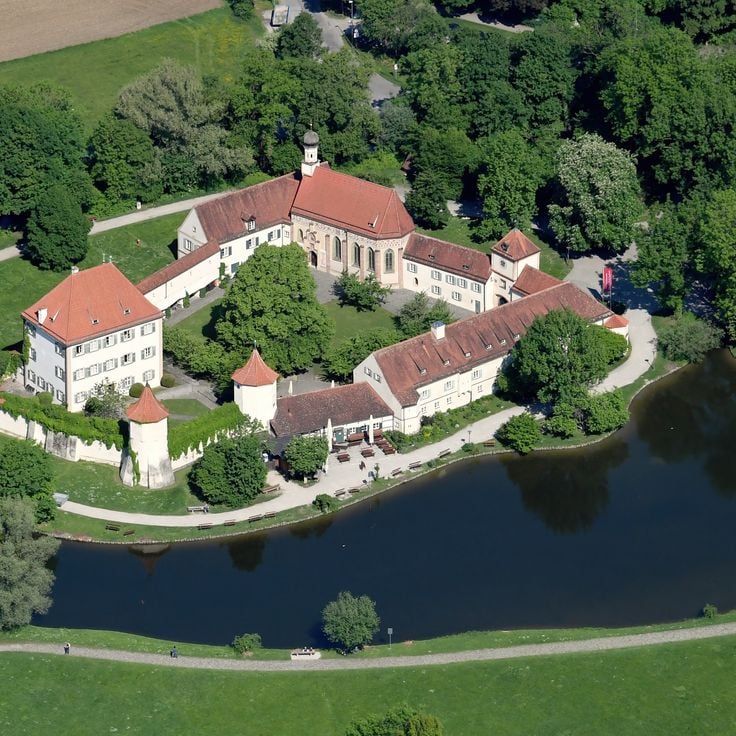
Blutenburg Castle sits in the western part of Munich, surrounded by water and meadows. This medieval building from the 15th century now houses an international youth library. The Gothic chapel in the courtyard preserves its original wall paintings and altars. You cross a small bridge to reach the grounds. The place draws mostly readers and families. The rooms feel quiet, away from the city center. In summer the windows open to the greenery, and you can sit on the benches outside.
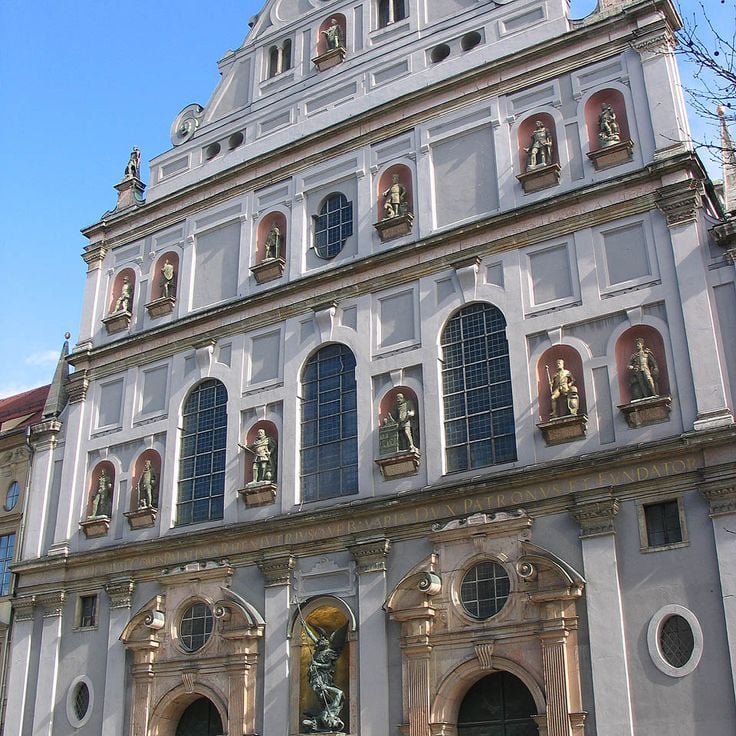
Saint Michael's Church was built between 1583 and 1597 and is the largest Renaissance church north of the Alps. Inside rests the tomb of King Ludwig II of Bavaria. The church interior shows a white barrel vault, one of the widest of its kind in Europe. The facade follows the style of Italian Jesuit buildings. Other members of the House of Wittelsbach are also buried in the royal crypt. The church sits in the pedestrian zone between Karlsplatz and Marienplatz.
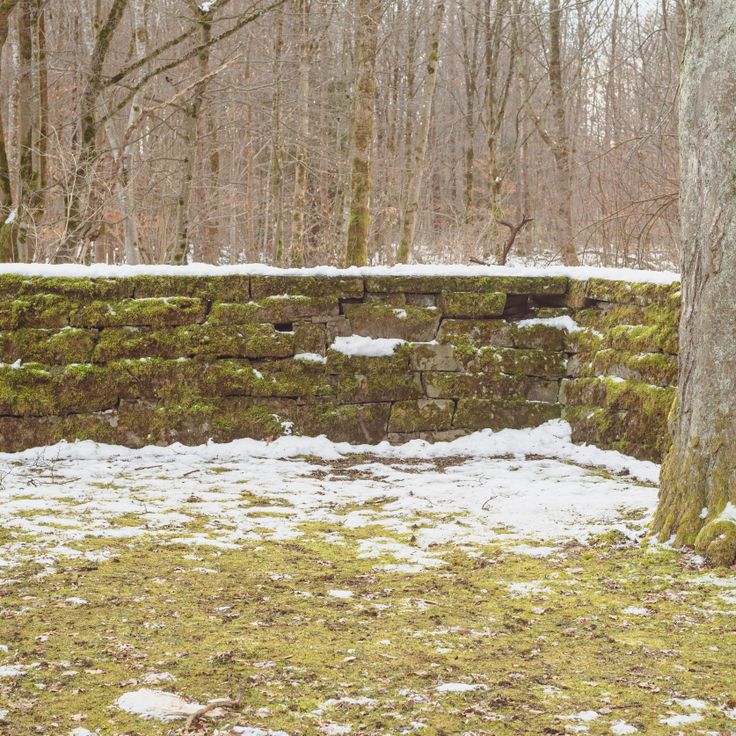
The war cemetery of Munich occupies the northern section of Westfriedhof. Soldiers from several nations who fell during both world wars are buried here. The burial grounds are organized by nationality and include French, British, Russian, and Italian gravestones. The site was laid out after 1945. The cemetery receives few visitors and offers a place for quiet reflection. Simple crosses and memorial stones stand in rows across the grounds. Access is through a separate entrance from Westfriedhof.
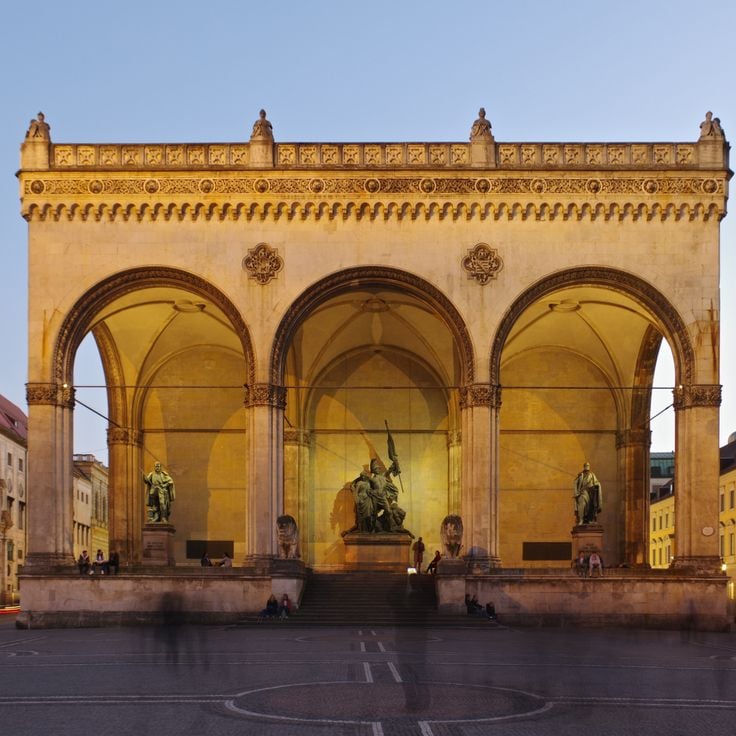
This loggia stands at the southern end of Odeonsplatz and was built between 1841 and 1844, modeled after a Florentine example. The Feldherrnhalle honors notable commanders of the Bavarian army and displays statues of Tilly and Wrede, along with reliefs recalling military events. During the Nazi era, it served as a memorial site for the failed 1923 coup attempt, making it a politically charged location. The open arched hall with its three arcades offers a direct view toward the Theatinerkirche and the Residenz. Today the structure stands quietly among pedestrians crossing the square, with little trace of its former symbolic role in everyday life.
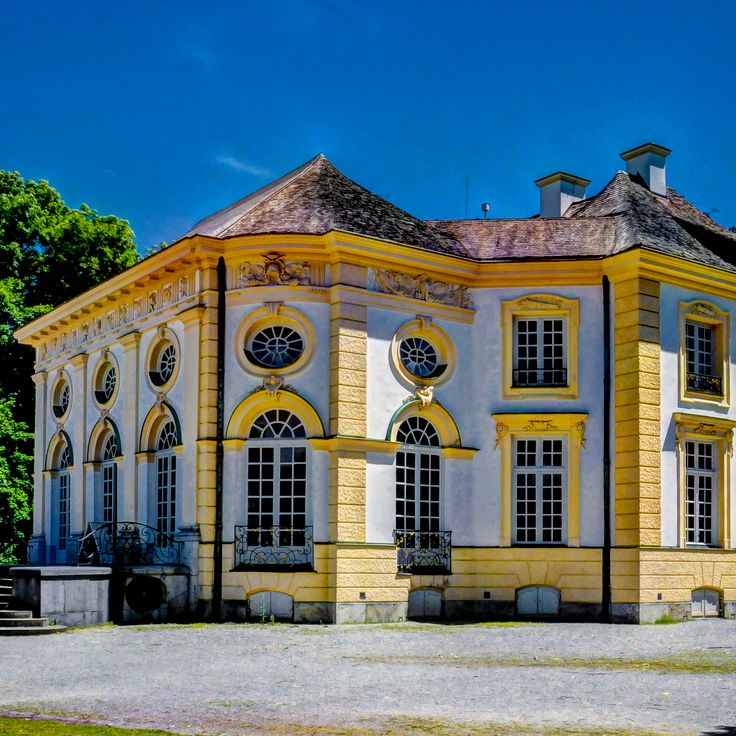
This baroque building from the 18th century stands in the park of Nymphenburg and served the royal family as a private bathing room. Inside, a large pool is surrounded by gilded wall decorations and paintings. The building shows how the nobility spent their leisure time and what role water and architecture played in their daily life. The rooms are decorated with mirrors and exotic motifs that reflect the taste of the period.
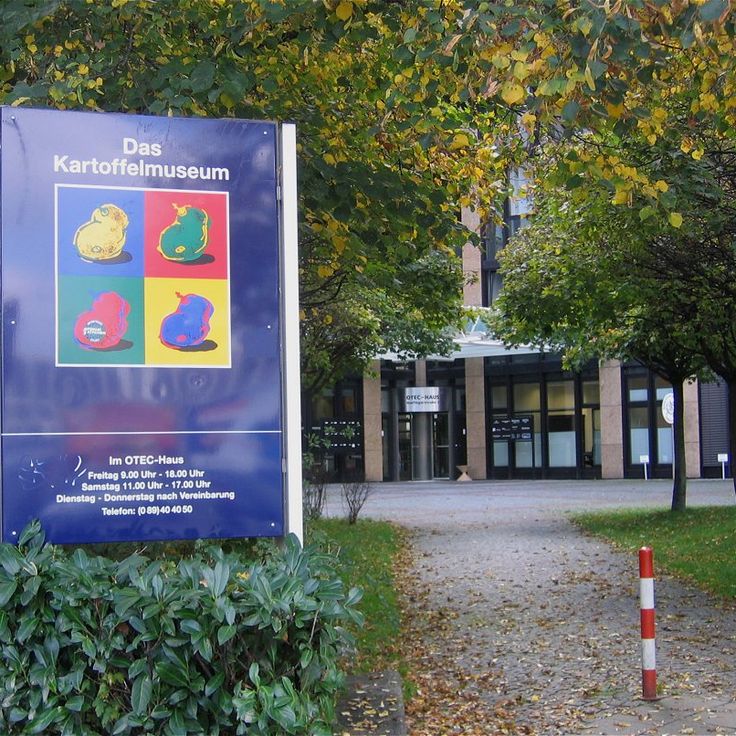
This museum in western Munich shows how the potato shaped the culture and economy of Europe. The exhibition brings together paintings, prints, documents and everyday objects that reveal how the tuber became a staple food from the 16th century onward. You see depictions of the potato in art, learn about famines and potato wars, and discover how farming methods changed over the centuries. The museum sits away from the main tourist flows and offers an unusual look at a food that seems ordinary today.
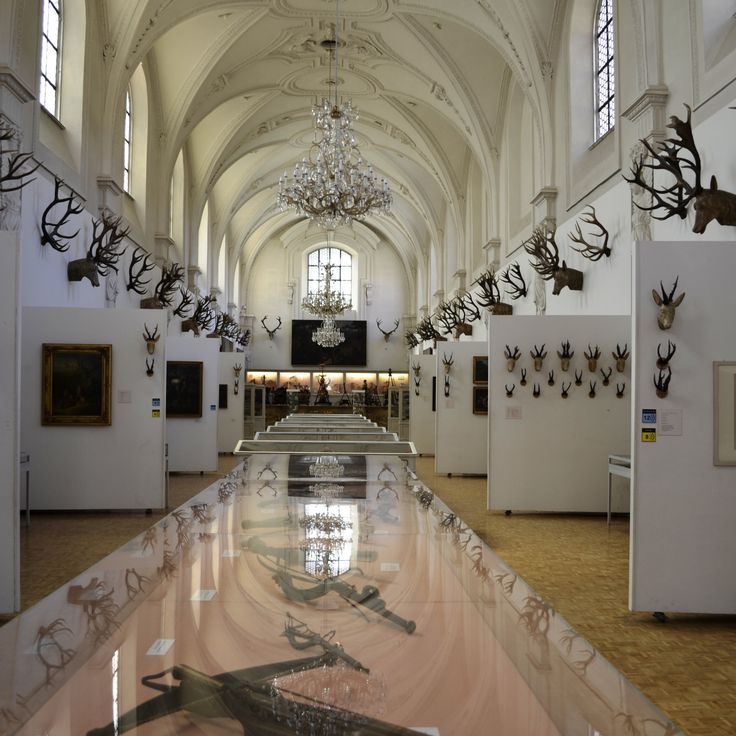
This museum displays hunting weapons, traps, and fishing equipment from several centuries. The collection includes taxidermied animals from local wildlife and old fishing gear. The rooms are located in a historic building in the center of Munich. The museum documents how hunting and fishing developed over time in Bavaria. The exhibition appeals to visitors interested in craftsmanship, tradition, and natural history. You see tools made of wood and metal, nets from old materials, and rifles from different periods. The atmosphere remains calm because few tourists come here.
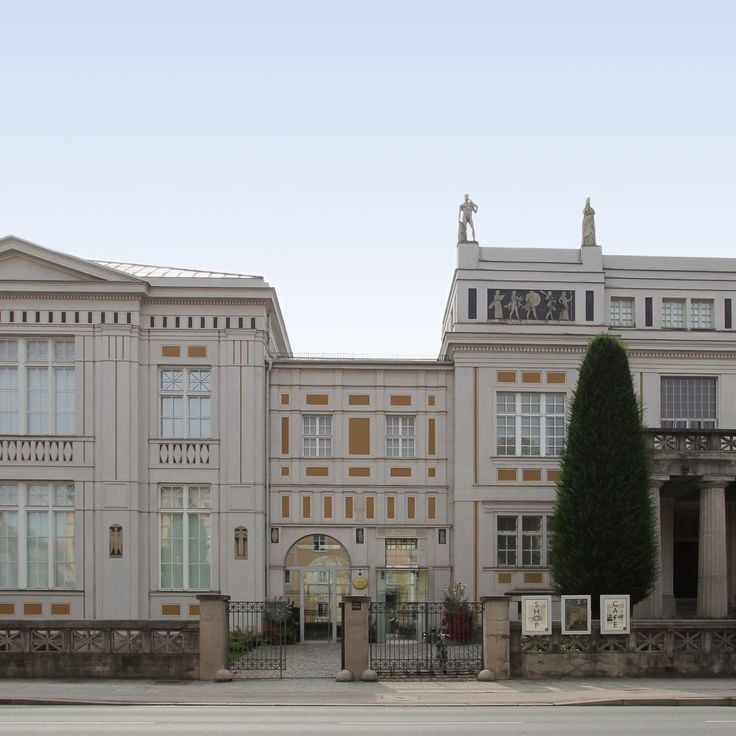
Villa Stuck was built in 1898 by painter and sculptor Franz von Stuck as both residence and studio. The interior features Art Nouveau furniture, painted walls and ceilings, and works by Stuck from different periods of his career. The house now operates as a museum, displaying the original rooms alongside rotating exhibitions of contemporary art in a modern extension.
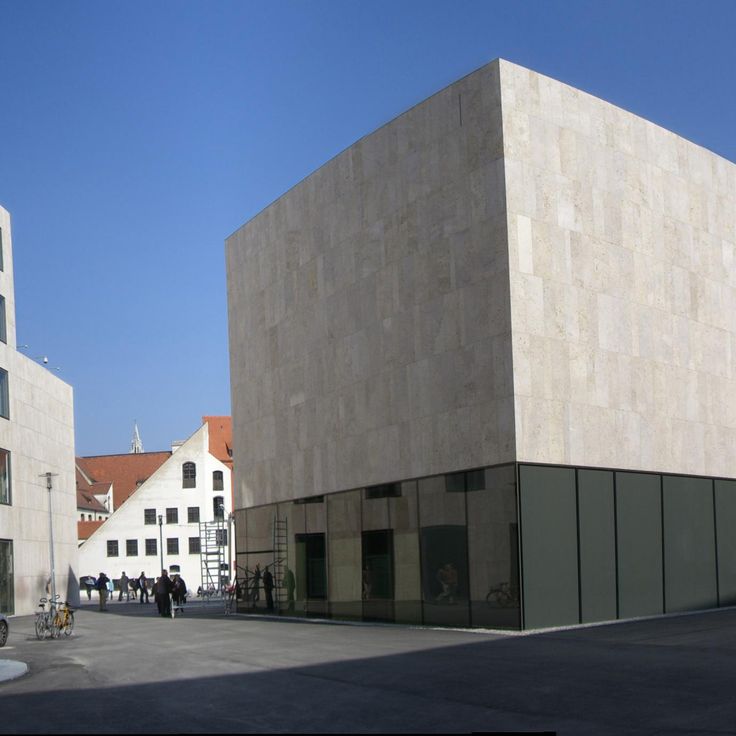
This museum documents the history of Munich's Jewish community from 1229 to the present day through objects, photographs, and documents. The permanent exhibition shows Jewish traditions and religious customs in a building that opened in 2007 at St.-Jakobs-Platz, next to the new main synagogue.
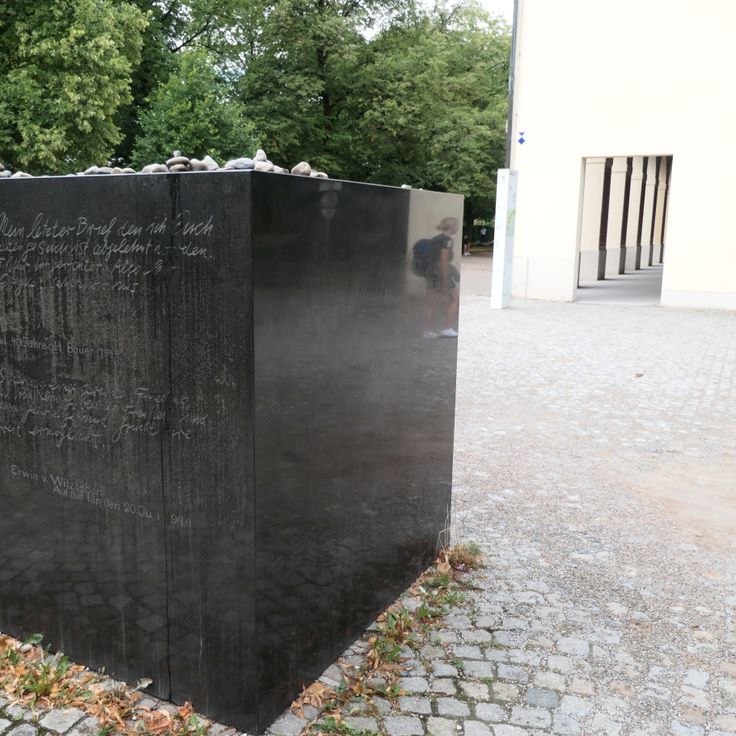
This memorial at Ludwig Maximilian University remembers the student resistance group that fought the Nazi regime with leaflets between 1942 and 1943. The Scholl siblings and their companions were arrested here after distributing leaflets inside the university. A bronze sculpture rests on the floor of the atrium, marking where the leaflets once fell. The memorial stands in a building where students still pass through every day. The quiet interior contrasts with the weight of the events that took place here.
Praterinsel sits between two branches of the Isar River and houses art galleries, workshops, and a former hydroelectric plant. The old industrial site includes green spaces for walking and taking a break from the city. The island shows a side of Munich where art and industrial history meet in a quiet atmosphere.
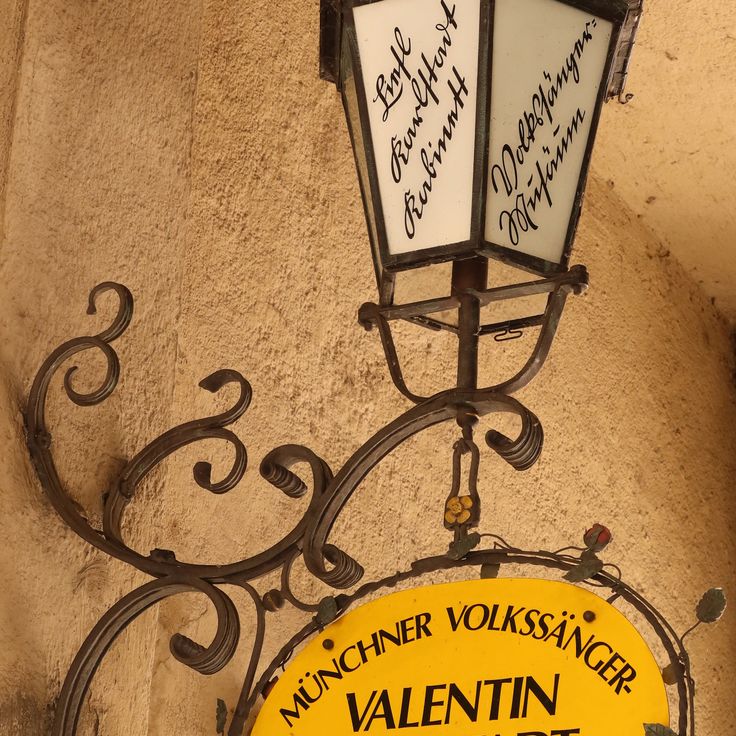
The Valentin-Karlstadt-Musäum presents the daily life and work of Karl Valentin, a Munich comedian, and his partner Liesl Karlstadt. You see personal items, stage props, photographs and short film clips. The rooms feel like a cabinet of curiosities filled with odd objects and wordplay. The atmosphere remains playful and a bit absurd, in the spirit of both artists. The museum sits in one of the towers of the Isartor and belongs to the small addresses that tell Munich beyond the usual routes.
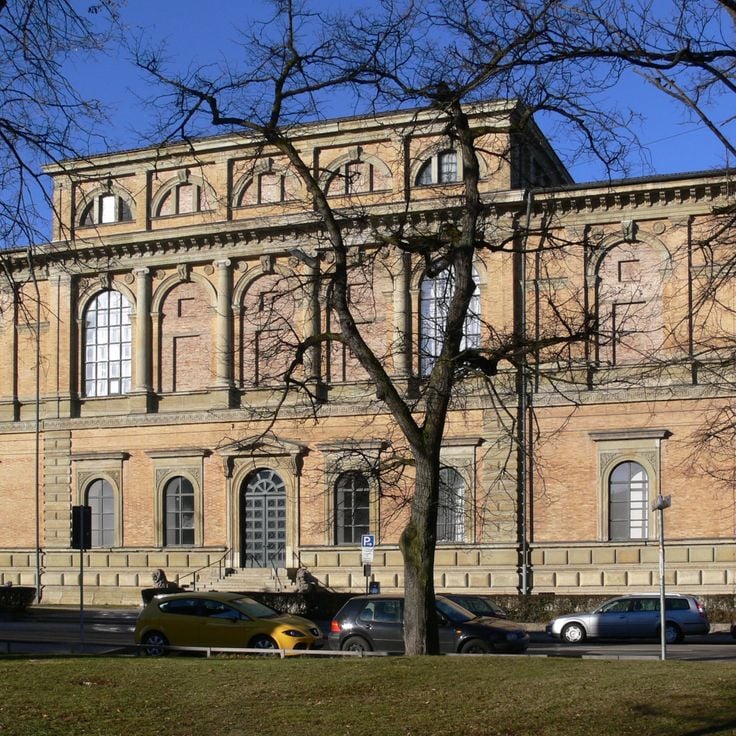
The Old Pinakothek displays European paintings from the 14th to the 18th century. The route leads through halls with works by Dürer, Rembrandt, Rubens and other masters of the Renaissance and Baroque. The collection includes Flemish, Dutch, Italian and German painting. The building itself was constructed in the mid-19th century to house the royal art treasures and is one of the oldest museums in Munich.
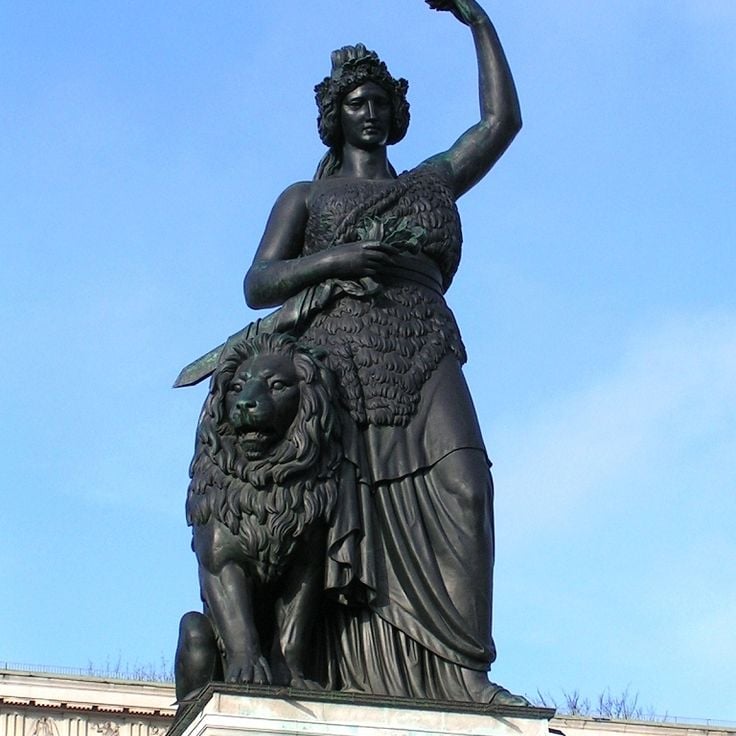
This bronze statue has stood on the Theresienwiese since 1850 and was created by Ludwig Schwanthaler. The figure rises over 59 feet (18 meters) and represents Bavaria as a female form. Visitors can climb an interior staircase to the head and look out through small openings onto the meadow below. Around the statue stands a hall of fame with Doric columns honoring notable Bavarians. The space fills with festival tents during Oktoberfest but feels open and quiet outside that period. The statue is one of the city's symbols, though it draws fewer visitors than other monuments in the center.
The workshop was founded in 1747 and still produces porcelain by hand. In the ateliers, visitors watch throwers, modelers, and painters at work. Each piece goes through several stages, from shaping the clay to applying colors and the final firing. The techniques follow methods that have been used for centuries, and many molds date back to the early years. Besides the workshops, there is an exhibition space showing both historical and contemporary pieces. The building sits in the palace roundel at Nymphenburg, surrounded by tree-lined avenues and green spaces.
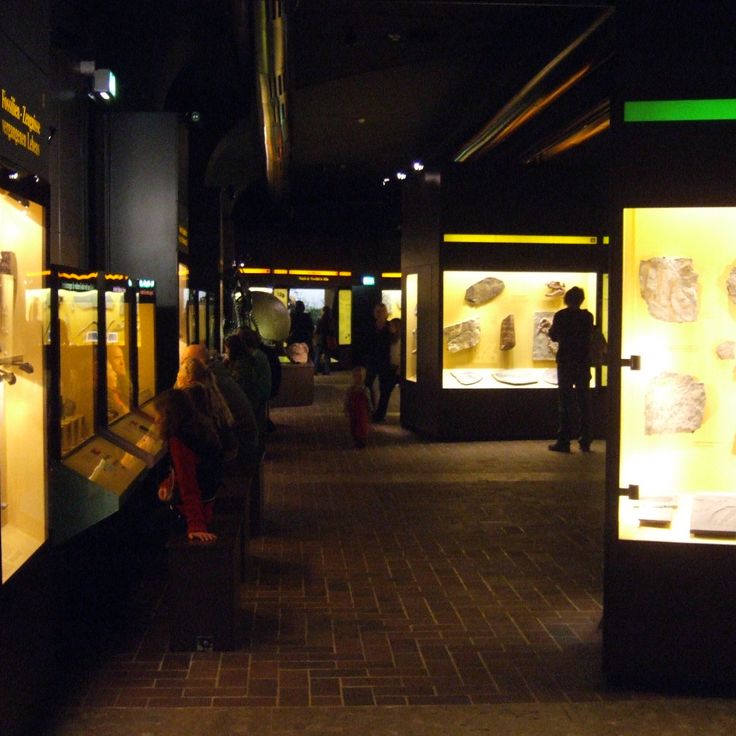
The Museum of Humans and Nature occupies one wing of Nymphenburg Palace and presents natural history collections that often surprise visitors. The rooms explore the relationship between people, animals and the planet in a way that speaks to everyone without becoming too complex. You see preserved animals, geological formations, interactive stations about the human body and displays on the formation of the Earth. The exhibition is clearly designed and conveys scientific topics through practical examples. Families appreciate this museum, but it also appears on this list because it offers a quieter alternative to the city's better-known institutions. It sits right next to the state rooms and the carriage museum, yet remains less visible to visitors. Its location inside the palace gives the rooms a particular atmosphere: old architecture meets modern presentation. Anyone coming to Munich with an interest in nature, science or simply well-crafted exhibitions will find a place here that stands apart from the usual routes.
Hirschgarten Royal is located in the west of Munich in a wooded park from the 18th century. The enclosure houses several fallow deer that visitors can watch through the fence. The beer garden has space for several thousand guests and sits under old chestnut trees. You can sit at long wooden tables, order pretzels and pork knuckle or bring your own food. Augustiner brewery serves its beer here. On summer weekends, families from all over the city come here to eat among the trees and animals. The park is spacious, with lawns and walking paths. Hirschgarten began as a royal hunting ground and still has this woodland character today.
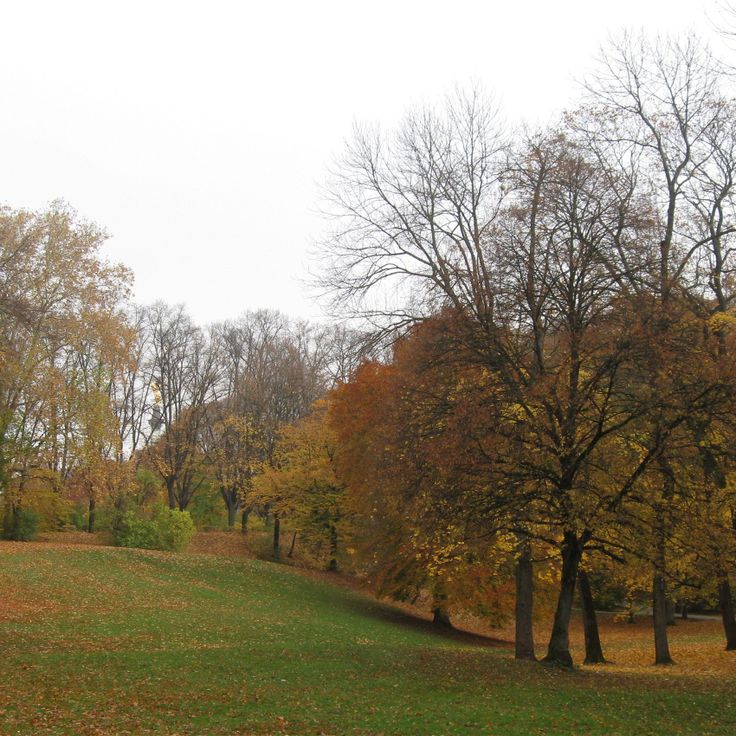
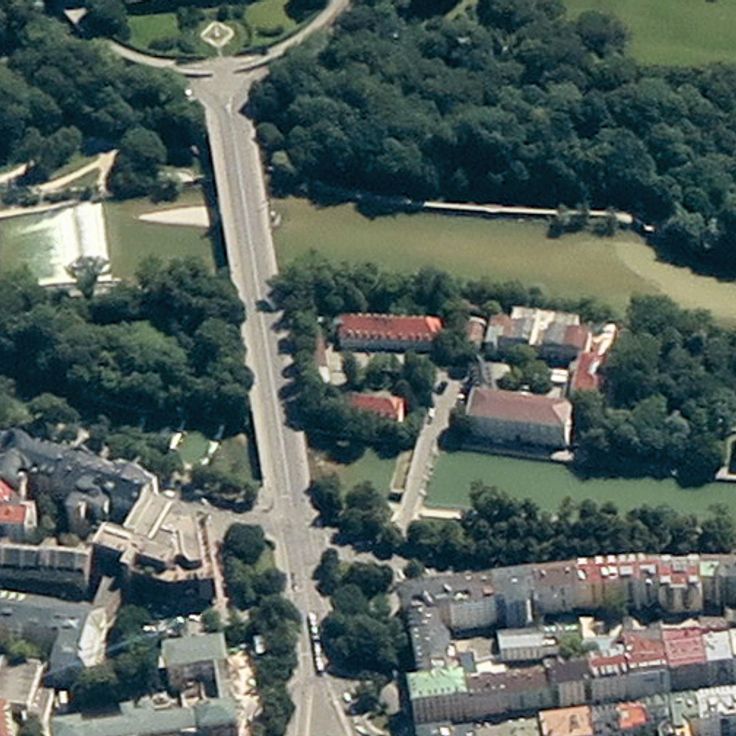
This park runs along the Isar River on the east side of the old town. You can see statues, lawns and rows of trees that provide shade. The area links green spaces with paths beside the river, where locals often jog or rest. Maximiliansanlagen offers a quiet setting away from the main tourist routes and suits a walk with views over the water.
The Friedensengel stands on the banks of the Isar and marks the end of the war of 1870–71. A broad stairway leads to the column, rising through several levels. At the top, a golden angel figure catches the eye from far away. The terrace gives a view across the city and the river. Locals come here to walk or sit on the steps, especially on warm evenings. The area around it is calm, with houses from the turn of the century lining the nearby streets.
Nymphenburg Palace houses an extensive collection of historic carriages and sleighs belonging to the Bavarian kings in its former stables. The gilded ceremonial coaches used by the Wittelsbach family for official occasions stand alongside the travel wagons built for long journeys. The rooms also display sedan chairs, harnesses, and the sleighs that glided through Munich's snowy streets in winter. You can see how ornate these vehicles were and how royal daily life was organized. The exhibition is calm, with fewer visitors than the main palace rooms.
The Lenbachhaus holds one of the most important collections of early 20th century German expressionist painting, with a particular focus on the works of the Der Blaue Reiter artist group, which was founded in Munich and created much of their work here. The gallery also displays works from earlier periods of Munich art, from the 19th century to the present day, in a building that originally served as the residence of painter Franz von Lenbach and was later converted into a museum.
This church was built in the mid-18th century by the Asam brothers as a private place of worship and displays all the features of baroque art. The facade fits into a narrow row of houses, while the interior is filled with frescoes, stuccowork, and gilded figures. Light enters through oval windows and enhances the theatrical effect of the decoration. The Asam family lived in the adjacent house, and the church was initially for their own use before being opened to the public. The space is small, but the density of ornamental detail makes the visit an immersion into the baroque visual world.
Haus der Kunst sits at the southern edge of the English Garden and hosts rotating exhibitions of 20th and 21st century art. The building dates from the 1930s and was later repurposed as a venue for international contemporary art. Inside, wide halls with high ceilings display installations, paintings, photographs, and video works from various countries and periods. The program changes several times a year. Visitors interested in movements beyond Expressionism will find shows that often feature experimental or political perspectives. The building itself recalls the era of its construction, though it now serves an entirely different purpose.
This rose garden sits in the western part of the city and offers a quiet place to rest. Over 500 varieties bloom here from May through October in every color. The paths wind through manicured beds, past benches and small patches of lawn. Locals come to read or take a break after work. The garden belongs to the larger Westpark but feels like a separate space tucked between meadows and old trees. On warm days the air smells of blossoms, and you mostly hear birdsong. It is a calm spot away from the usual routes through Munich.
The Eisbach wave is an artificial standing wave in the English Garden that draws surfers from across the city and beyond throughout the year. The stream flows out of a concrete channel at the southern edge of the park, and the current there forms a permanent wave that can be surfed even in winter. The water is cold, the wave is steep, and surfers often queue along the bank. Many walkers stop to watch, and the spectacle has become a fixture that shows how the city uses its waterways and where sport and urban life cross paths.
The three museums at Königsplatz show ancient sculptures, vases and gold jewelry from Greek and Roman times, from the 8th century BC to the 5th century AD. The collections are divided between the Glyptothek, the State Collections of Antiquities and the State Museum of Egyptian Art. You can see statues, reliefs, ceramics and everyday objects from antiquity. The buildings themselves date from the 19th century and form a neoclassical ensemble together with the square. The exhibitions are organized by period and theme. This part of Munich reveals a different side of the city, far from the beer gardens and Marienplatz.
This public indoor pool opened in 1901 and combines sport with architecture in one of the finest swimming facilities in Europe. The Müller'sche Volksbad has several pools under high vaulted ceilings, surrounded by Art Nouveau decoration, stained glass windows, and hand-painted tiles. People come here to swim, but also to experience the atmosphere of a historic bathhouse. The saunas and steam rooms are located in the basement. Situated along the Isar River, a few steps from the old town, the baths are visited by Munich residents of all ages. It is a place where daily life and heritage preservation blend naturally.
The Residenz Theater is one of Munich's quieter cultural venues, showing German plays and performances throughout the year. The hall itself carries the feel of another era, with its décor and intimate atmosphere. Within this collection, this place represents a side of Munich that goes beyond the big festivals and the opera house. Visitors come here to experience theater in a historic setting, away from the usual tourist circuits.
This circular temple stands on a hill in the English Garden and offers views over the trees and meadows of the park. The ten columns support a copper roof that gleams green in the sunlight. Visitors come here to sit on the steps, watch people passing by or simply take a break. On warm days the lawn around the structure is busy, with groups picnicking or making music. The temple was built in the early 19th century and has served as a meeting point ever since. From here you can see the park in its full expanse, without traffic or city noise.
This historic botanical garden was laid out in the 19th century as a research and teaching site, then redesigned as a public park. The grounds now show an English landscape garden with old trees, wide lawns and small ponds that offer calm in the middle of the city. At its center stands a glass pavilion with iron framework, used for concerts and exhibitions. You see Munich residents sitting on benches, walking by the water or reading on the grass. The café at the edge offers simple snacks for a break in the green. This botanical garden appeals not only to plant lovers but to anyone looking for a quiet corner away from busy streets.
Riem Arcaden is a shopping center on the eastern edge of the city, built on the site of the former airport. Around 120 stores spread across several floors, from fashion chains to electronics shops. On the ground floor you find a food court with different restaurants. If you need a break, you can sit on benches in the central hall. Locals often come here on weekends when the center gets busy. The architecture is functional, with wide corridors and plenty of daylight through skylights. Outside you see large parking areas leading toward the trade fair and Riemer Park.
The Bavaria Filmstadt opens the doors to one of the largest film production sites in Europe. This studio complex on the southern edge of the city was founded in the 1920s and has since produced hundreds of films and series. A tour takes you through original sets, shows props from well-known productions, and explains how special effects are created. In some areas, you can stand in front of the camera yourself or walk around reconstructed film sets. The site reveals the technical side of cinema, from makeup to sound engineering to the tricks used to create rain or wind. For visitors interested in film, the Bavaria Filmstadt offers a look behind the curtain of the dream factory.
Blutenburg Castle sits in the western part of Munich, surrounded by water and meadows. This medieval building from the 15th century now houses an international youth library. The Gothic chapel in the courtyard preserves its original wall paintings and altars. You cross a small bridge to reach the grounds. The place draws mostly readers and families. The rooms feel quiet, away from the city center. In summer the windows open to the greenery, and you can sit on the benches outside.
Saint Michael's Church was built between 1583 and 1597 and is the largest Renaissance church north of the Alps. Inside rests the tomb of King Ludwig II of Bavaria. The church interior shows a white barrel vault, one of the widest of its kind in Europe. The facade follows the style of Italian Jesuit buildings. Other members of the House of Wittelsbach are also buried in the royal crypt. The church sits in the pedestrian zone between Karlsplatz and Marienplatz.
The war cemetery of Munich occupies the northern section of Westfriedhof. Soldiers from several nations who fell during both world wars are buried here. The burial grounds are organized by nationality and include French, British, Russian, and Italian gravestones. The site was laid out after 1945. The cemetery receives few visitors and offers a place for quiet reflection. Simple crosses and memorial stones stand in rows across the grounds. Access is through a separate entrance from Westfriedhof.
This loggia stands at the southern end of Odeonsplatz and was built between 1841 and 1844, modeled after a Florentine example. The Feldherrnhalle honors notable commanders of the Bavarian army and displays statues of Tilly and Wrede, along with reliefs recalling military events. During the Nazi era, it served as a memorial site for the failed 1923 coup attempt, making it a politically charged location. The open arched hall with its three arcades offers a direct view toward the Theatinerkirche and the Residenz. Today the structure stands quietly among pedestrians crossing the square, with little trace of its former symbolic role in everyday life.
This baroque building from the 18th century stands in the park of Nymphenburg and served the royal family as a private bathing room. Inside, a large pool is surrounded by gilded wall decorations and paintings. The building shows how the nobility spent their leisure time and what role water and architecture played in their daily life. The rooms are decorated with mirrors and exotic motifs that reflect the taste of the period.
This museum in western Munich shows how the potato shaped the culture and economy of Europe. The exhibition brings together paintings, prints, documents and everyday objects that reveal how the tuber became a staple food from the 16th century onward. You see depictions of the potato in art, learn about famines and potato wars, and discover how farming methods changed over the centuries. The museum sits away from the main tourist flows and offers an unusual look at a food that seems ordinary today.
This museum displays hunting weapons, traps, and fishing equipment from several centuries. The collection includes taxidermied animals from local wildlife and old fishing gear. The rooms are located in a historic building in the center of Munich. The museum documents how hunting and fishing developed over time in Bavaria. The exhibition appeals to visitors interested in craftsmanship, tradition, and natural history. You see tools made of wood and metal, nets from old materials, and rifles from different periods. The atmosphere remains calm because few tourists come here.
Villa Stuck was built in 1898 by painter and sculptor Franz von Stuck as both residence and studio. The interior features Art Nouveau furniture, painted walls and ceilings, and works by Stuck from different periods of his career. The house now operates as a museum, displaying the original rooms alongside rotating exhibitions of contemporary art in a modern extension.
This museum documents the history of Munich's Jewish community from 1229 to the present day through objects, photographs, and documents. The permanent exhibition shows Jewish traditions and religious customs in a building that opened in 2007 at St.-Jakobs-Platz, next to the new main synagogue.
This memorial at Ludwig Maximilian University remembers the student resistance group that fought the Nazi regime with leaflets between 1942 and 1943. The Scholl siblings and their companions were arrested here after distributing leaflets inside the university. A bronze sculpture rests on the floor of the atrium, marking where the leaflets once fell. The memorial stands in a building where students still pass through every day. The quiet interior contrasts with the weight of the events that took place here.
Praterinsel sits between two branches of the Isar River and houses art galleries, workshops, and a former hydroelectric plant. The old industrial site includes green spaces for walking and taking a break from the city. The island shows a side of Munich where art and industrial history meet in a quiet atmosphere.
The Valentin-Karlstadt-Musäum presents the daily life and work of Karl Valentin, a Munich comedian, and his partner Liesl Karlstadt. You see personal items, stage props, photographs and short film clips. The rooms feel like a cabinet of curiosities filled with odd objects and wordplay. The atmosphere remains playful and a bit absurd, in the spirit of both artists. The museum sits in one of the towers of the Isartor and belongs to the small addresses that tell Munich beyond the usual routes.
The Old Pinakothek displays European paintings from the 14th to the 18th century. The route leads through halls with works by Dürer, Rembrandt, Rubens and other masters of the Renaissance and Baroque. The collection includes Flemish, Dutch, Italian and German painting. The building itself was constructed in the mid-19th century to house the royal art treasures and is one of the oldest museums in Munich.
This bronze statue has stood on the Theresienwiese since 1850 and was created by Ludwig Schwanthaler. The figure rises over 59 feet (18 meters) and represents Bavaria as a female form. Visitors can climb an interior staircase to the head and look out through small openings onto the meadow below. Around the statue stands a hall of fame with Doric columns honoring notable Bavarians. The space fills with festival tents during Oktoberfest but feels open and quiet outside that period. The statue is one of the city's symbols, though it draws fewer visitors than other monuments in the center.
The workshop was founded in 1747 and still produces porcelain by hand. In the ateliers, visitors watch throwers, modelers, and painters at work. Each piece goes through several stages, from shaping the clay to applying colors and the final firing. The techniques follow methods that have been used for centuries, and many molds date back to the early years. Besides the workshops, there is an exhibition space showing both historical and contemporary pieces. The building sits in the palace roundel at Nymphenburg, surrounded by tree-lined avenues and green spaces.
The Museum of Humans and Nature occupies one wing of Nymphenburg Palace and presents natural history collections that often surprise visitors. The rooms explore the relationship between people, animals and the planet in a way that speaks to everyone without becoming too complex. You see preserved animals, geological formations, interactive stations about the human body and displays on the formation of the Earth. The exhibition is clearly designed and conveys scientific topics through practical examples. Families appreciate this museum, but it also appears on this list because it offers a quieter alternative to the city's better-known institutions. It sits right next to the state rooms and the carriage museum, yet remains less visible to visitors. Its location inside the palace gives the rooms a particular atmosphere: old architecture meets modern presentation. Anyone coming to Munich with an interest in nature, science or simply well-crafted exhibitions will find a place here that stands apart from the usual routes.
Hirschgarten Royal is located in the west of Munich in a wooded park from the 18th century. The enclosure houses several fallow deer that visitors can watch through the fence. The beer garden has space for several thousand guests and sits under old chestnut trees. You can sit at long wooden tables, order pretzels and pork knuckle or bring your own food. Augustiner brewery serves its beer here. On summer weekends, families from all over the city come here to eat among the trees and animals. The park is spacious, with lawns and walking paths. Hirschgarten began as a royal hunting ground and still has this woodland character today.
This park runs along the Isar River on the east side of the old town. You can see statues, lawns and rows of trees that provide shade. The area links green spaces with paths beside the river, where locals often jog or rest. Maximiliansanlagen offers a quiet setting away from the main tourist routes and suits a walk with views over the water.
The Friedensengel stands on the banks of the Isar and marks the end of the war of 1870–71. A broad stairway leads to the column, rising through several levels. At the top, a golden angel figure catches the eye from far away. The terrace gives a view across the city and the river. Locals come here to walk or sit on the steps, especially on warm evenings. The area around it is calm, with houses from the turn of the century lining the nearby streets.
Nymphenburg Palace houses an extensive collection of historic carriages and sleighs belonging to the Bavarian kings in its former stables. The gilded ceremonial coaches used by the Wittelsbach family for official occasions stand alongside the travel wagons built for long journeys. The rooms also display sedan chairs, harnesses, and the sleighs that glided through Munich's snowy streets in winter. You can see how ornate these vehicles were and how royal daily life was organized. The exhibition is calm, with fewer visitors than the main palace rooms.
The Lenbachhaus holds one of the most important collections of early 20th century German expressionist painting, with a particular focus on the works of the Der Blaue Reiter artist group, which was founded in Munich and created much of their work here. The gallery also displays works from earlier periods of Munich art, from the 19th century to the present day, in a building that originally served as the residence of painter Franz von Lenbach and was later converted into a museum.
This church was built in the mid-18th century by the Asam brothers as a private place of worship and displays all the features of baroque art. The facade fits into a narrow row of houses, while the interior is filled with frescoes, stuccowork, and gilded figures. Light enters through oval windows and enhances the theatrical effect of the decoration. The Asam family lived in the adjacent house, and the church was initially for their own use before being opened to the public. The space is small, but the density of ornamental detail makes the visit an immersion into the baroque visual world.
Haus der Kunst sits at the southern edge of the English Garden and hosts rotating exhibitions of 20th and 21st century art. The building dates from the 1930s and was later repurposed as a venue for international contemporary art. Inside, wide halls with high ceilings display installations, paintings, photographs, and video works from various countries and periods. The program changes several times a year. Visitors interested in movements beyond Expressionism will find shows that often feature experimental or political perspectives. The building itself recalls the era of its construction, though it now serves an entirely different purpose.
This rose garden sits in the western part of the city and offers a quiet place to rest. Over 500 varieties bloom here from May through October in every color. The paths wind through manicured beds, past benches and small patches of lawn. Locals come to read or take a break after work. The garden belongs to the larger Westpark but feels like a separate space tucked between meadows and old trees. On warm days the air smells of blossoms, and you mostly hear birdsong. It is a calm spot away from the usual routes through Munich.
The Eisbach wave is an artificial standing wave in the English Garden that draws surfers from across the city and beyond throughout the year. The stream flows out of a concrete channel at the southern edge of the park, and the current there forms a permanent wave that can be surfed even in winter. The water is cold, the wave is steep, and surfers often queue along the bank. Many walkers stop to watch, and the spectacle has become a fixture that shows how the city uses its waterways and where sport and urban life cross paths.
The three museums at Königsplatz show ancient sculptures, vases and gold jewelry from Greek and Roman times, from the 8th century BC to the 5th century AD. The collections are divided between the Glyptothek, the State Collections of Antiquities and the State Museum of Egyptian Art. You can see statues, reliefs, ceramics and everyday objects from antiquity. The buildings themselves date from the 19th century and form a neoclassical ensemble together with the square. The exhibitions are organized by period and theme. This part of Munich reveals a different side of the city, far from the beer gardens and Marienplatz.
This public indoor pool opened in 1901 and combines sport with architecture in one of the finest swimming facilities in Europe. The Müller'sche Volksbad has several pools under high vaulted ceilings, surrounded by Art Nouveau decoration, stained glass windows, and hand-painted tiles. People come here to swim, but also to experience the atmosphere of a historic bathhouse. The saunas and steam rooms are located in the basement. Situated along the Isar River, a few steps from the old town, the baths are visited by Munich residents of all ages. It is a place where daily life and heritage preservation blend naturally.
The Residenz Theater is one of Munich's quieter cultural venues, showing German plays and performances throughout the year. The hall itself carries the feel of another era, with its décor and intimate atmosphere. Within this collection, this place represents a side of Munich that goes beyond the big festivals and the opera house. Visitors come here to experience theater in a historic setting, away from the usual tourist circuits.
This circular temple stands on a hill in the English Garden and offers views over the trees and meadows of the park. The ten columns support a copper roof that gleams green in the sunlight. Visitors come here to sit on the steps, watch people passing by or simply take a break. On warm days the lawn around the structure is busy, with groups picnicking or making music. The temple was built in the early 19th century and has served as a meeting point ever since. From here you can see the park in its full expanse, without traffic or city noise.
This historic botanical garden was laid out in the 19th century as a research and teaching site, then redesigned as a public park. The grounds now show an English landscape garden with old trees, wide lawns and small ponds that offer calm in the middle of the city. At its center stands a glass pavilion with iron framework, used for concerts and exhibitions. You see Munich residents sitting on benches, walking by the water or reading on the grass. The café at the edge offers simple snacks for a break in the green. This botanical garden appeals not only to plant lovers but to anyone looking for a quiet corner away from busy streets.
Riem Arcaden is a shopping center on the eastern edge of the city, built on the site of the former airport. Around 120 stores spread across several floors, from fashion chains to electronics shops. On the ground floor you find a food court with different restaurants. If you need a break, you can sit on benches in the central hall. Locals often come here on weekends when the center gets busy. The architecture is functional, with wide corridors and plenty of daylight through skylights. Outside you see large parking areas leading toward the trade fair and Riemer Park.
The Bavaria Filmstadt opens the doors to one of the largest film production sites in Europe. This studio complex on the southern edge of the city was founded in the 1920s and has since produced hundreds of films and series. A tour takes you through original sets, shows props from well-known productions, and explains how special effects are created. In some areas, you can stand in front of the camera yourself or walk around reconstructed film sets. The site reveals the technical side of cinema, from makeup to sound engineering to the tricks used to create rain or wind. For visitors interested in film, the Bavaria Filmstadt offers a look behind the curtain of the dream factory.
Blutenburg Castle sits in the western part of Munich, surrounded by water and meadows. This medieval building from the 15th century now houses an international youth library. The Gothic chapel in the courtyard preserves its original wall paintings and altars. You cross a small bridge to reach the grounds. The place draws mostly readers and families. The rooms feel quiet, away from the city center. In summer the windows open to the greenery, and you can sit on the benches outside.
Saint Michael's Church was built between 1583 and 1597 and is the largest Renaissance church north of the Alps. Inside rests the tomb of King Ludwig II of Bavaria. The church interior shows a white barrel vault, one of the widest of its kind in Europe. The facade follows the style of Italian Jesuit buildings. Other members of the House of Wittelsbach are also buried in the royal crypt. The church sits in the pedestrian zone between Karlsplatz and Marienplatz.
The war cemetery of Munich occupies the northern section of Westfriedhof. Soldiers from several nations who fell during both world wars are buried here. The burial grounds are organized by nationality and include French, British, Russian, and Italian gravestones. The site was laid out after 1945. The cemetery receives few visitors and offers a place for quiet reflection. Simple crosses and memorial stones stand in rows across the grounds. Access is through a separate entrance from Westfriedhof.
This loggia stands at the southern end of Odeonsplatz and was built between 1841 and 1844, modeled after a Florentine example. The Feldherrnhalle honors notable commanders of the Bavarian army and displays statues of Tilly and Wrede, along with reliefs recalling military events. During the Nazi era, it served as a memorial site for the failed 1923 coup attempt, making it a politically charged location. The open arched hall with its three arcades offers a direct view toward the Theatinerkirche and the Residenz. Today the structure stands quietly among pedestrians crossing the square, with little trace of its former symbolic role in everyday life.
This baroque building from the 18th century stands in the park of Nymphenburg and served the royal family as a private bathing room. Inside, a large pool is surrounded by gilded wall decorations and paintings. The building shows how the nobility spent their leisure time and what role water and architecture played in their daily life. The rooms are decorated with mirrors and exotic motifs that reflect the taste of the period.
This museum in western Munich shows how the potato shaped the culture and economy of Europe. The exhibition brings together paintings, prints, documents and everyday objects that reveal how the tuber became a staple food from the 16th century onward. You see depictions of the potato in art, learn about famines and potato wars, and discover how farming methods changed over the centuries. The museum sits away from the main tourist flows and offers an unusual look at a food that seems ordinary today.
This museum displays hunting weapons, traps, and fishing equipment from several centuries. The collection includes taxidermied animals from local wildlife and old fishing gear. The rooms are located in a historic building in the center of Munich. The museum documents how hunting and fishing developed over time in Bavaria. The exhibition appeals to visitors interested in craftsmanship, tradition, and natural history. You see tools made of wood and metal, nets from old materials, and rifles from different periods. The atmosphere remains calm because few tourists come here.
Villa Stuck was built in 1898 by painter and sculptor Franz von Stuck as both residence and studio. The interior features Art Nouveau furniture, painted walls and ceilings, and works by Stuck from different periods of his career. The house now operates as a museum, displaying the original rooms alongside rotating exhibitions of contemporary art in a modern extension.
This museum documents the history of Munich's Jewish community from 1229 to the present day through objects, photographs, and documents. The permanent exhibition shows Jewish traditions and religious customs in a building that opened in 2007 at St.-Jakobs-Platz, next to the new main synagogue.
This memorial at Ludwig Maximilian University remembers the student resistance group that fought the Nazi regime with leaflets between 1942 and 1943. The Scholl siblings and their companions were arrested here after distributing leaflets inside the university. A bronze sculpture rests on the floor of the atrium, marking where the leaflets once fell. The memorial stands in a building where students still pass through every day. The quiet interior contrasts with the weight of the events that took place here.
Praterinsel sits between two branches of the Isar River and houses art galleries, workshops, and a former hydroelectric plant. The old industrial site includes green spaces for walking and taking a break from the city. The island shows a side of Munich where art and industrial history meet in a quiet atmosphere.
The Valentin-Karlstadt-Musäum presents the daily life and work of Karl Valentin, a Munich comedian, and his partner Liesl Karlstadt. You see personal items, stage props, photographs and short film clips. The rooms feel like a cabinet of curiosities filled with odd objects and wordplay. The atmosphere remains playful and a bit absurd, in the spirit of both artists. The museum sits in one of the towers of the Isartor and belongs to the small addresses that tell Munich beyond the usual routes.
The Old Pinakothek displays European paintings from the 14th to the 18th century. The route leads through halls with works by Dürer, Rembrandt, Rubens and other masters of the Renaissance and Baroque. The collection includes Flemish, Dutch, Italian and German painting. The building itself was constructed in the mid-19th century to house the royal art treasures and is one of the oldest museums in Munich.
This bronze statue has stood on the Theresienwiese since 1850 and was created by Ludwig Schwanthaler. The figure rises over 59 feet (18 meters) and represents Bavaria as a female form. Visitors can climb an interior staircase to the head and look out through small openings onto the meadow below. Around the statue stands a hall of fame with Doric columns honoring notable Bavarians. The space fills with festival tents during Oktoberfest but feels open and quiet outside that period. The statue is one of the city's symbols, though it draws fewer visitors than other monuments in the center.
The workshop was founded in 1747 and still produces porcelain by hand. In the ateliers, visitors watch throwers, modelers, and painters at work. Each piece goes through several stages, from shaping the clay to applying colors and the final firing. The techniques follow methods that have been used for centuries, and many molds date back to the early years. Besides the workshops, there is an exhibition space showing both historical and contemporary pieces. The building sits in the palace roundel at Nymphenburg, surrounded by tree-lined avenues and green spaces.
The Museum of Humans and Nature occupies one wing of Nymphenburg Palace and presents natural history collections that often surprise visitors. The rooms explore the relationship between people, animals and the planet in a way that speaks to everyone without becoming too complex. You see preserved animals, geological formations, interactive stations about the human body and displays on the formation of the Earth. The exhibition is clearly designed and conveys scientific topics through practical examples. Families appreciate this museum, but it also appears on this list because it offers a quieter alternative to the city's better-known institutions. It sits right next to the state rooms and the carriage museum, yet remains less visible to visitors. Its location inside the palace gives the rooms a particular atmosphere: old architecture meets modern presentation. Anyone coming to Munich with an interest in nature, science or simply well-crafted exhibitions will find a place here that stands apart from the usual routes.
Hirschgarten Royal is located in the west of Munich in a wooded park from the 18th century. The enclosure houses several fallow deer that visitors can watch through the fence. The beer garden has space for several thousand guests and sits under old chestnut trees. You can sit at long wooden tables, order pretzels and pork knuckle or bring your own food. Augustiner brewery serves its beer here. On summer weekends, families from all over the city come here to eat among the trees and animals. The park is spacious, with lawns and walking paths. Hirschgarten began as a royal hunting ground and still has this woodland character today.
This park runs along the Isar River on the east side of the old town. You can see statues, lawns and rows of trees that provide shade. The area links green spaces with paths beside the river, where locals often jog or rest. Maximiliansanlagen offers a quiet setting away from the main tourist routes and suits a walk with views over the water.