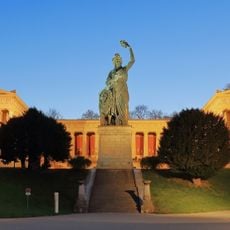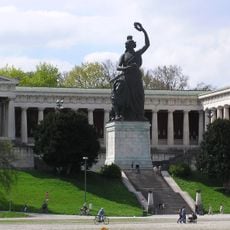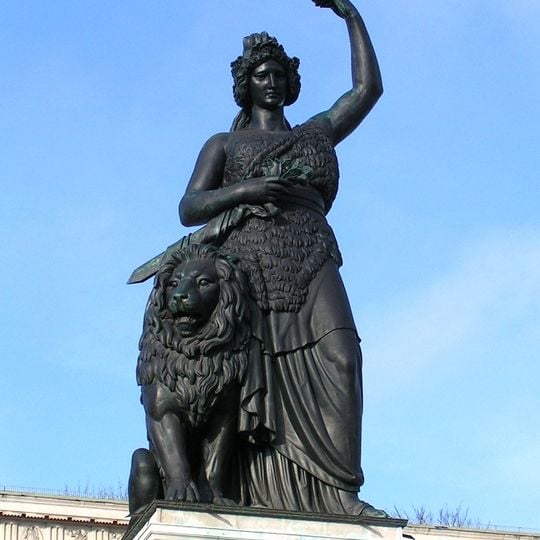
Bavaria, Colossal bronze statue at Theresienwiese, Munich, Germany.
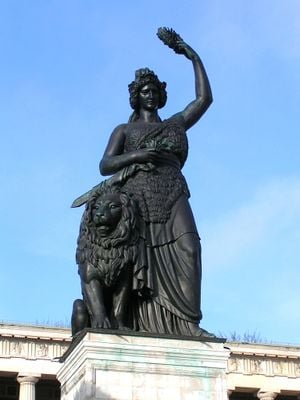
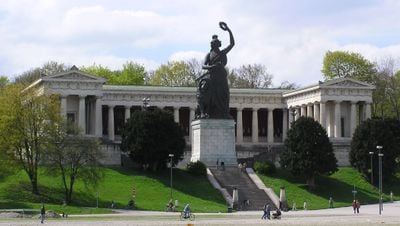
Bavaria is a colossal bronze statue standing at Theresienwiese in Munich, positioned in front of the Ruhmeshalle memorial building at the southern edge of the festival grounds. The female figure reaches 18.52 meters (60.8 feet) in height and weighs 87.36 tons, resting on a massive pedestal.
King Ludwig I commissioned the monument in 1837 as a symbol of state power, and architect Leo von Klenze completed the construction in 1850. The statue was cast in multiple sections that were assembled on site, marking a turning point in 19th-century metalcasting techniques.
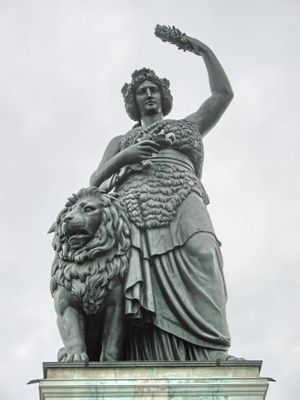
The figure wears a bear fur and holds an oak wreath while standing beside a lion, symbols visitors recognize as representations of Bavarian strength. People often gather around the base to examine the craftsmanship and the allegorical elements cast into the bronze surface.
An internal staircase leads to a viewing platform inside the head, where visitors can look out over Munich and the Oktoberfest grounds. The climb requires good physical condition, as the staircase is narrow and steep.
This monument was the first colossal bronze statue cast since classical antiquity, requiring new metalworking methods. The statue was assembled from multiple pieces connected internally by an iron framework.
The community of curious travelers
AroundUs brings together thousands of curated places, local tips, and hidden gems, enriched daily by 91,321 contributors worldwide.