Lenbachhaus, Art museum in Munich, Germany
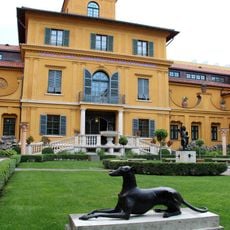
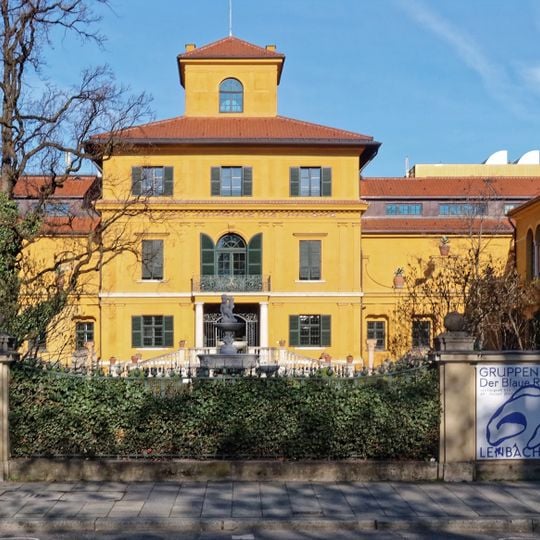
The Lenbachhaus is an art museum in the villa built for painter Franz von Lenbach, with a yellow facade, green shutters and a central tower with a pyramidal roof. A stone fountain with a sculpture stands before it. The 2013 Foster + Partners wing is clad in copper-aluminium tubes that weather over time.
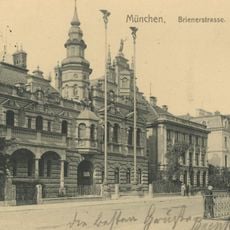
Franz von Lenbach had Gabriel von Seidl build his Florentine-style villa between 1887 and 1891, with a studio wing on Brienner Strasse finished in 1888 and the main house in 1890. The city of Munich bought the property in 1924 and opened the Städtische Galerie there in 1929. Hans Grässel extended it in 1927–1929, and Foster + Partners added a new wing for the 2013 reopening.
The collection centers on Der Blaue Reiter, an art group that formed in Munich and shaped early modern painting through bold use of color and form. Works by Kandinsky, Marc, and their contemporaries show how local artists challenged traditional ways of seeing and creating art.
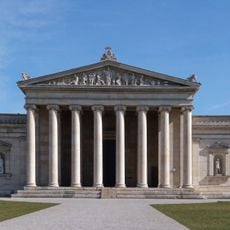
The museum stands at Luisenstraße 33 in the Maxvorstadt, within the Kunstareal, where 18 museums and about 40 galleries lie within walking distance. The 2013 Foster + Partners wing placed the main entrance on Museumsplatz, facing the Propylaea of the Königsplatz. The affiliated Kunstbau, an underground exhibition space above the Königsplatz subway station, shows changing special exhibitions.
The Lenbachhaus holds 28,000 artworks (as of 2016). Of the works made before 1900, only one percent are by women; across all pieces up to the end of the Second World War the share is six percent, rising to eleven percent for 1946 to 2015. In 1950 it was the first German institution to restitute art, returning drawings by Bonaventura Genelli and others to the heirs of the Jewish collector Michael Berolzheimer.
The community of curious travelers
AroundUs brings together thousands of curated places, local tips, and hidden gems, enriched daily by 93,118 contributors worldwide.