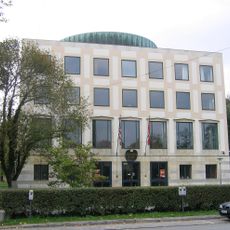
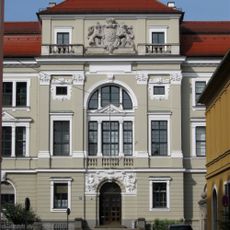
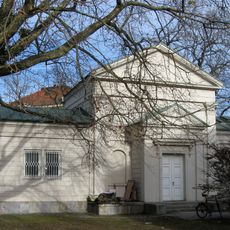
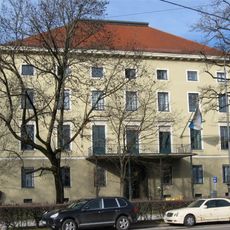
Königsplatz, neoclassical square in Maxvorstadt, Munich, Germany
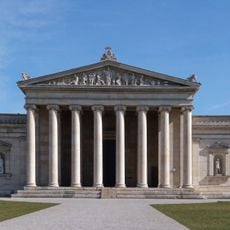
Königsplatz is a neoclassical square in Munich surrounded by three museum buildings featuring different classical architectural styles. The open layout creates a sense of proportion and formality, with manicured gardens filling the central area.
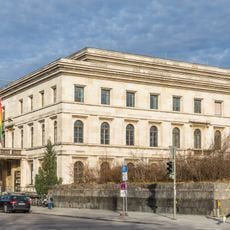
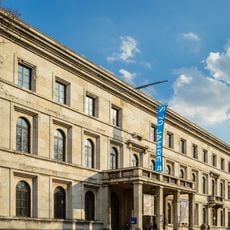
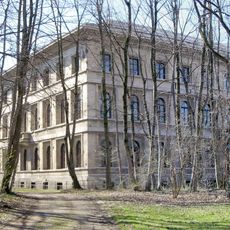
Maximilian I of Bavaria launched a competition in 1807 to embellish the road to Nymphenburg; the winning design by Friedrich Ludwig von Sckell and Karl von Fischer was later modified by Leo von Klenze. Crown Prince Ludwig took charge of the works, begun in 1815, and the Glyptothek (1816–1830), the Antikensammlungen (1838–1845) and the Propyläen (1848–1862) followed. In 1933 the Nazis renamed it Königlicher Platz, paved it with 20,000 granite slabs and built the Führerbau and Ehrentempel; the US Army demolished the temples in 1947.
The square's name means "King's Square", honoring King Ludwig I, who commissioned the ensemble. The Glyptothek displays classical sculptures, while the Propyläen carry tablets with the names of Greek freedom fighters from the 1821–1829 war. The annual Munich Opera Festival uses the square for open-air screenings.
The square connects directly to the U2 underground line and sits within walking distance of Munich's main attractions. Visit during daylight hours to see the buildings clearly and access the museums when they are open.
The square slopes gently upward from the central street toward the buildings on its sides. This slight rise, noted in accounts of Karl von Fischer's design, was enough to suggest the ancient temples that stood on hills and heights, though the square itself lies on flat ground.
The community of curious travelers
AroundUs brings together thousands of curated places, local tips, and hidden gems, enriched daily by 92,852 contributors worldwide.