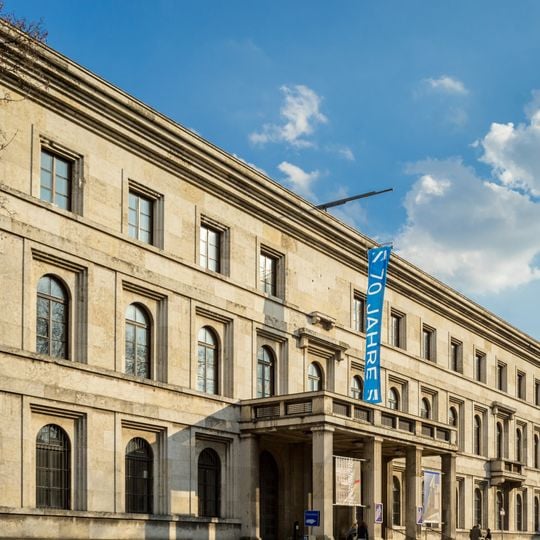
Münchner Haus der Kulturinstitute, Museum building in Maxvorstadt, Germany.
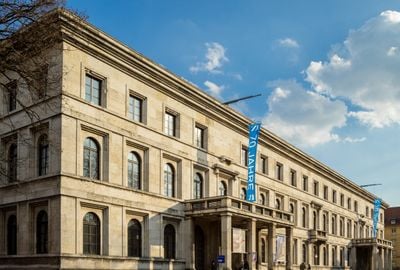
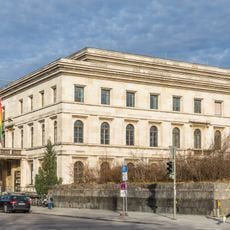
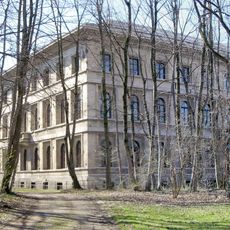
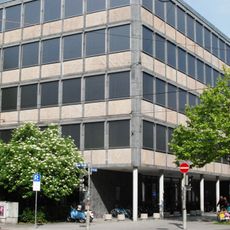
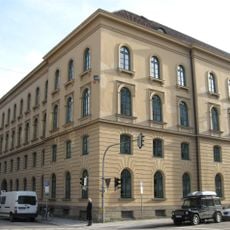
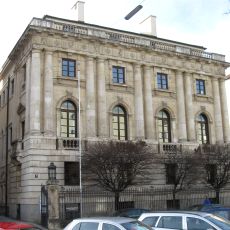
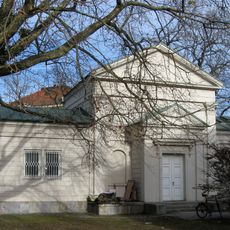
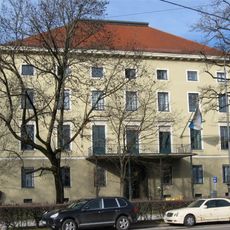
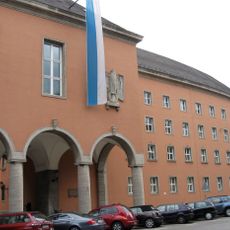
The Münchner Haus der Kulturinstitute is a long stone building on Katharina-von-Bora-Straße in the Kunstareal, built by Paul Ludwig Troost from 1934 to 1935 as the Verwaltungsbau der NSDAP. Its pale beige facade is banded: tall arched windows with dark grilles below, rectangular windows above, and small upright windows under a projecting cornice. A flat-roofed portico with square pillars marks the center.
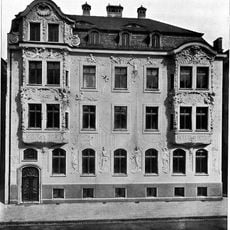
The building stands on the site of Palais Pringsheim, an 1889 Neo-Renaissance mansion owned by mathematician Alfred Pringsheim, Thomas Mann's father-in-law. After the Nazi takeover, Pringsheim was dispossessed and the palace demolished in November 1933. Architect Paul Ludwig Troost then built the neoclassical structure from 1934 to 1935 as the NSDAP's administrative headquarters. From 1945 it served as the US Central Collecting Point for looted art.
The building is named Haus der Kulturinstitute, and its tenants are the Staatliche Antikensammlung and Glyptothek directorate, the Staatliche Graphische Sammlung, the Museum für Abgüsse Klassischer Bildwerke, and two LMU institutes, for Egyptology and Classical Archaeology, plus the Zentralinstitut für Kunstgeschichte. A blue banner reading "100 JAHRE" hangs on the facade.
The building is located in the Kunstareal district and is easily reached by public transportation, particularly via the Königsplatz station. Many other cultural venues are within walking distance, making it easy to combine a visit with other attractions in the area.
After World War II, the building served as a central location for gathering looted and hidden artworks. This role as a collecting point for recovered treasures remains an important part of its historical identity.
The community of curious travelers
AroundUs brings together thousands of curated places, local tips, and hidden gems, enriched daily by 94,455 contributors worldwide.