Alter Botanischer Garten, Botanical garden in central Munich, Germany.
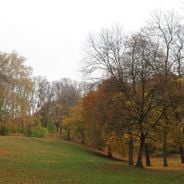
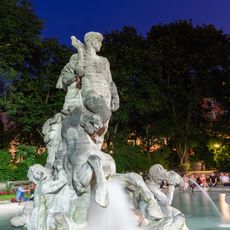
The Alter Botanischer Garten is a public green space in Munich's center with pathways, native and exotic trees, and a central Neptune fountain at its heart. The layout follows a carefully planned geometric design with lawn areas and planted sections arranged to invite visitors to pause and explore.
Friedrich Ludwig von Sckell laid out the garden between 1804 and 1812, and it opened on 23 May 1812 under director Franz von Paula Schrank. In 1854 the Glass Palace was built on its northern edge for the First General German Industrial Exhibition; it burned down in 1931. After the collections moved to Nymphenburg in 1914, the site was redesigned as a park in 1937 by Oswald Bieber and Joseph Wackerle.
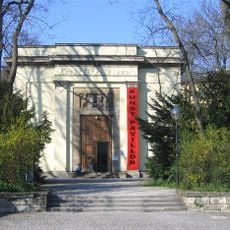
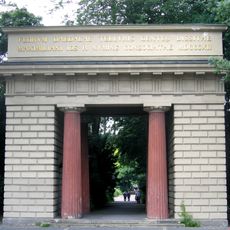
The garden's name survives in the Latin verses by Goethe inscribed on the Classicist gate at Lenbachplatz. The Kunstpavillon, a small exhibition building destroyed in World War II, was rebuilt by Munich artists who helped one another and now shows contemporary visual art.
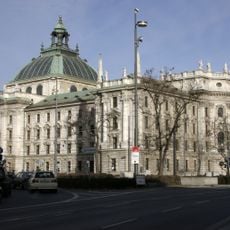
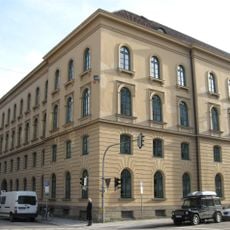
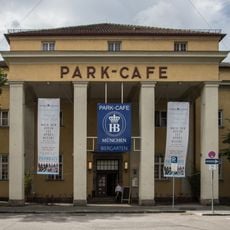
The garden lies between Lenbachplatz and the Justizpalast in Maxvorstadt, about four hectares in size, with the Park Café in the former eclectic coffeehouse building. The Neptune fountain stands in the middle of the grounds, and the Kunstpavillon hosts changing exhibitions of contemporary art. Entrances open from Lenbachplatz and the surrounding streets.
The entrance gate was built by Emanuel Herigoyen and remains one of the few surviving Classicist structures from the garden's founding era. This gate still speaks to the original architectural vision of the scientific institution.
The community of curious travelers
AroundUs brings together thousands of curated places, local tips, and hidden gems, enriched daily by 93,905 contributors worldwide.