Ehreshoven Castle, Medieval castle in Engelskirchen, Germany
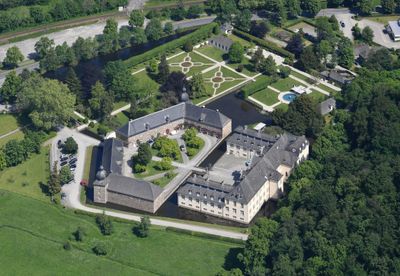
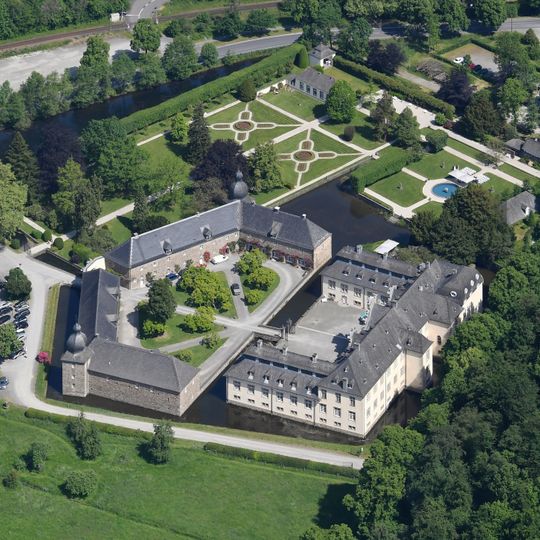
Ehreshoven is a moated castle featuring a three-winged manor house and a four-winged front structure with pale yellow exterior walls from a 1990 renovation. The buildings sit on an island surrounded by water and house various rooms, some with historical leather wall coverings.
First documented in 1355, the castle originally belonged to Siegburg Abbey before passing to the Nesselrode family in 1396. Over the centuries, ownership changed hands until it was converted into a charitable foundation for canonesses in 1924.
Since 1924 the castle has housed a Damenstift, a Protestant foundation providing homes for unmarried noblewomen, run by the Rhenish Knighthood. Eberhard Fechner's 1984 documentary Im Damenstift portrayed the residents and their daily life. The castle has served as a film set, including for the series Verbotene Liebe and the fairy-tale films Die Salzprinzessin (2015) and Das Wasser des Lebens (2017).
The castle is inhabited and not open to the public; the ladies' foundation still operates here, so visits are limited to the exterior. A short avenue leads from the B55 between Engelskirchen and Overath to a flat stone bridge and the main gate. The former stable now holds the depot of the United Noble Archives of the Rhineland, with over 10,000 boxes on about 1,700 shelf metres; enquiries go to the LVR archive centre in Pulheim-Brauweiler.
The interior contains sections of leather wallpaper, a rare feature from the German Baroque period that demonstrates period handcraft techniques. This material was costly and suggests the castle once housed considerable wealth.
The community of curious travelers
AroundUs brings together thousands of curated places, local tips, and hidden gems, enriched daily by 94,655 contributors worldwide.