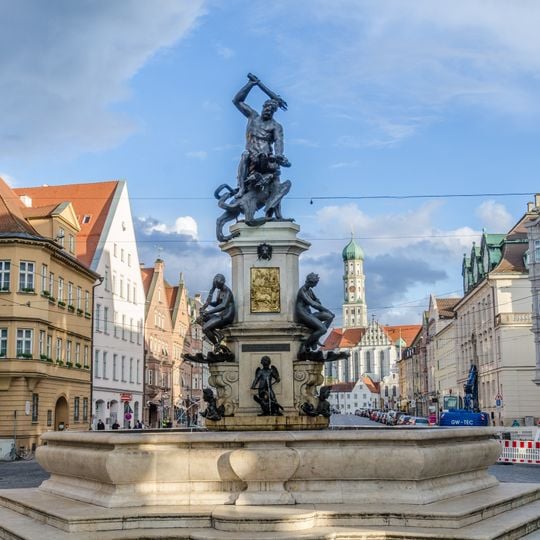
Herkulesbrunnen, Renaissance fountain in Augsburg, Germany
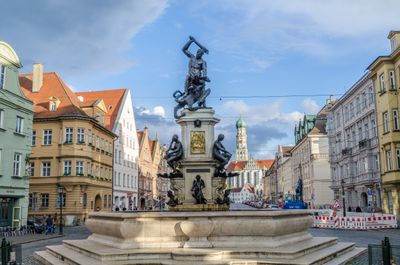
The Hercules Fountain stands on Augsburg's Maximilianstraße as a three-sided structure. Its three-metre bronze group by Adriaen de Vries shows the bearded, naked Hercules with a victor's band in his curly hair, holding a flaming club above the seven-headed, scaled and winged Hydra. Below, three nymphs sit on the ledge of the lower pier block, and three bearded sea gods with shells and fish emerge from the water beside winged putti holding geese.
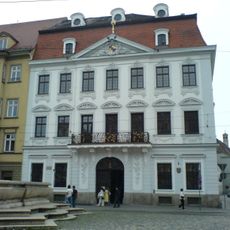
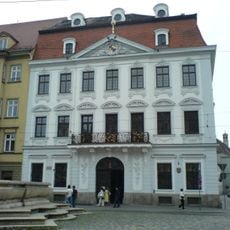
Adriaen de Vries modelled the fountain between 1597 and 1600; Wolfgang Neidhardt cast it in Augsburg and it was set up in 1602 on the Weinmarkt, in front of the Siegelhaus and the Fuggerhäuser. Until 1809 a row of buildings stood south of it, aligning its facade with the Siegelhaus; their demolition removed the fountain's original setting. In 1828 the bronze Hercules and the column received a strengthened support.
The fountain displays mythological scenes in bronze that once connected the city to ancient Rome, serving as a symbol of Augsburg's importance and refinement. Today, these sculptures remain central to how residents and visitors understand the square's identity and its role as a civic landmark.
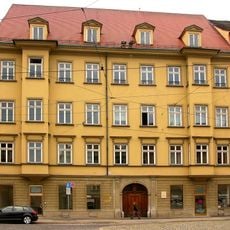
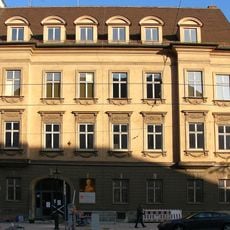
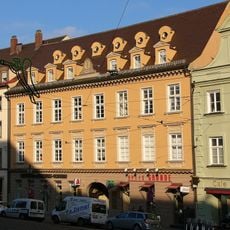
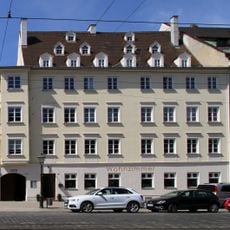
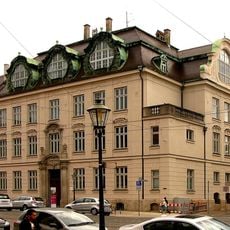
The fountain stands in the middle of Maximilianstraße, in front of the Siegelhaus and the Fuggerhäuser, and can be viewed at any time in the open street. Since 1809 it has no longer been framed by the building row that once aligned with the Siegelhaus facade, so it is now seen in the open. All bronze figures remain on the fountain itself.
The central hero figure holds an unusual flaming mace as a weapon, a choice rarely seen in artworks of that era and adding a dramatic element. The composition also includes various water creatures and fowl integrated into the design, bringing a playful quality to the representation of water itself.
The community of curious travelers
AroundUs brings together thousands of curated places, local tips, and hidden gems, enriched daily by 94,227 contributors worldwide.