Rotes Kliff, Coastal cliff in Wenningstedt-Braderup, Sylt, Germany
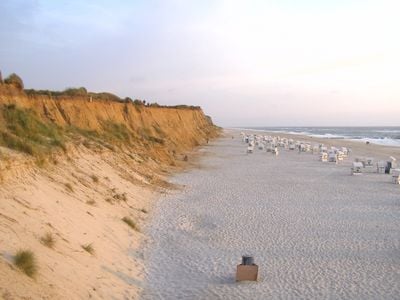
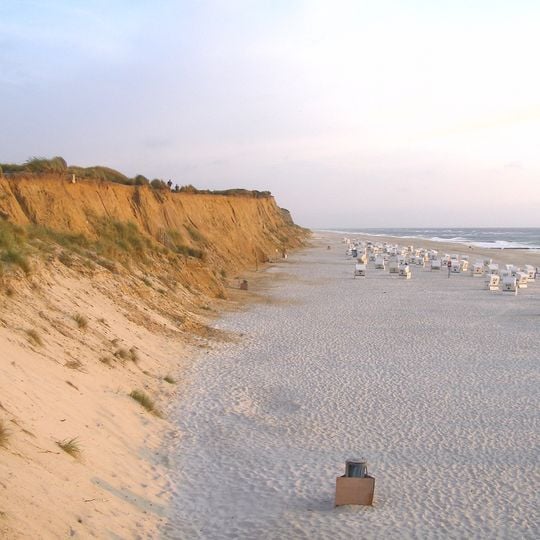
The Rotes Kliff is a coastal cliff formation on Sylt that stretches several kilometers between Wenningstedt and Kampen, rising roughly 30 meters above the shoreline. The red coloration comes from iron oxides present in glacial deposits, creating a distinctive visual appearance along the North Sea coast.
The cliff formed during glacial processes approximately 120,000 years ago in the Saale glaciation period, when glaciers shaped the rock and deposited iron oxides. Over the centuries, seafarers navigated by this distinctive red formation as a natural landmark along the North Sea.
The cliff's name appears as "Roet Kliff" on Dutch sea charts by Lucas Janszoon Waghenaer (1584) and Albert Haeyen (1585), where it served as a landmark for shipping. The name comes from the rust-red glacial till, coloured by oxidised iron. Other North Sea coasts also bore the name Rotes Kliff, including one near Stavoren in West Frisia.
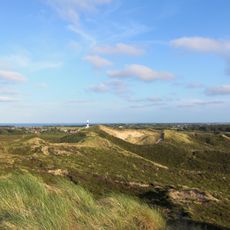
The cliff runs from the Risgap car park in Wenningstedt north to Haus Kliffende on the Kampen West Heath. In Wenningstedt it is largely hidden behind beach-grass dunes built up by sand replenishment since the late 1970s; the open face is best seen further north. The 177-hectare area above the cliff has been a nature reserve since 1979.
The red coloring comes not from surface erosion but from iron oxide deposits locked within the glacial till, preserved since the last ice age. This geological feature turns the cliff into a natural record of ancient climate and landscape changes.
The community of curious travelers
AroundUs brings together thousands of curated places, local tips, and hidden gems, enriched daily by 94,839 contributors worldwide.