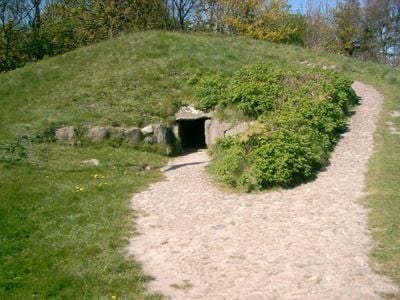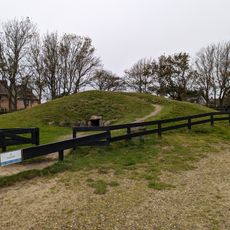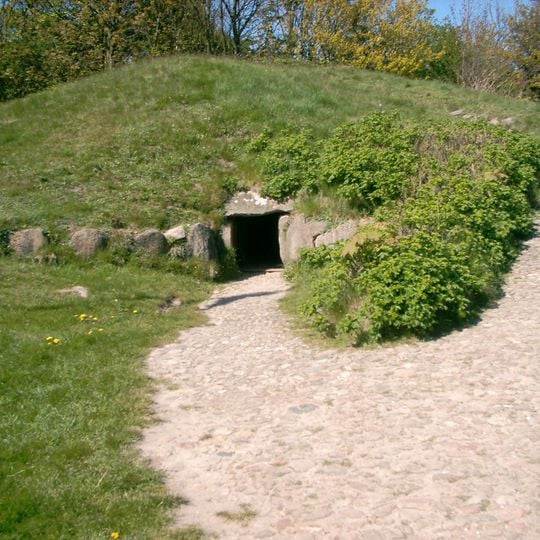
Denghoog, Neolithic passage grave in Wenningstedt-Braderup, Germany.
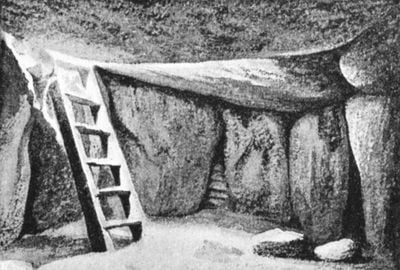
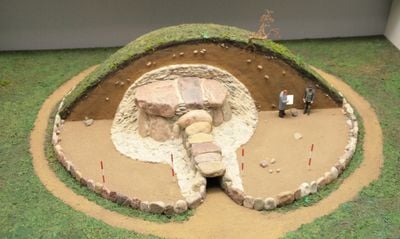
Denghoog is a Neolithic chamber tomb in Wenningstedt-Braderup with an elliptical stone chamber measuring roughly five meters from east to west and three meters from north to south. Six massive capstones cover this underground chamber, with each stone being extraordinarily heavy.
The burial chamber was excavated in 1868 by Ferdinand Wibel, revealing human remains, stone tools, and pottery vessels dating to around 3200 to 2800 BC. These discoveries come from one of the earliest settlement periods in the region.
The name Denghoog comes from the Söl'ring language and means 'meeting hill', showing that this place served as a gathering spot for the community in ancient times. Visitors today can sense how people came here together and what role this location played in their shared life.
Access to the burial chamber is through a narrow passage entrance, which may present difficulties for visitors with limited mobility. It is recommended to wear sturdy shoes and be prepared for uneven ground.
Four distinct phases of burial practices have been identified at this site, showing that the community honored its ancestors here across many generations. This makes this location a rare record of continuity in prehistoric burial rituals.
The community of curious travelers
AroundUs brings together thousands of curated places, local tips, and hidden gems, enriched daily by 92,700 contributors worldwide.