Bröhan Museum, Art museum in Charlottenburg, Germany
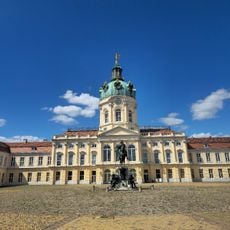
The Bröhan Museum occupies a former barracks building of the Charlottenburg Palace ensemble at Schloßstraße 1a. Its three exhibition floors display furniture, porcelain, glass, ceramics, metalwork, textiles, paintings and sculpture from the late 19th century to the beginning of the Second World War, with objects regularly rotated rather than kept in a permanent display.
Karl H. Bröhan, a dental wholesale merchant, opened a private museum in a villa in Dahlem in 1973. On his 60th birthday he gave the collection to the state of Berlin, and on 14 October 1983 it moved to Schloßstraße 1a, a former barracks of the guard regiment within the Charlottenburg Palace ensemble. It became a state museum in 1994; Bröhan expanded the holdings until his death in 2000.
The museum's name comes from its founder, Karl H. Bröhan, who began collecting 18th-century porcelain from the Royal Porcelain Manufactory in the early 1960s; those pieces now form the basis of the Belvedere's porcelain collection in Charlottenburg Palace Park. The Art Nouveau holdings include glass by Émile Gallé, Daum Frères et Cie and Johann Loetz Witwe, and porcelain from Meissen, Nymphenburg, Sèvres, Copenhagen, Rörstrand and Bing & Grøndahl.
The museum occupies three floors of the former barracks building at Schloßstraße 1a, next to Charlottenburg Palace. Rooms are rearranged for each new exhibition, so the route through the collection changes; check the current layout at the entrance before starting.
The museum's collection is not shown as a permanent display: objects are regularly swapped and placed in new contexts, so repeat visitors see different pieces. Since 2016 the "Blackbox" format has hosted smaller shows on poster design, graphics and photography. Three floors are redesigned for each new exhibition.
The community of curious travelers
AroundUs brings together thousands of curated places, local tips, and hidden gems, enriched daily by 93,136 contributors worldwide.