Max Planck Institute for Evolutionary Anthropology, research institute
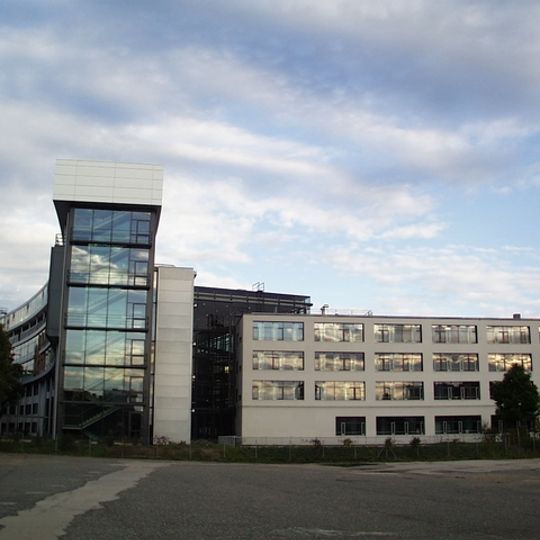
The Max Planck Institute for Evolutionary Anthropology is a research center in Leipzig focused on the history of humans and primates. It operates seven departments that combine genetics, fossils, languages, cultures, behavior, and archaeological findings to build a complete understanding of human development.
Founded in 1997, the Institute brought together researchers from many fields. Key discoveries such as analyzing ancient DNA from Neanderthals and tracing early human migrations into Europe have fundamentally changed our understanding of prehistoric human history.
The Institute studies how languages and cultures have developed over thousands of years and continue to shape societies today. This research reveals how human communities passed down traditions and how these patterns of diversity remain visible across different regions.
The Institute offers tours and exhibitions for visitors to learn about ongoing research. Events such as lectures and discussions take place regularly, and the affiliated Wolfgang Koehler Primate Research Centre at Leipzig Zoo allows visitors to observe primates in action.
The Institute uses innovative methods to extract DNA from sediment layers, revealing information about past populations that left few fossils behind. This technique fills important gaps in human evolutionary history and significantly expands what we know about our ancestors.
The community of curious travelers
AroundUs brings together thousands of curated places, local tips, and hidden gems, enriched daily by 91,985 contributors worldwide.