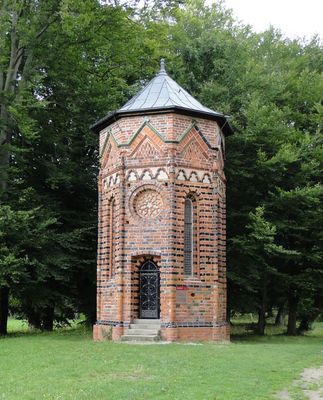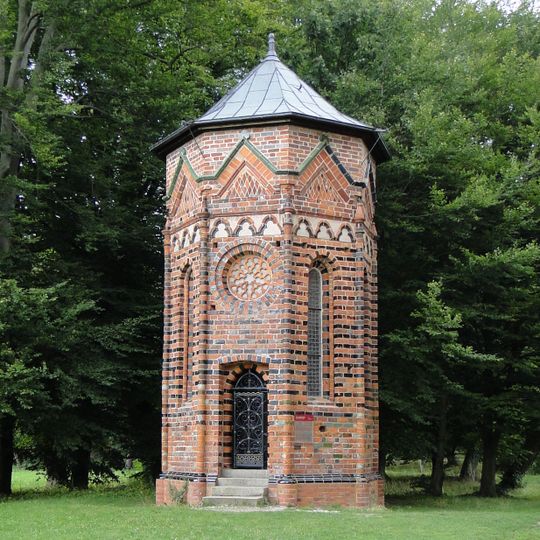
Beinhaus, Medieval ossuary at Bad Doberan monastery, Germany.
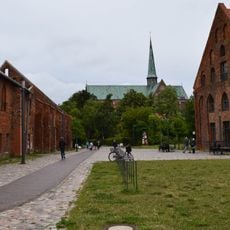
The Beinhaus is an octagonal brick building nestled within the Bad Doberan monastery complex, defined by its slender proportions and compact footprint. Decorative glazed stones are embedded throughout its walls, creating visual detail that breaks up the simple brick surfaces.
Construction took place around 1270 and the building served as bone storage for monks for centuries afterward. Changes to burial practices in 1552 meant the original function eventually ceased as graves needed to be reused for new burials.
The ossuary reflects medieval monastic life and the practical ways communities managed burial space within their religious grounds. Monks stored remains here to make room for new burials, a common practice in medieval monasteries.
The structure stands within the monastery grounds and is accessible from the courtyard area, where visitors can view it up close. The monastery administration can arrange tours that provide access and explain the building's history and purpose.
The octagonal shape was unusual for storage buildings of its time, standing out from standard rectangular structures. This geometric choice suggests the builders considered the design important despite the building's purely practical function.
The community of curious travelers
AroundUs brings together thousands of curated places, local tips, and hidden gems, enriched daily by 91,119 contributors worldwide.