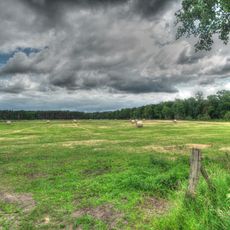
Blankes Flat, Nature reserve in Neustadt am Rübenberge, Germany.
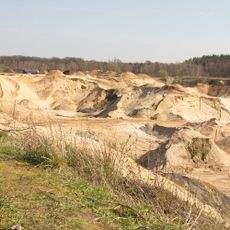
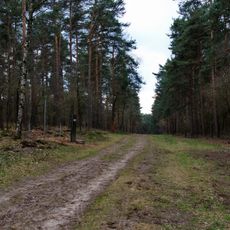
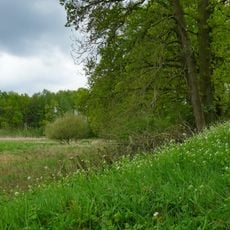
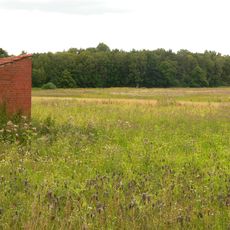
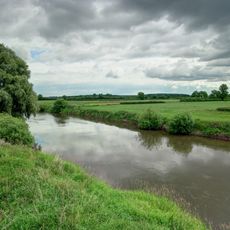
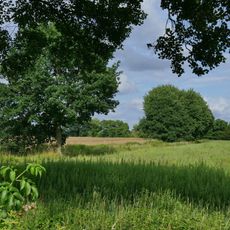
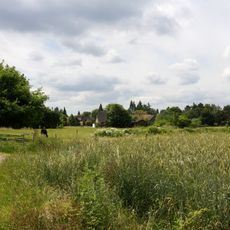
Blankes Flat is a 47.45-hectare nature reserve in the Esperke and Vesbeck districts of Neustadt am Rübenberge. It contains a small heath pond, likely a cut-off old arm of the Leine, surrounded by oak mixed woods, birch and pine swamp forest, and dry sand heath on valley-edge dunes.
Blankes Flat was declared a nature reserve in 1930, on the initiative of biologist Reinhold Tüxen, making it one of Lower Saxony's oldest protected areas. In 1971 it passed into public ownership. When a holiday village with 400 units for 1,500 people was planned 500 metres away, residents founded the Heimatbund group Esperke/Warmeloh in 1971; the plan was withdrawn in 1973.
The name "blank" comes from Low German for shining, referring to the water surface once seen from the dune. Until the late 1960s, walkers used the dike as a bathing dune, and young people learned to swim in the moor lake and skated on its ice in winter. Locals once gathered cranberries here and sold them at the weekly market.
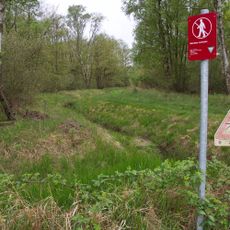
The reserve lies in the Esperke and Vesbeck districts of Neustadt am Rübenberge. Hiking trails cross the area, and a rest area sits near the moor lake. The dike in the northern section, used as a bathing dune until the late 1960s, offers an orientation point over the lower meadows.
The pond probably formed from a cut-off old arm of the Leine. Because the water is too acidic for fish, water spiders, dragonflies and great diving beetles live in and on it, while moor frogs stay near the banks and sand lizards inhabit the heather.
The community of curious travelers
AroundUs brings together thousands of curated places, local tips, and hidden gems, enriched daily by 93,915 contributors worldwide.