Helstorf church, Lutheran church in Helstorf, Germany.
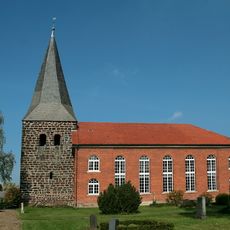
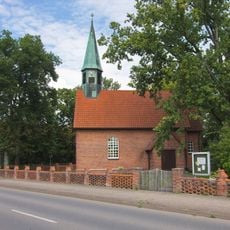
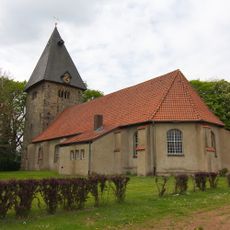
The Helstorf church is a Lutheran hall church built in 1750–1751, with a six-bay nave and a west tower clad in dark vertical wooden slats. The tower's steep grey roof carries a blue-and-yellow clock face. Cream plastered walls, a red-orange clay tile roof and six tall arched windows with white frames and dark grilles face the street.
A church existed here by 1438, when it was recorded as "Helstorpe kerkhere"; its Romanesque stone tower and baptismal font survive. The nave was demolished and replaced in 1750–1751 by the present baroque hall church. The first Lutheran pastor is documented in 1542, after the Reformation was introduced in Calenberg-Göttingen.
The church serves as a gathering place for the local Lutheran community and shapes the heart of the village. People gather here regularly for services and celebrations, making it a central point in the life of the settlement.
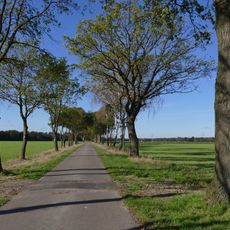
The church is situated along the street in Helstorf and can be easily reached from regional roads L 383 and L 191 in the area. Parking and accessible paths nearby make visiting convenient for most people.
The 1751 pulpit altar from Johann Friedrich Ziesenis's workshop shows the Last Supper, and on the table lies a roast hare — a detail also found in other Last Supper scenes of the region, such as at the Jakobuskirche in Hagen near Neustadt am Rübenberge.
The community of curious travelers
AroundUs brings together thousands of curated places, local tips, and hidden gems, enriched daily by 94,652 contributors worldwide.