Branderburg Gord, Medieval fort in Brandenburg an der Havel, Germany
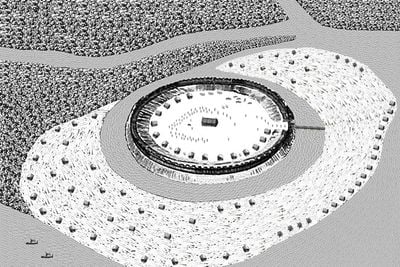
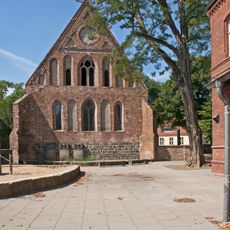
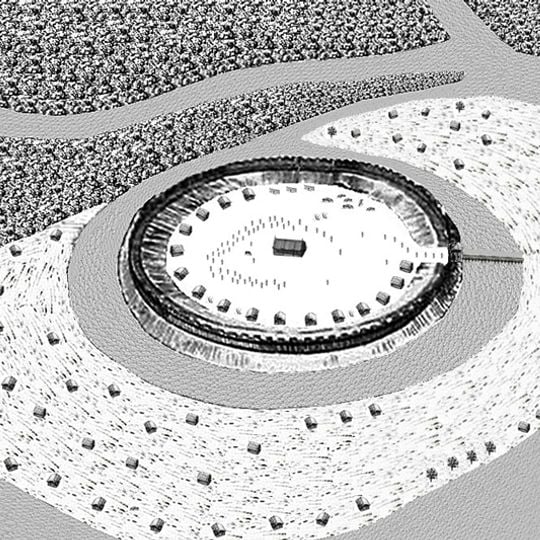
The Brandenburg was a Slavic lowland gord on a Havel island, occupying about 4 hectares within a palisaded ring wall roughly 240 by 340 metres, with a wooden main house at its centre. Its site now holds the Church of St. Petri and the Cathedral of St. Peter and Paul. The cathedral was built over the filled-in ramparts, and the resulting discontinuity in the soil layers contributes decisively to its structural instability.
A Slavic settlement existed here by around 600, and a fortified gord was built around 700. In the winter of 928/929 King Henry I took the stronghold by starving it and attacking across the frozen moat. On 11 June 1157 Albert the Bear retook it after fierce fighting, beginning lasting German rule in the Mark Brandenburg.
The name Brenna, later Brennabor, is Slavic in origin; Polish historians render it as Branibór. From 948 the northeastern ward held the seat of the new Bishopric of Brandenburg, one of the first two bishoprics east of the Elbe, until the Slavic uprising of 983 drove the bishops out. The Premonstratensian canons of St. Gotthardt in the old town supplied the cathedral chapter from 1161.
Access is through marked pathways that cross the grounds and connect different sections of the fortifications. It is wise to walk carefully when weather is uncertain, as the elevated terrain can become slippery after rain.
The 948 bishopric was installed in the northeastern outer bailey, where archaeologists found the Slavic settlement abandoned and a large area levelled; two inhumation graves nearby may mark the site of the first cathedral. The later cathedral was built over the filled-in ramparts, and this discontinuity of soil layers is a main cause of its structural instability.
The community of curious travelers
AroundUs brings together thousands of curated places, local tips, and hidden gems, enriched daily by 94,807 contributors worldwide.