Brückenkopf Jülich, Military fortification and park in Jülich, Germany
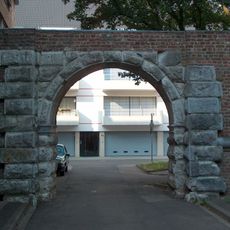
Brückenkopf Jülich is a crown-work fortification begun in 1799 under Napoleon, about 800 metres wide, 300 metres deep and ten metres high, built of earth held by masonry walls. A plank bridge with metal railings crosses a water-filled ditch toward a brick escarpment pierced by loopholes, with a grass-covered rampart above. Two half-bastions and one full bastion face west; the bastions are hollow, unlike the filled 16th-century bastions of the citadel.
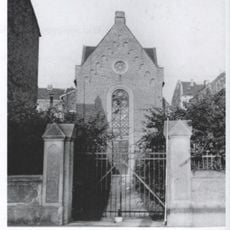
The French, who entered Jülich in 1794, began building the bridgehead in 1799 to protect the Rur crossing and the road from France and Belgium to the Rhine; a Lutheran church on the site was demolished for it. In 1804 Napoleon visited the unfinished works and judged them oversized and vulnerable because of the nearby heights toward Aldenhoven. It is the only surviving example in Germany of French Empire fortification technique.
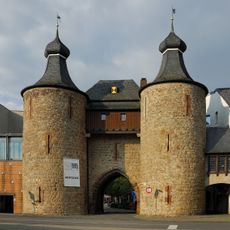
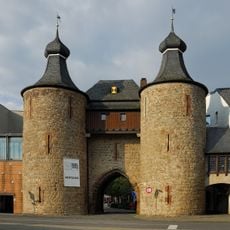
The site functions today as an open space where visitors can observe restored fortification elements while walking through the grounds. You can see how military construction techniques shaped the appearance of this historic defense system.
The grounds feature well-maintained pathways connecting all sections of the fortification and are easy to walk through. You can explore the different areas at your own pace without needing any special equipment or preparation.
The Brückenkopf is the only surviving example in Germany of French Empire fortification engineering from the early 19th century. Its three western bastions are hollow, unlike the earth-filled bastions of Jülich's 16th-century citadel and town walls. The southern Bauhofbastion was built stronger and given a high cavalier because of the nearby heights toward Aldenhoven.
The community of curious travelers
AroundUs brings together thousands of curated places, local tips, and hidden gems, enriched daily by 94,485 contributors worldwide.