Aachener Tor, Building in Jülich, North Rhine-Westphalia, Germany
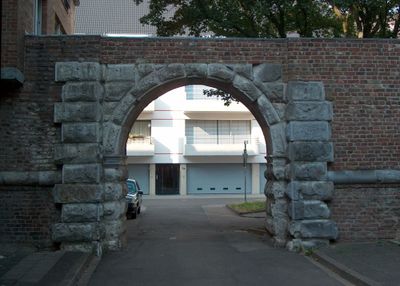
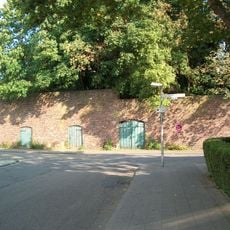
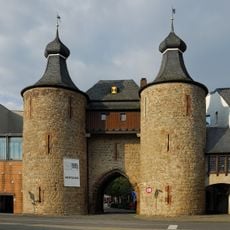
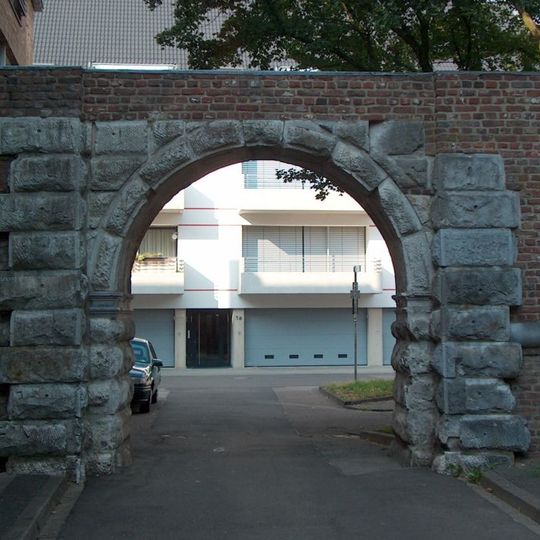
The Aachener Tor is a stone archway in Jülich flanked by a long wall that once protected the city. The arch displays Renaissance features with clean, simple lines and dates from 1548, while the wall behind it extends roughly 115 meters.
The gate was completed in 1548, shortly after a major fire in 1547, and was likely designed by Italian architect Alessandro Pasqualini. During the 19th century, most of the original structure was demolished, with only the outer arch surviving as a reminder of the gate's former importance.
The gate takes its name from the nearby city of Aachen and connects Jülich's history with the broader regional past. For centuries, passing through the archway was part of daily life for merchants, travelers, and residents moving in and out of the city.
The archway is easily reached on foot or by bicycle and sits near the city's main routes, allowing convenient access. The gate is now used by pedestrians and cyclists and provides a quiet spot to explore the history of the city walls.
The gate was once part of a defense system with a moat that was originally about 4.5 meters deep and 30 meters wide. The moat is now partly filled, but sections of the old fortifications remain underground, showing how the city once protected itself.
The community of curious travelers
AroundUs brings together thousands of curated places, local tips, and hidden gems, enriched daily by 90,826 contributors worldwide.