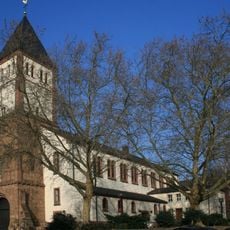
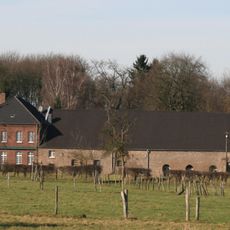
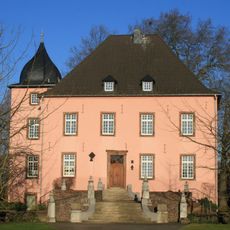
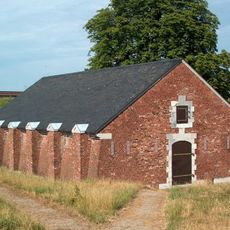
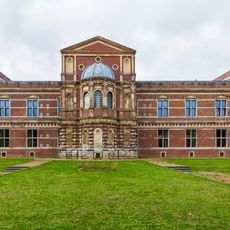
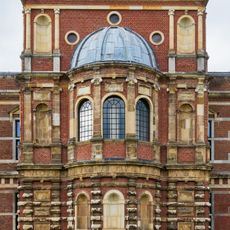
Festung Jülich, Military fortress in Jülich, Germany.
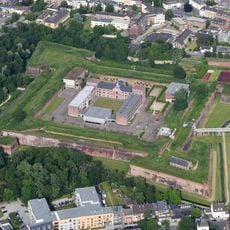
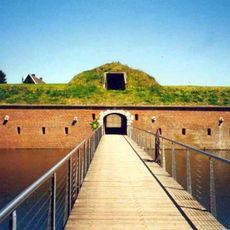
Festung Jülich is a military fortress in Jülich with a distinctive star shape formed by four bastions, thick defensive walls, and a deep surrounding moat. Its interior courtyard displays Renaissance architectural details, while an extensive network of passages and underground tunnels runs beneath the structure.
Duke Wilhelm V of Jülich-Kleve-Berg commissioned Alessandro Pasqualini of Bologna to rebuild Jülich as a Renaissance ideal city after the duke's defeat in the 1543 Guelders feud. A fire on the night of 25–26 May 1547 cleared most of the medieval town, and from 1547 Pasqualini planned a citadel with four bastions, roughly 500 m from bastion tip to bastion tip, around a ducal palace. The fortifications existed until 1860.
The name Jülich comes from the Roman vicus Iuliacum, and the fortress's street grid was laid out so that the rubble of a collapsed house would block only half the roadway. The ducal residence palace stood inside the citadel, a palazzo in fortezza, while the town's straight streets were aligned on it so the citadel could dominate the city.
Visitors can explore the grounds during daylight hours and should wear comfortable shoes, as there are many stairs and passages to navigate. Guided tours in various languages are available to help interpret the layout and spaces within the fortress.
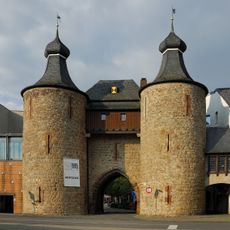
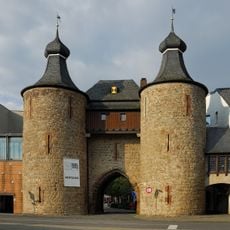
The fortress was built after a fire on the night of 25–26 May 1547 destroyed almost all of Jülich; only the area around the Hexenturm and today's Kleine Rurstraße was spared. Some suspected arson. The cleared site let Alessandro Pasqualini plan a new ideal city with the citadel on its north side.
The community of curious travelers
AroundUs brings together thousands of curated places, local tips, and hidden gems, enriched daily by 94,051 contributors worldwide.