Burg Wildeck, Medieval castle ruins in Wildeck, Germany
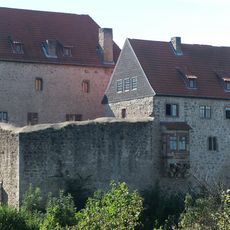
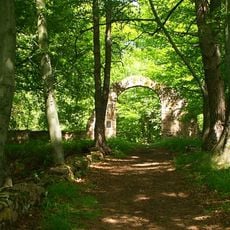
Burg Wildeck is the ruin of a 13th-century spur castle in the Richelsdorf Hills, in the Raßdorf district of the Hessian municipality of Wildeck. It stood on a wooded spur of the Schloßberg at about 350 m above sea level, above the Suhl. Of the castle only foundations of the rectangular perimeter walls and a stone-covered well remain; the visible masonry, including a cellar on the north side and the gateway arch on the approach path, comes mainly from the Blumenstein hunting lodge built on the ruins from 1727.
The fortress was built in the 13th century by Thuringian landgraves and first appears in records in 1289. It came under the control of Fulda Abbey in 1301 and suffered destruction in 1525.
The name Wildeck passed to the Amt Wildeck, the administrative district to which Obersuhl belonged from 1323 and Hönebach from 1363. The ruins are kept up by volunteers: local clubs and citizens of the surrounding communities raise donations to maintain the surviving walls and the well.
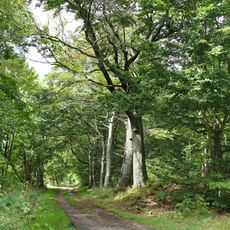
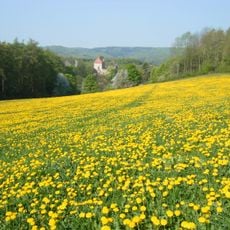
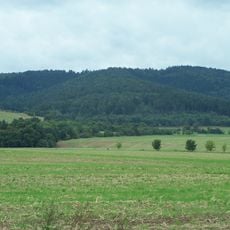
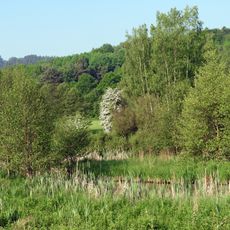
The ruin lies on a wooded spur of the Schloßberg at about 350 m above sea level, above the Suhl valley in the Raßdorf district. The approach is via forest paths and the ground around the foundations is uneven; sturdy footwear is advisable. The surviving cellar on the north side and the gateway arch on the access path are the main features to locate.
The visible masonry today is mostly not medieval: the builders of Blumenstein hunting lodge, begun in 1727 under Landgrave Ernst II Leopold of Hessen-Rotenburg, used the castle ruin as a quarry. What remains are foundations of the rectangular perimeter walls, a cellar on the north side, the gateway arch on the approach path, and a stone-covered well said to be 40 metres deep.
The community of curious travelers
AroundUs brings together thousands of curated places, local tips, and hidden gems, enriched daily by 94,797 contributors worldwide.