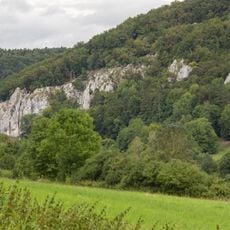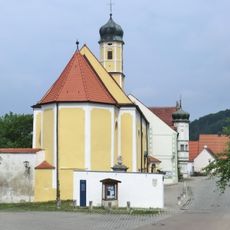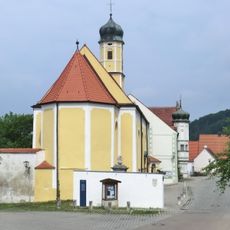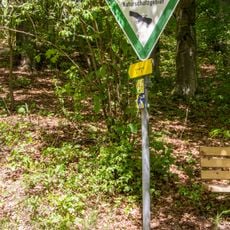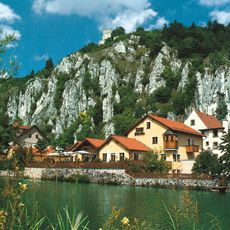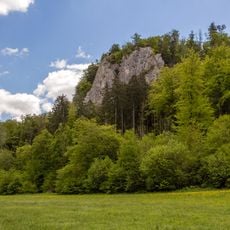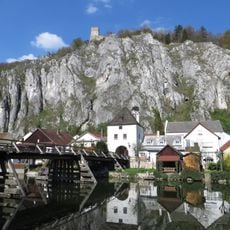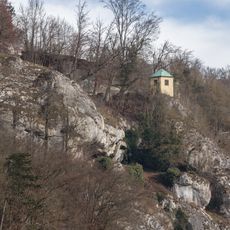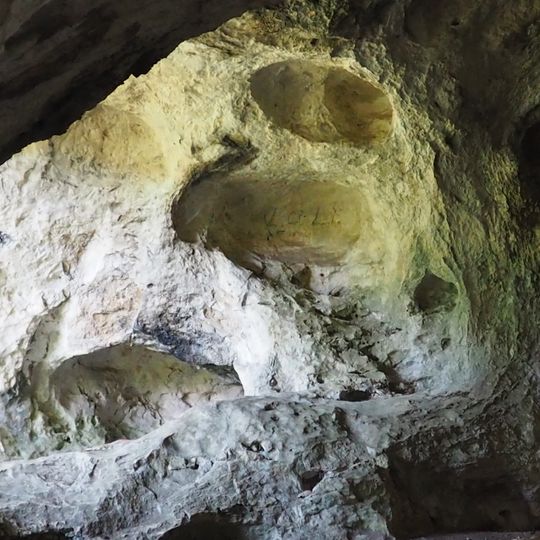
Klausenhöhle, Natural karst cave and geotope in Essing, Germany.
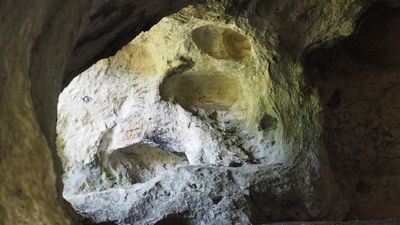
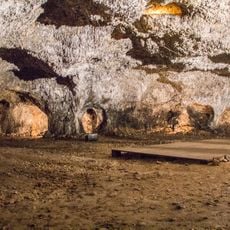
Klausenhöhle extends approximately 70 meters through Jurassic limestone formations, featuring multiple rock niches arranged across four different elevation levels between 25 and 55 meters above the valley floor.
Archaeological excavations conducted by Joseph Fraunholz between 1900 and 1908 revealed stratigraphic layers ranging from the Mousterian period through historical times, documenting continuous human occupation.
The cave served as a shelter and gathering site for prehistoric communities, with discoveries including Paleolithic tools, animal bones, and decorated limestone plates indicating ceremonial use during the Upper Magdalenian period.
The cave remains publicly accessible to visitors interested in geology and archaeology, though proper equipment is recommended for safely exploring the connecting passages between different chamber levels.
A male Cro-Magnon skeleton discovered in 1913, buried with red ochre decorations and dated to approximately 20,000 years ago, represents one of Germany's earliest evidence of modern human settlement.
The community of curious travelers
AroundUs brings together thousands of curated places, local tips, and hidden gems, enriched daily by 60,000 contributors worldwide.