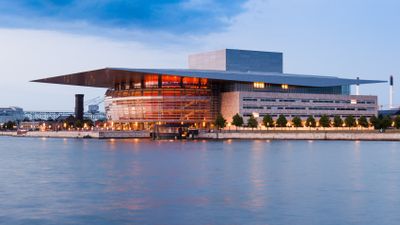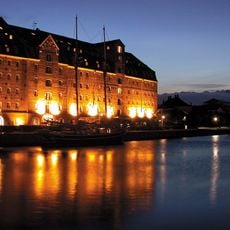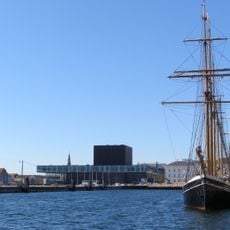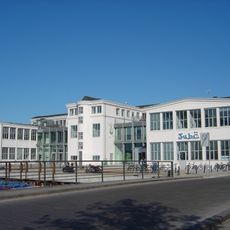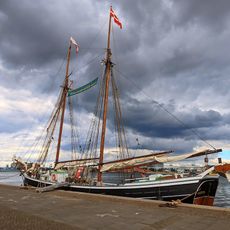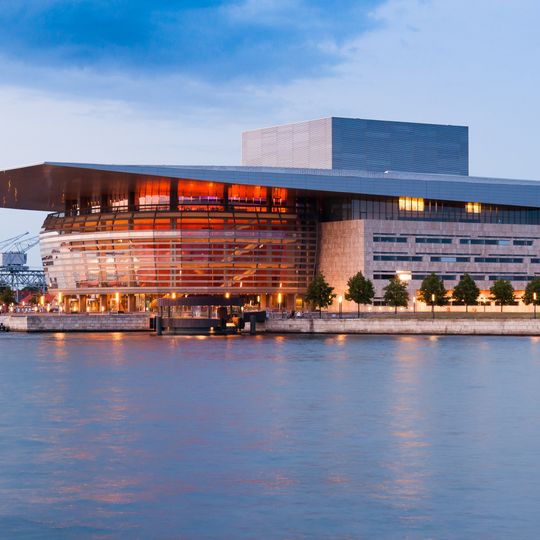
Copenhagen Opera House

Log in to your account

AroundUs is a community-driven map of interesting places, built by curious explorers like you. It grows with every review, story, and photo you share.
Connect to save your favorite spots, contribute locations, and create personalized routes.
By continuing, you accept our Terms and Conditions and our Privacy Policy
Add to collection
Map
Suggest a change
Share

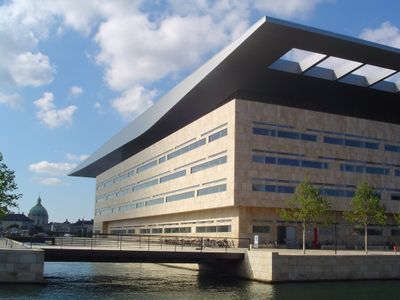
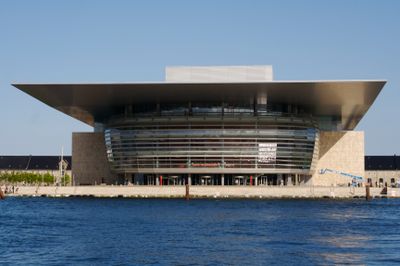
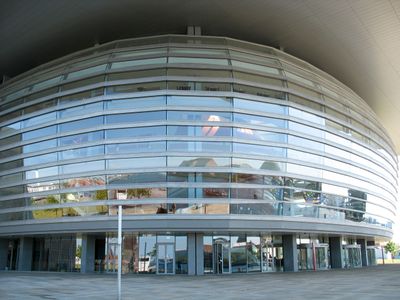
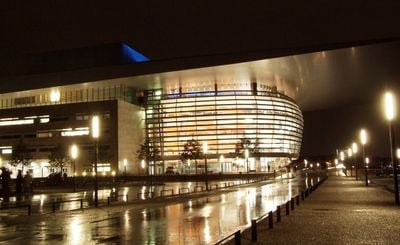
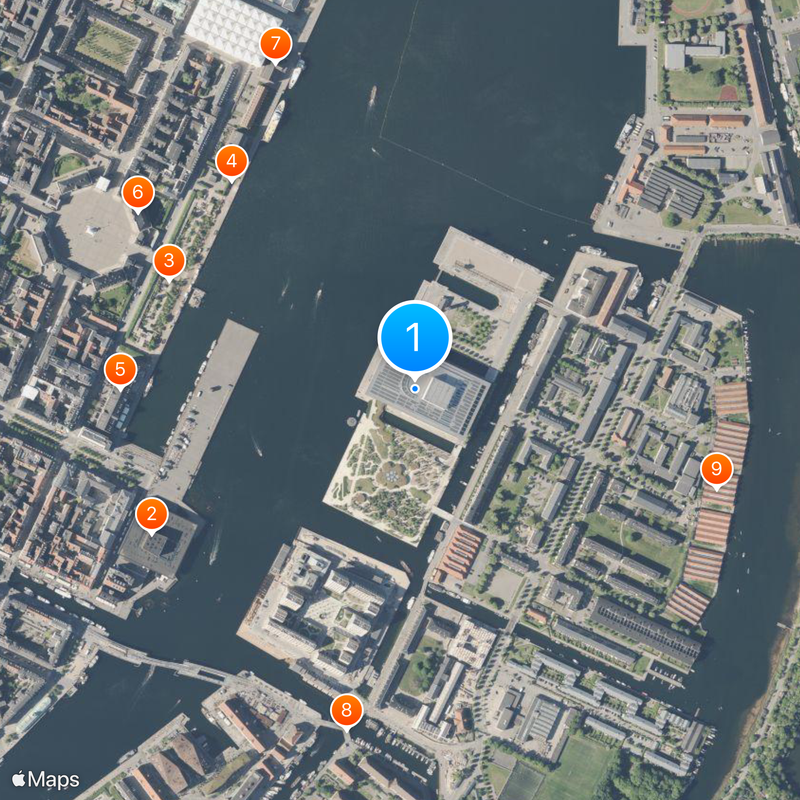
Copenhagen Opera House, Opera house in Copenhagen, Denmark

The Copenhagen Opera House features fourteen floors, including five underground levels, with a main stage accommodating 1400 seats and advanced acoustic systems.

The building was donated to the Danish state by the A.P. Møller Foundation and officially opened its doors on January 15, 2005.

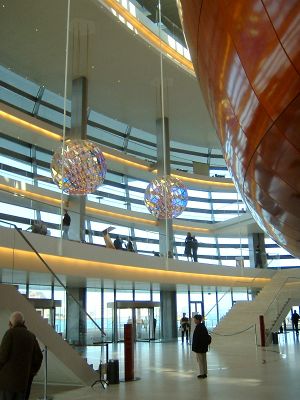
Danish artists enriched the interior with creations, including Per Kirkeby's bronze reliefs and Olafur Eliasson's light sculptures in the main foyer.

The opera house maintains complete wheelchair accessibility and provides ticket purchases through phone reservations, online platforms, or at the venue before performances.

The main auditorium ceiling contains 105,000 sheets of 24-carat gold leaf, using 1.5 kilograms of gold in its construction.

Location: Copenhagen Municipality

Inception: 2005

Architects: Henning Larsen

Official opening: January 15, 2005

Architectural style: neo-futurism

Capacity: 1703

Accessibility: Wheelchair accessible

Address: Ekvipagemestervej 10

Website: https://kglteater.dk

GPS coordinates: 55.68194,12.60056

Latest update: May 27, 2025 07:13

Postmodern architecture worldwide: 50 buildings you should see

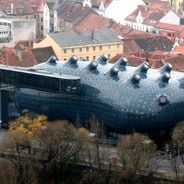
Postmodern architecture emerged in the 1970s as a response to the rigid principles of modernism, reintroducing color, ornament, and historical references into contemporary building design. The movement evolved over decades, producing structures that challenge conventional forms and experiment with different materials and surfaces. These buildings demonstrate varied approaches to design, from playful facades to complex geometric constructions, showing how architects employ new technologies while engaging with historical stylistic elements. The collection includes cultural institutions such as the Guggenheim Museum Bilbao and Casa da Música in Porto, public buildings like Seattle Central Library and Almere City Hall, and religious structures such as the Jubilee Church in Rome. Other examples include the SIS Building in London, Dancing House in Prague, and Niterói Contemporary Art Museum in Rio de Janeiro. The Louvre Pyramid in Paris and the Wexner Center for the Arts in Columbus show different interpretations of postmodern principles. The Piazza d'Italia in New Orleans with its colored colonnades and the Portland Building with its decorated facade represent early postmodern works in the United States.

Photo spots in Copenhagen

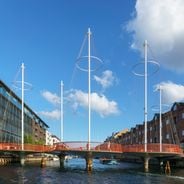
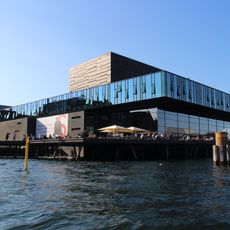
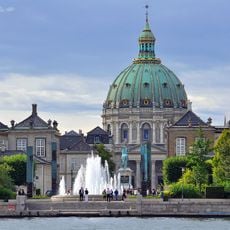
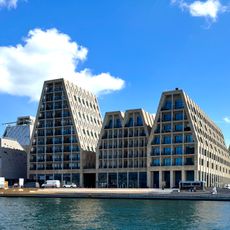
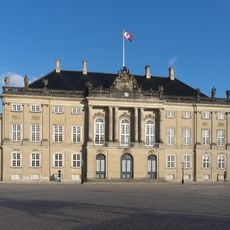
Copenhagen brings together centuries of history with recent construction in a walkable city by the water. Nyhavn lines the harbor with narrow houses painted in strong colors, where wooden ships dock beside outdoor cafes. The Little Mermaid sits on a rock at the edge of the sound, a bronze figure that has drawn visitors since the early 20th century. Christiansborg Palace rises near the old city center, while Amalienborg forms a royal residence around an octagonal plaza. The Opera House stands across the harbor with a flat, cantilevered roof, and The Black Diamond adds a modern glass facade to the Royal Library. Further out, The Blue Planet aquarium curves along the coast in Ørestad, and the VM Houses show angular residential design in the same district. Parks and gardens spread across the city, offering green space and different moods. The Botanical Garden collects plants from around the world under glass domes and in open beds. Superkilen Park stretches through the Nørrebro neighborhood with colored surfaces and objects gathered from many countries. King's Garden surrounds Rosenborg Castle with tree-lined paths and lawns where people sit in warm weather. Assistens Cemetery lies quiet among the streets, used both as a burial ground and a place to walk. Tivoli Gardens mixes rides, stages, and flower beds in the center of the city. Strøget runs as a long pedestrian street through the old town. Freetown Christiania remains a self-governed neighborhood with painted buildings and its own rules. Dragør preserves old fishing cottages and cobblestones just outside the capital.

Reviews

Visited this place? Tap the stars to rate it and share your experience / photos with the community! Try now! You can cancel it anytime.

« Copenhagen Opera House - Opera house in Copenhagen, Denmark » is provided by Around Us (aroundus.com). Images and texts are derived from Wikimedia project under a Creative Commons license. You are allowed to copy, distribute, and modify copies of this page, under the conditions set by the license, as long as this note is clearly visible.

Discover hidden gems everywhere you go!

From secret cafés to breathtaking viewpoints, skip the crowded tourist spots and find places that match your style. Our app makes it easy with voice search, smart filtering, route optimization, and insider tips from travelers worldwide. Download now for the complete mobile experience.
Around Us App Screenshot

A unique approach to discovering new places

Le Figaro

All the places worth exploring

France Info

A tailor-made excursion in just a few clicks

20 Minutes