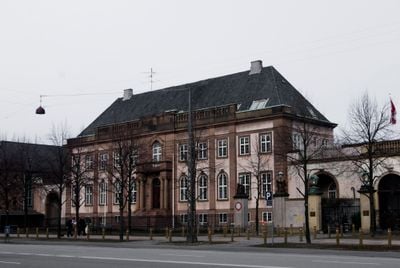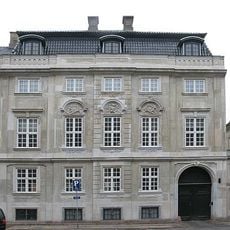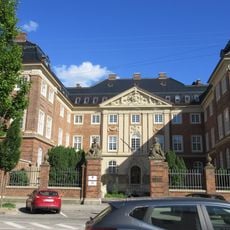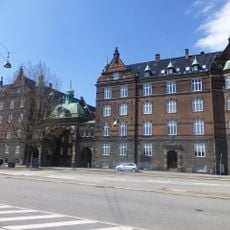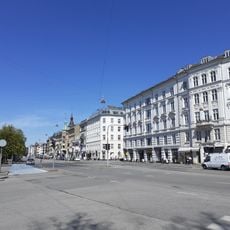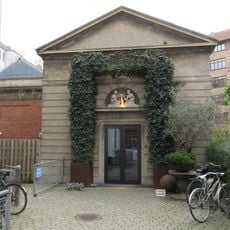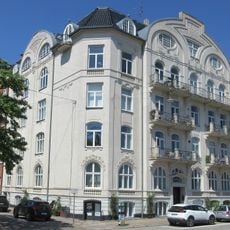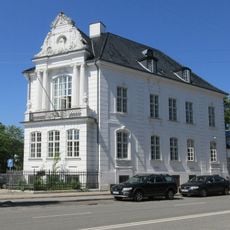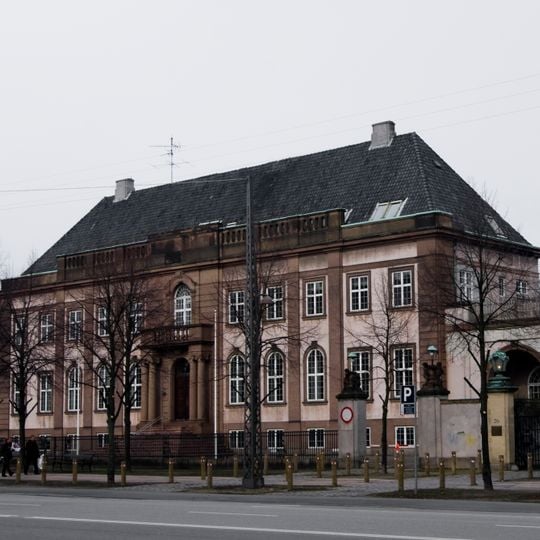
Lille Amalienborg, Private residence in Østerbro, Copenhagen, Denmark.
Dag Hammarskjölds Alle 28 is a four-story residence in Østerbro, designed by architect Carl Brummer and built to reflect early 20th-century upper-class living standards. The property includes a large plot with separate garages and a basement level, designed for both everyday use and protection.
Built in 1917 by entrepreneur Harald Simonsen, the residence embodies the wealth and architectural ideals of the early 20th century. During World War II, German occupation forces used it as a headquarters, and afterward the Danish Red Cross operated from the building.
The mansion earned the nickname Lille Amalienborg from its grand early 20th-century architectural style, a reference that reflects how locals perceived its design. This comparison shows how the building's appearance shaped its place in neighborhood memory and cultural identity.
The property is a private residence not open to the public, though its exterior is visible from the street as it sits on a prominent corner lot in the neighborhood. The building is now under Turkish authority management, so access to the interior is restricted.
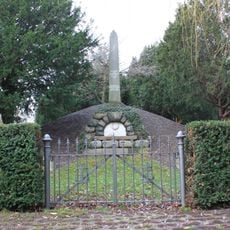
The property was built on the grounds of a former animal cemetery, a hidden historical detail that gives the location an unexpected layer of story. This unusual history is often overlooked when visitors admire the building's grand exterior.
The community of curious travelers
AroundUs brings together thousands of curated places, local tips, and hidden gems, enriched daily by 91,586 contributors worldwide.