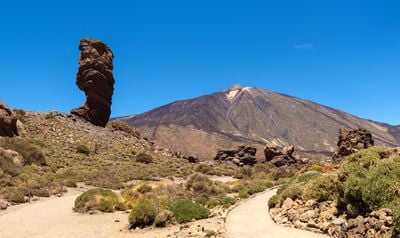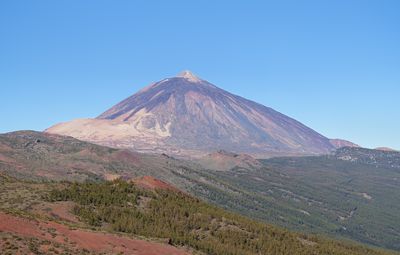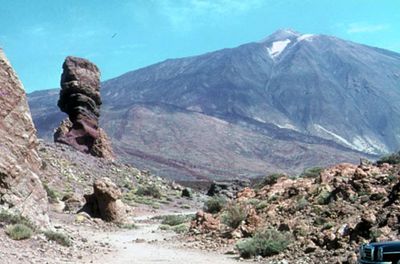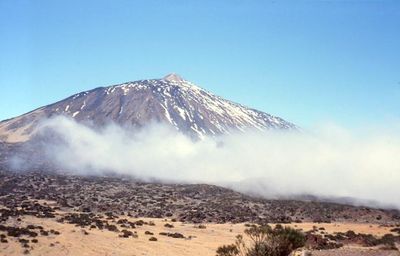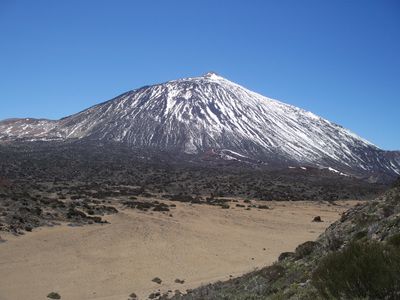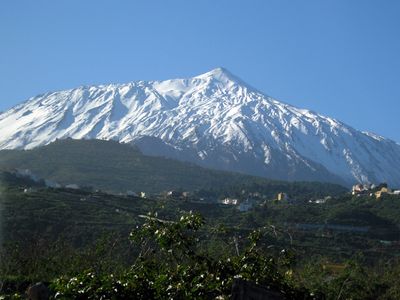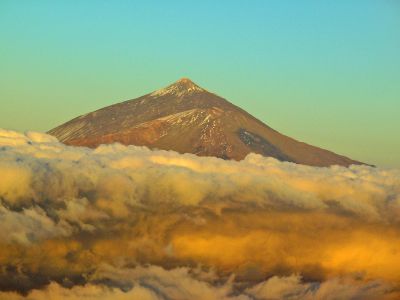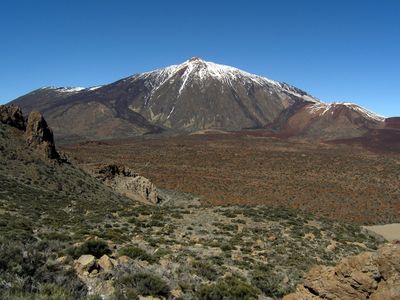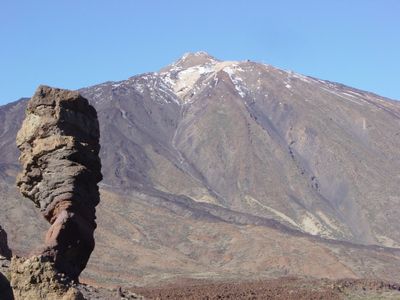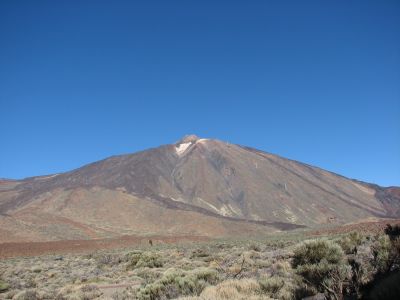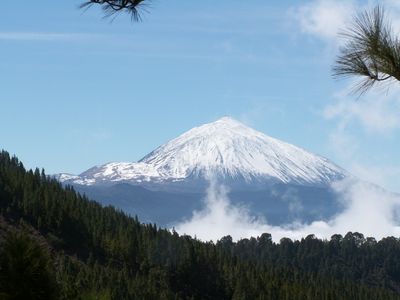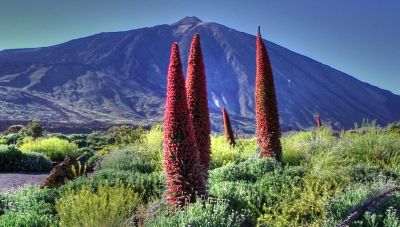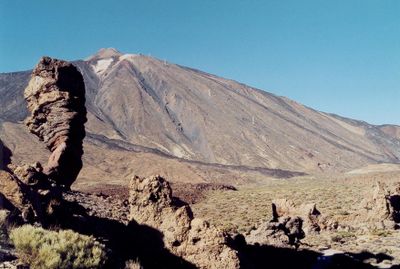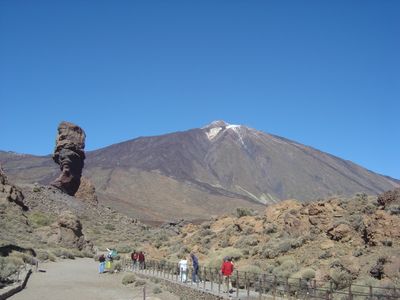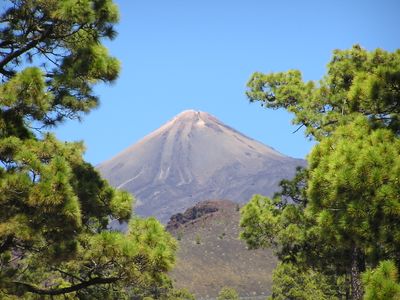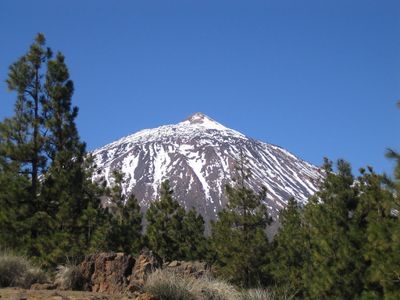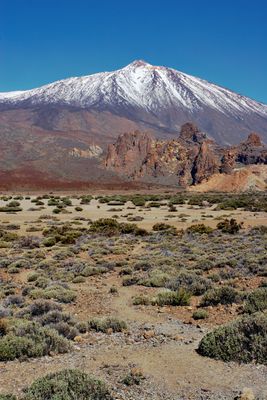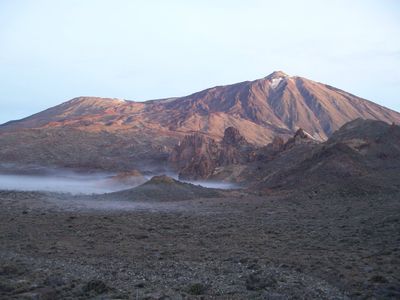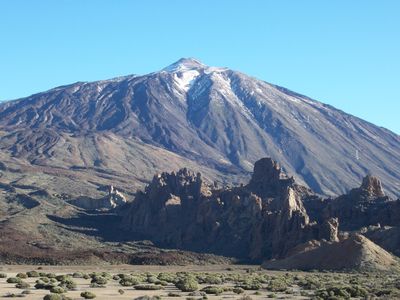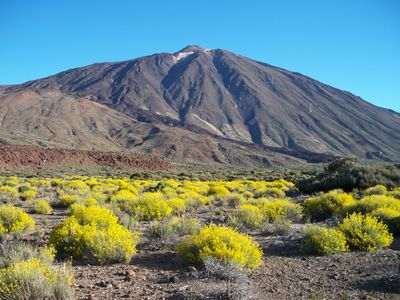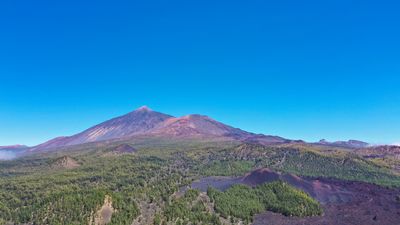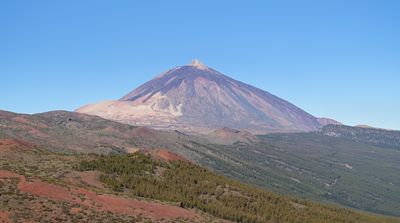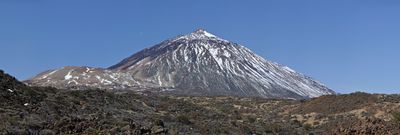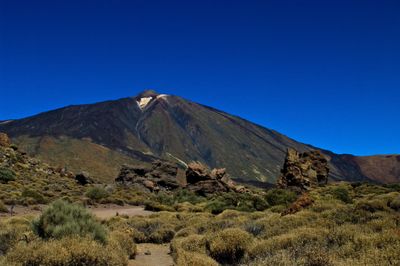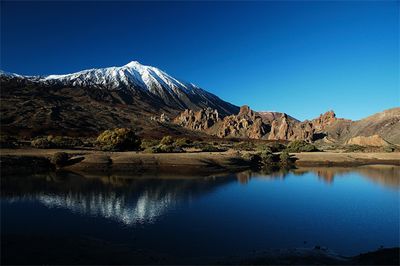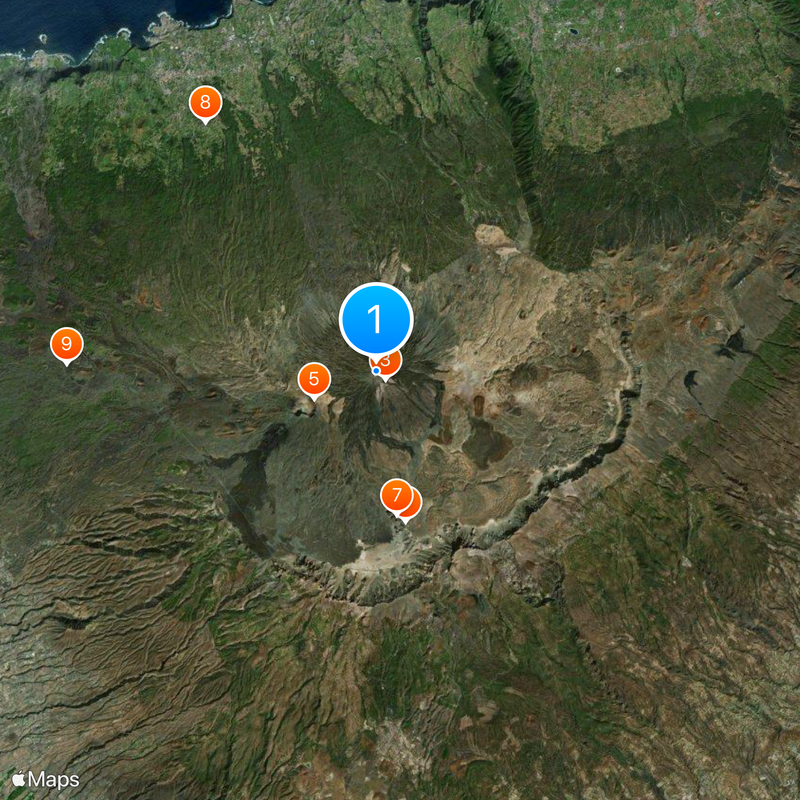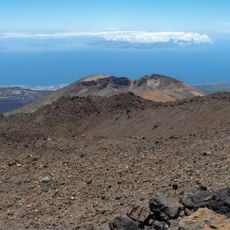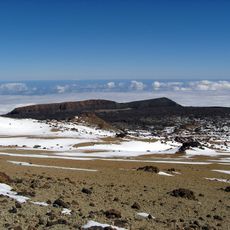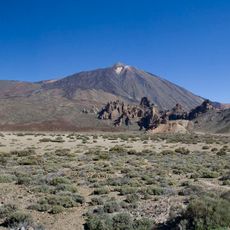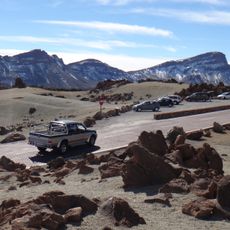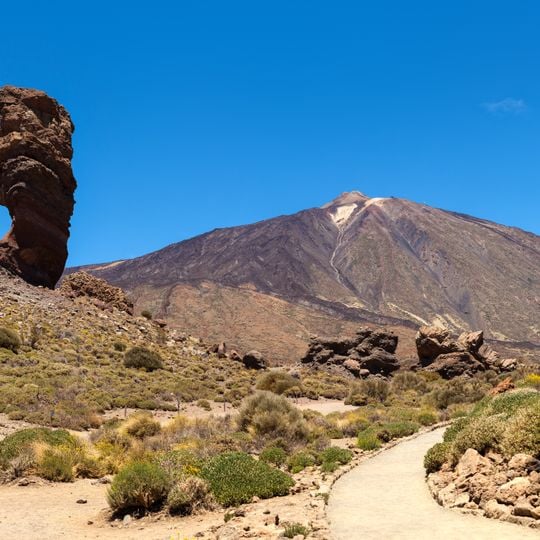
Teide, Volcano in Santa Cruz de Tenerife Province, Spain.
Teide rises to 3,715 meters (12,188 feet) and forms a massive cone built from layered basalt, phonolite and trachybasalt. Its crater area extends over several kilometers and includes several cooled lava flows plus fumaroles still releasing sulfurous steam.
The last eruption occurred in 1909 at the El Chinyero vent and released lava for several weeks. Earlier eruptions in the 16th and 18th centuries were documented by Spanish chroniclers and shaped settlement patterns on the island.
The indigenous Guanches gave the mountain its name and believed Guayota, a deity in their mythology, lived inside it. Today's hikers notice numerous shrines and sites along the trails where ritual activities once took place.
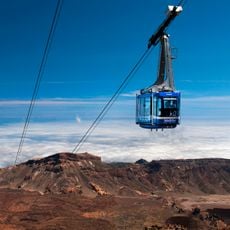
A cable car runs from the base station at 2,356 meters (7,730 feet) to the upper station near the summit, saving several hours of hiking. Those who want to reach the highest point need a permit that should be requested online in advance.
At sunrise and sunset the mountain casts a cone-shaped shadow that extends over 40 kilometers (25 miles) onto the ocean. This shadow is considered the largest volcanic shadow on Earth and attracts photographers from around the world.
The community of curious travelers
AroundUs brings together thousands of curated places, local tips, and hidden gems, enriched daily by 92,051 contributors worldwide.