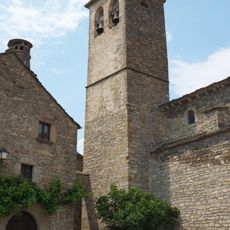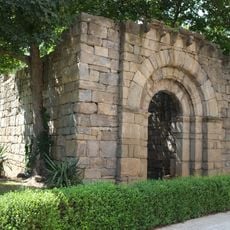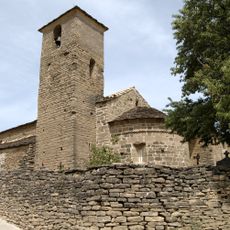
Royal Monastery of San Juan de la Peña, Romanesque monastery in Botaya, Jaca, Spain
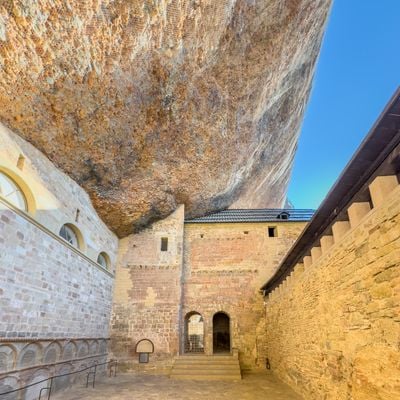
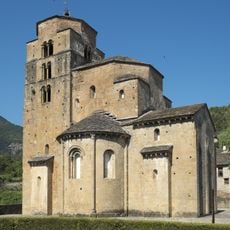
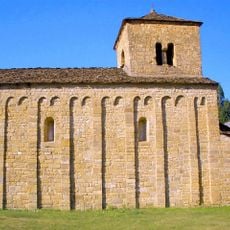
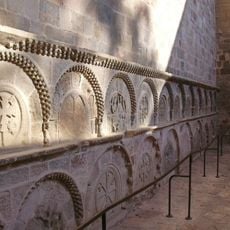
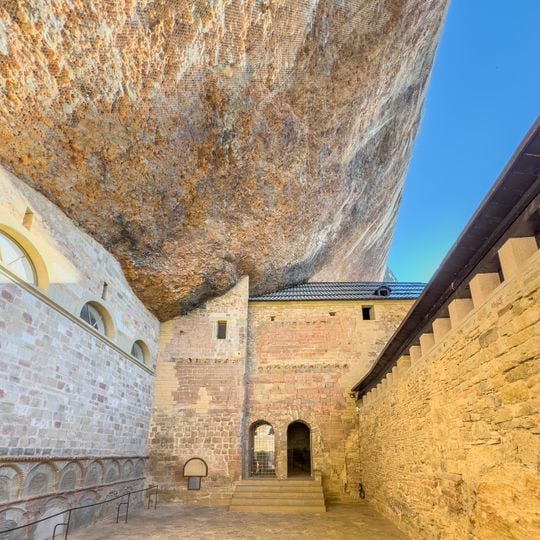
The Royal Monastery of San Juan de la Peña is a Benedictine monastery in northeastern Spain whose structures are partially built into a cliff face. The complex includes Romanesque churches, a cloister with carved capitals, and rooms cut directly into the stone across different periods.
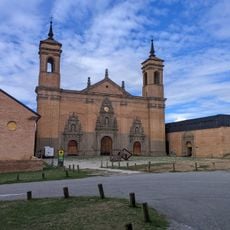
A small monastery existed here by 920, and the surviving Mozarabic lower church dates from that time. Construction of the monastery dedicated to John the Baptist began in 1026 under Sancho the Great of Pamplona; the Benedictine rule was adopted in 1028. On 22 March 1071 San Juan de la Peña became the first place in Spain to adopt the Roman rite, and Cluniac reform followed. Fires in 1494 and 1675 damaged the old complex, prompting a new monastery higher up in 1705.
The monastery's name comes from the rock overhang (peña) that shelters it. On 22 March 1071 it became the first place in Spain to adopt the Roman rite, replacing the Visigothic liturgy. The cloister capitals, carved by the anonymous Master of San Juan de la Peña, show biblical scenes such as the Nativity and the Last Supper.
The site sits on a mountainside and requires some climbing to explore, especially to reach the older areas carved into the cliff. Visitors should wear sturdy shoes and be aware that some sections may be tight or uneven.
The cloister's 26 surviving capitals, carved in the last third of the 12th century by the anonymous Master of Agüero, show figures whose gestures are exaggerated, with enlarged eyes and mouths, and bodies that break out of the frame. The programme centres on Salvation through Faith, from the Creation of Adam and Eve to the Last Supper.
The community of curious travelers
AroundUs brings together thousands of curated places, local tips, and hidden gems, enriched daily by 94,677 contributors worldwide.