See the monuments around you in AROpen chests in the app
Around Us is built for your phone — point your camera at the streets and discover the monuments and places around you in augmented reality.Around Us is built for your phone — chests unlock when you walk, explore and capture nearby places.
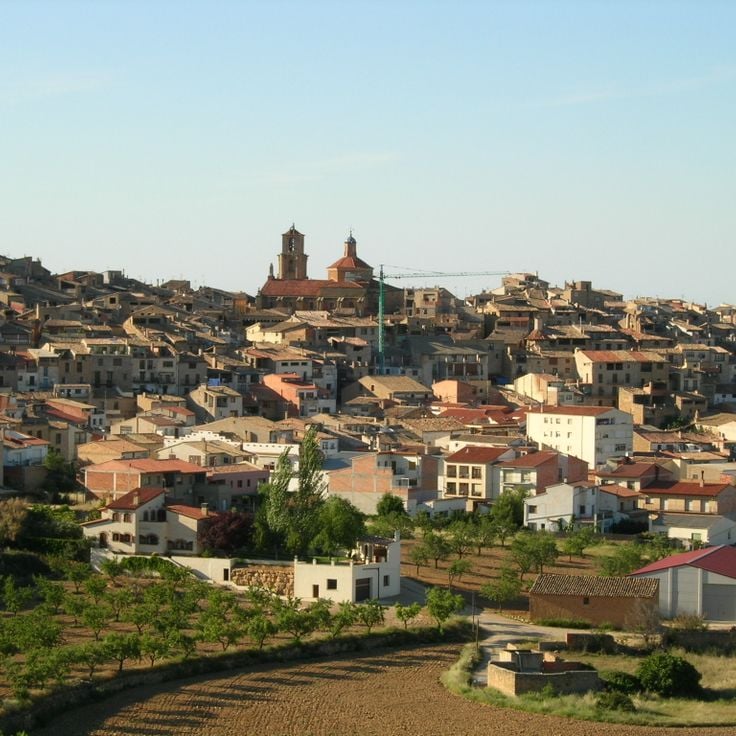
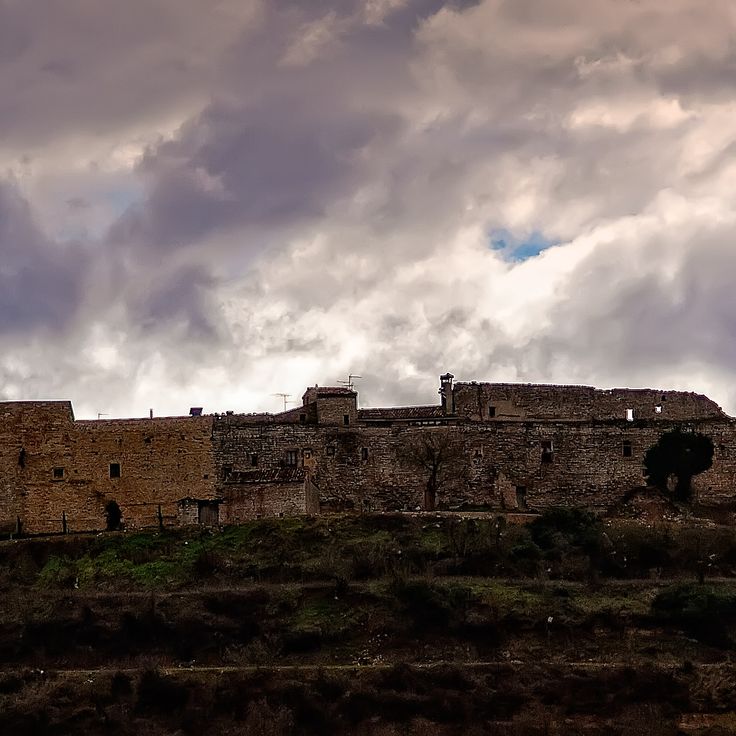
Aragon stretches across three provinces in northeastern Spain, preserving more than two thousand years of history through its monasteries, castles and medieval villages. The region displays Moorish towers in Teruel, Romanesque churches in the Pyrenees and Gothic bridges along ancient trade routes. Natural parks protect limestone canyons, caves holding prehistoric paintings and mountain ranges extending to the French border.
Visitors explore fortified villages such as Albarracín and Sos del Rey Católico, where stone walls and narrow lanes tell of medieval life. The 11th-century Castillo de Loarre stands on a hilltop overlooking the Ebro valley, while Sierra de Guara Natural Park provides trails through deep gorges. Monasteries including San Juan de la Peña and Monasterio de Piedra connect religious history with surrounding landscapes, creating destinations that combine cultural heritage with natural environments.
Aragon stretches across three provinces in northeastern Spain, preserving more than two thousand years of history through its monasteries, castles and medieval villages. The region displays Moorish towers in Teruel, Romanesque churches in the Pyrenees and Gothic bridges along ancient trade routes. Natural parks protect limestone canyons, caves holding prehistoric paintings and mountain ranges extending to the French border.
Visitors explore fortified villages such as Albarracín and Sos del Rey Católico, where stone walls and narrow lanes tell of medieval life. The 11th-century Castillo de Loarre stands on a hilltop overlooking the Ebro valley, while Sierra de Guara Natural Park provides trails through deep gorges. Monasteries including San Juan de la Peña and Monasterio de Piedra connect religious history with surrounding landscapes, creating destinations that combine cultural heritage with natural environments.
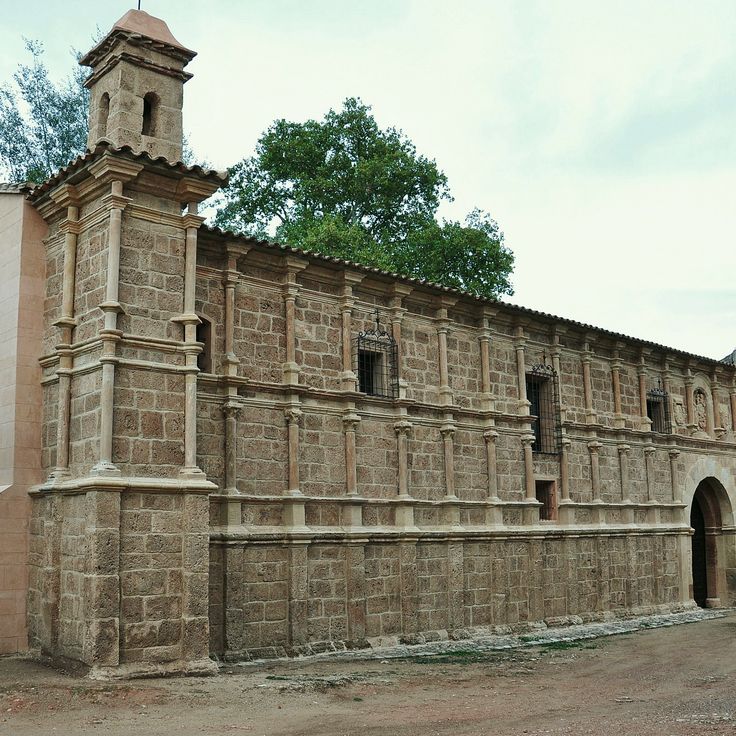
This 13th century monastery sits within a park featuring waterfalls and caves in Zaragoza province. The medieval complex displays Cistercian architecture with cloisters, churches and monastic buildings. The surrounding park uses the waters of the Piedra River, which flows through tufa limestone formations and feeds several waterfalls. Visitors can tour the monastery rooms and follow walking paths through the park that lead to grottos and viewpoints overlooking the water cascades.
This medieval settlement sits on a rock outcrop above Vero Canyon and developed around a 9th century castle. Alquézar grew as a fortified site under Muslim rule and later expanded under Christian kingdoms. The narrow stone streets lead to the castle complex with its Romanesque cloister and Collegiate Church of Santa María la Mayor. The position provides access to canyon trails where prehistoric cave paintings appear on several rock faces. The settlement ranks among the historic sites in Aragon, combining architectural heritage with the Sierra de Guara landscape.
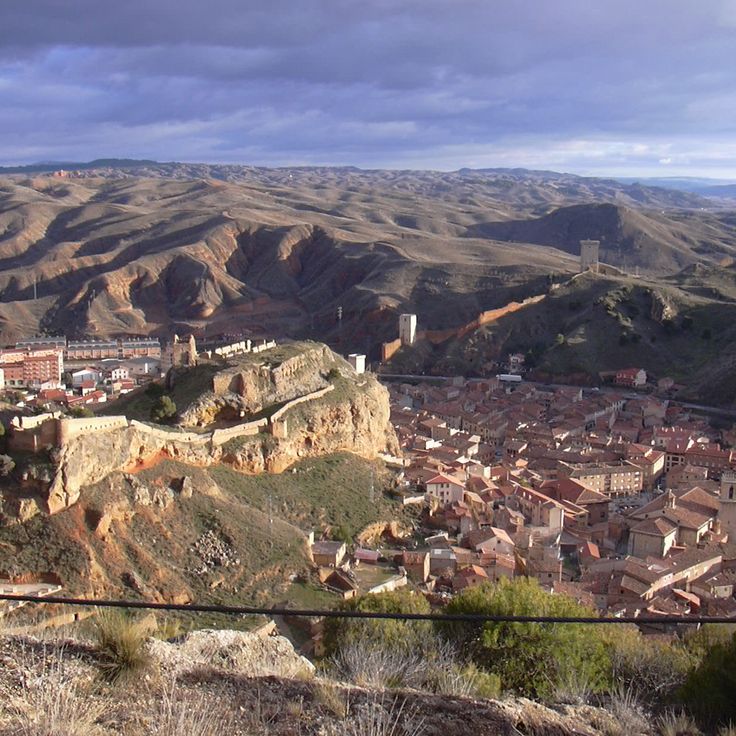
This town in Zaragoza province preserves 13th century city walls that encircle Mudéjar churches and a Renaissance college. Daroca stands along a historic trade route between Valencia and the Ebro valley, showing architectural influences from medieval Aragon. The fortifications extend roughly 2.5 miles (4 kilometers) and include more than a hundred towers. Within the walls stand several Mudéjar churches with preserved brick decoration and the 16th century Santo Domingo college.
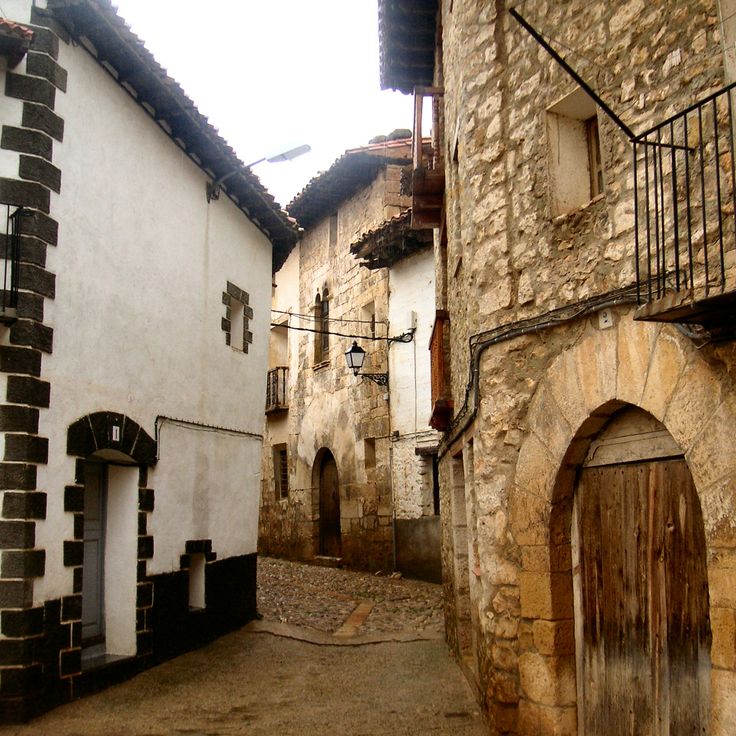
This municipality in southeastern Teruel preserves structures from several periods, including stone portals from the Gothic and Renaissance eras and a Baroque church. Calaceite sits in a rural area near the border with Catalonia and displays typical features of local construction with narrow streets and stone buildings from past centuries.
This location in Teruel province preserves a church from the 12th century with original Romanesque elements, surrounded by olive groves and mountains. Torre de Arcas represents the medieval architecture found across Aragon, where Romanesque construction is documented in rural communities. The church displays characteristic features of this period within an agricultural mountain landscape.
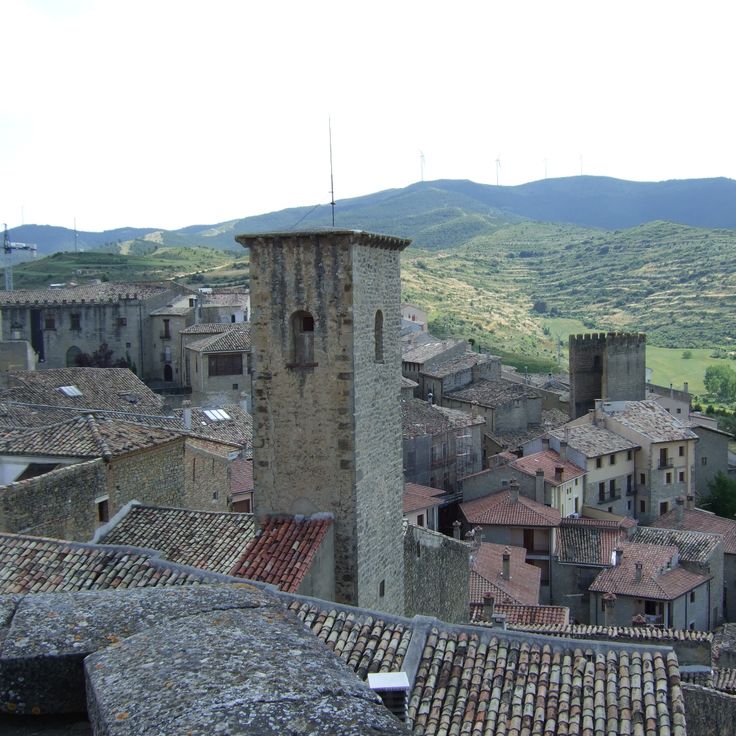
This medieval village in northwestern Aragon preserves its historic character through cobblestone streets, Gothic churches and stone houses dating from the 12th century. Sos del Rey Católico is the birthplace of King Ferdinand II of Aragon, who was born in 1452 at the Sada family palace. The settlement sits on a hillside near the Navarre border and displays examples of medieval defensive architecture alongside Romanesque and Gothic structures.
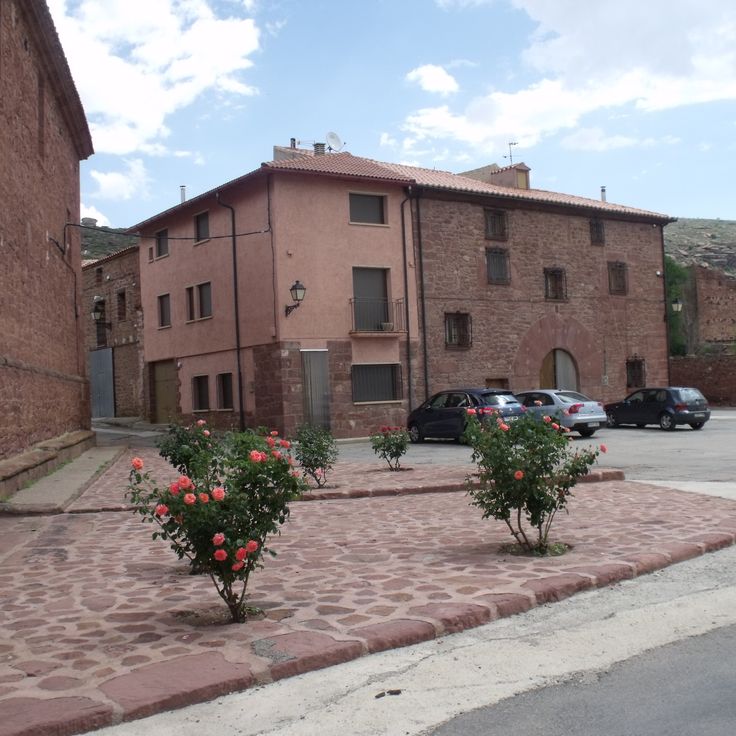
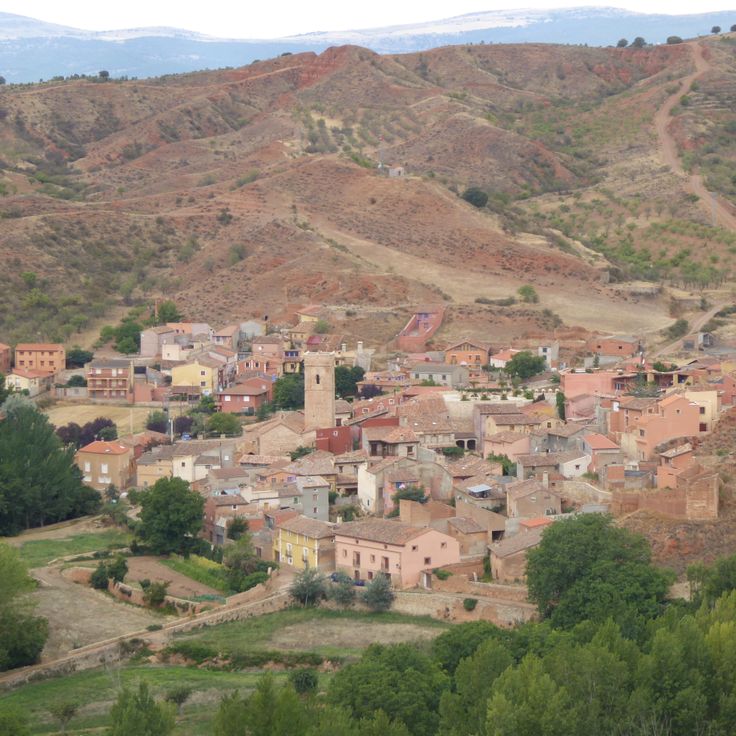
This municipality in southern Aragon sits among pine forests and red sandstone formations. The historic buildings of Rodenas use ochre-colored stone quarried from surrounding outcrops. The landscape covers roughly 27 square miles (70 square kilometers) and displays erosion patterns typical of the region. Walking trails connect the village to rock formations and forested slopes in the surrounding terrain.
This mountain village sits at the entrance to the natural park where limestone cliffs form the Els Ports massif. Beceite occupies a valley position below rocky formations that rise above 3,900 feet (1,200 meters). Historical paper mills along the Matarraña River document a craft tradition extending to the 15th century. Trails lead to waterfalls and through gorges where griffon vultures nest.
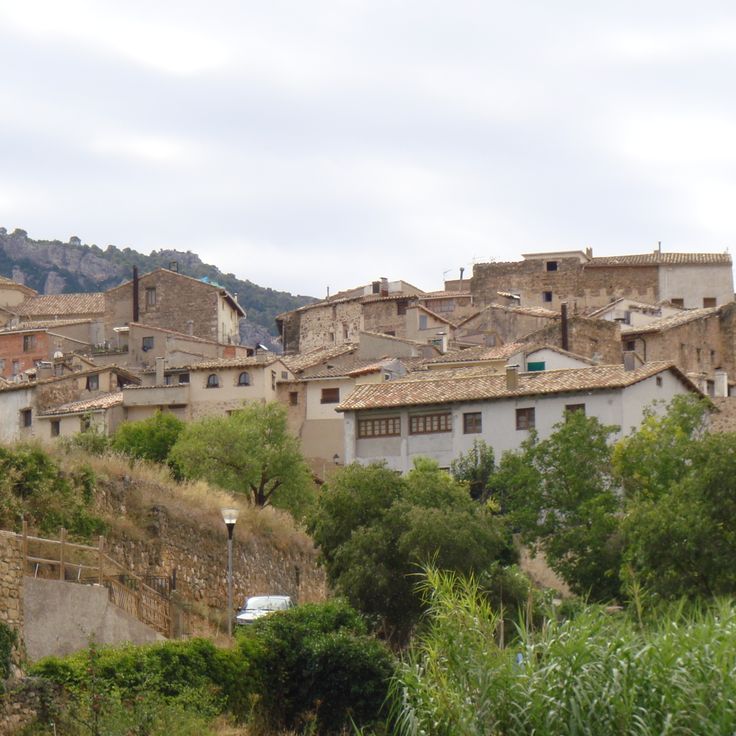
This village sits in a valley between rock faces in Zaragoza province. The surrounding landscape consists of agricultural fields and gardens that maintain the traditional rural character of the area. The setting demonstrates the characteristic relationship between historic settlements and natural topography in Aragon, where communities adapted to the geological conditions.
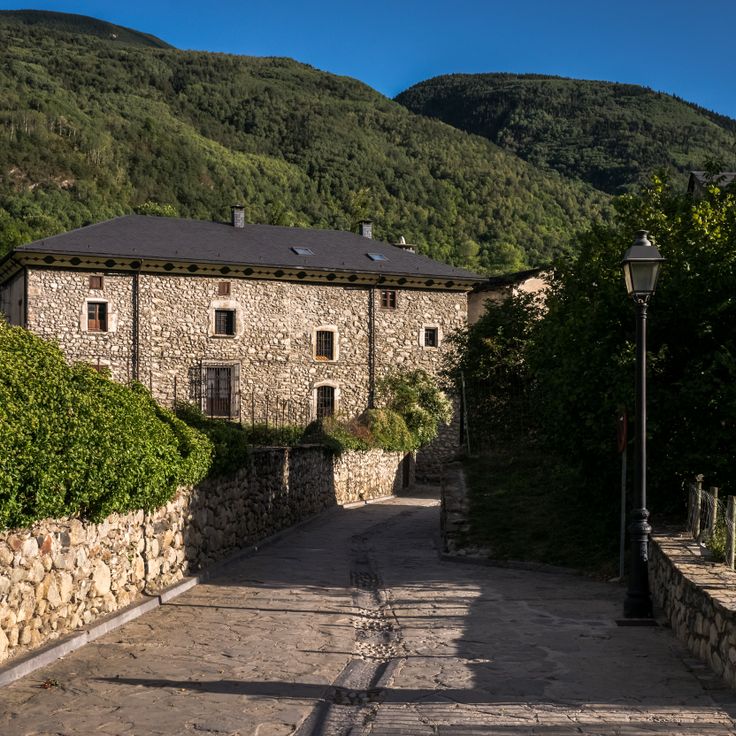
This village preserves several manor houses from the 16th century featuring characteristic Aragonese architecture. Anciles sits in Huesca province, a region known for its medieval monasteries, castles, nature parks and geological formations. The historic buildings display traditional stone construction with regional details. The settlement forms part of the cultural heritage that includes Romanesque churches, Gothic bridges and Moorish architecture across the provinces of Huesca, Zaragoza and Teruel.
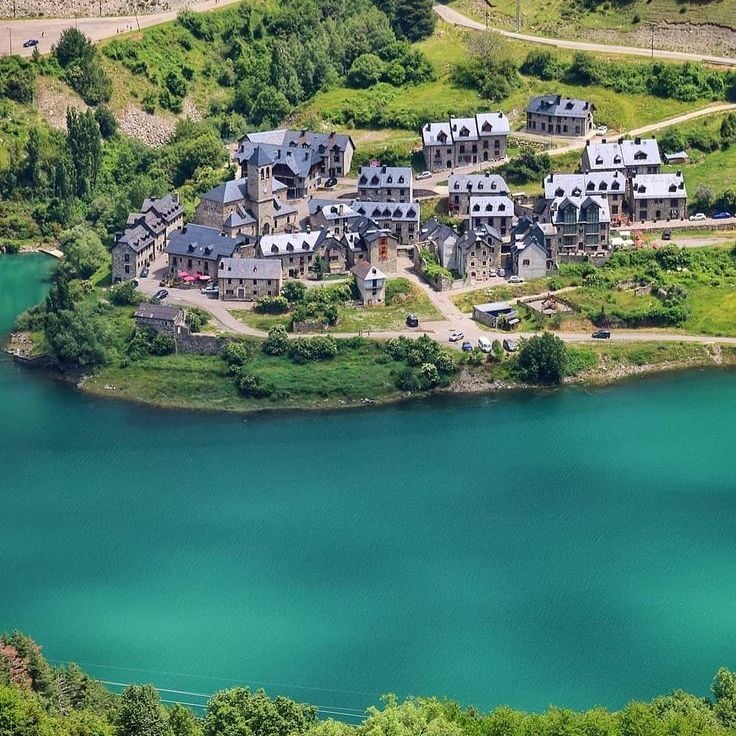
This village was restored and rebuilt after decades of flooding by a reservoir. Lanuza sits in the Tena Valley of Huesca province and was abandoned from the 1970s through the 1990s. The preserved medieval structure of stone houses and cobbled lanes has been rehabilitated using traditional Aragonese construction methods. The settlement documents the fate of Pyrenean villages cleared for hydroelectric projects and their later revival as cultural heritage.
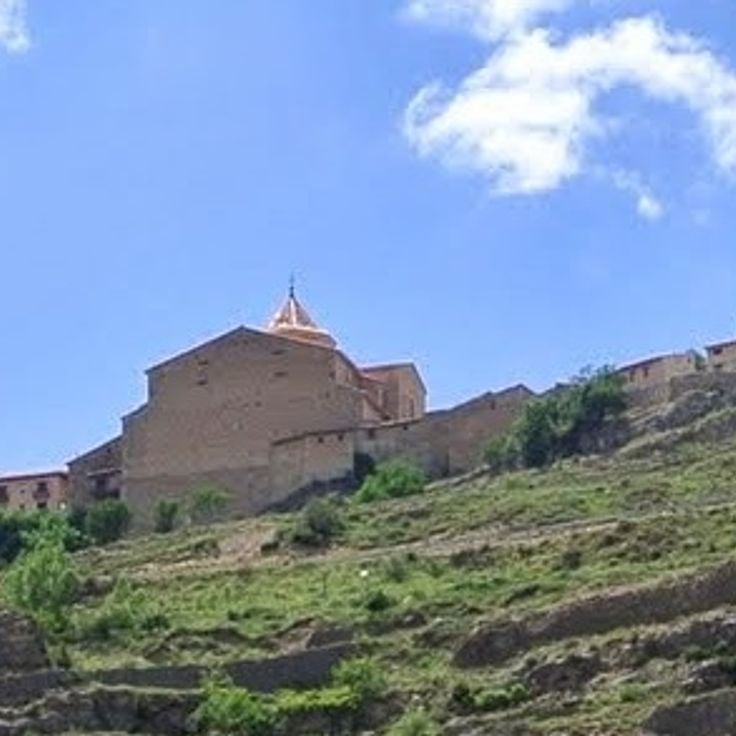
This medieval settlement preserves its original stone walls and narrow lanes from the 11th century. Montfalcó Murallat stands among Huesca's protected historic sites, demonstrating the defensive architecture of the period. The village sits atop an elevation from which residents once monitored the surrounding valleys. The structures document medieval settlement patterns in the Aragonese Pyrenean foothills.
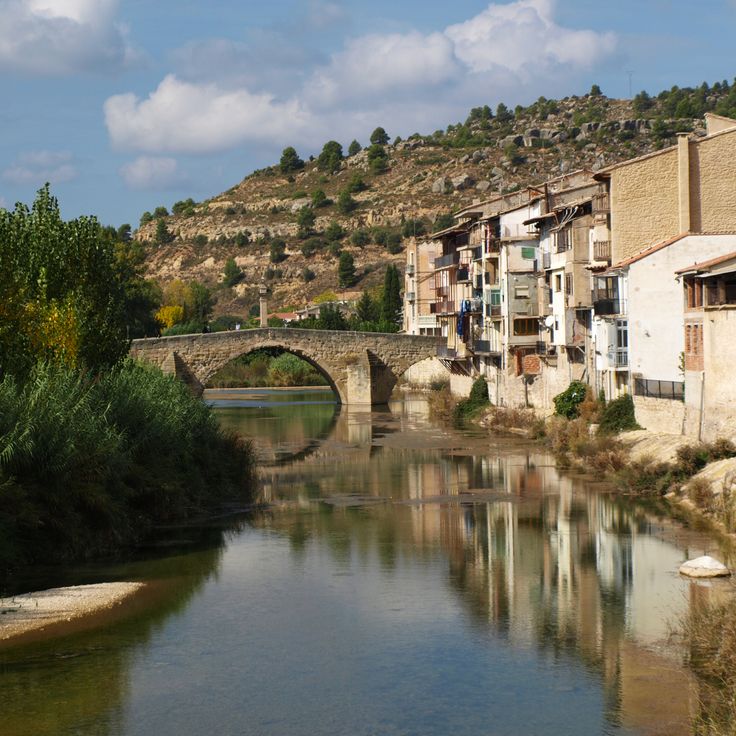
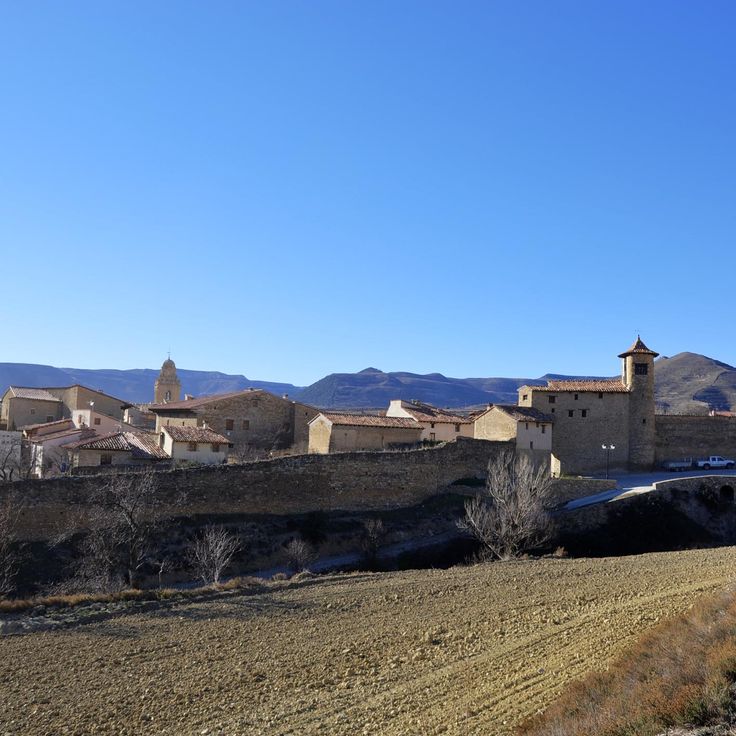
Valderrobres rises on a hill near the Catalan border, where Gothic and Renaissance elements converge in a compact historic center. The fourteenth-century stone bridge leads to a castle and church perched above the Matarraña River. Narrow streets with arcades connect ochre-toned buildings constructed from local materials. This settlement in the Matarraña valley represents the historic sites and natural areas of Aragon, illustrating architectural evolution in a border zone during the transition from medieval to early modern periods.
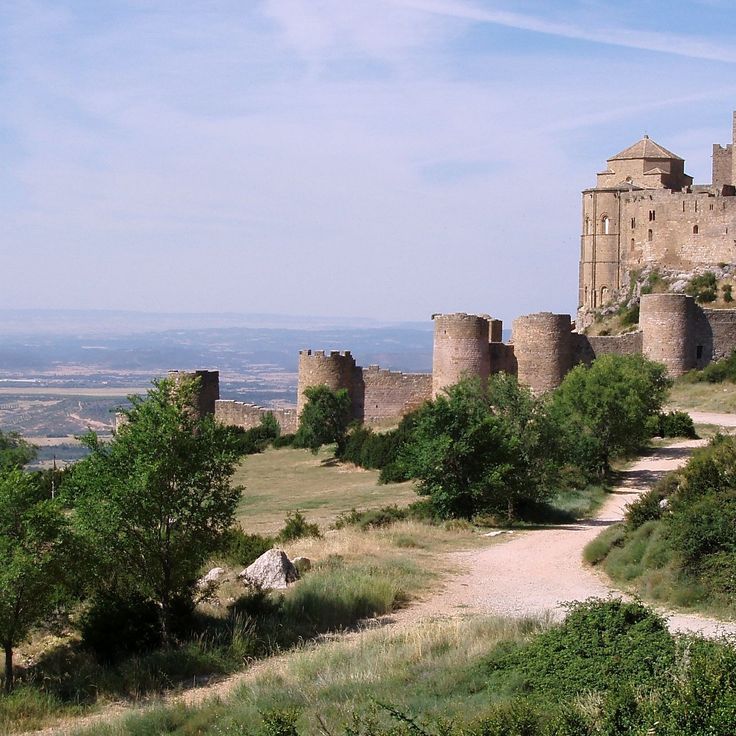
This Romanesque fortress occupies a hilltop position in Huesca province and represents one of medieval Aragon's most substantial fortified complexes. Castillo de Loarre was built in the 11th century and combines military architecture with a collegiate church. The site includes stone towers, chapels and defensive ramparts that document the transition from the Caliphate to Christian kingdoms and offers broad views across the pre-Pyrenean landscape.
This village sits in the Maestrazgo mountains in Teruel and serves as the gateway to the Grutas de Cristal, a cave system featuring calcite formations, underground galleries and stalactites. The caves extend several hundred yards through the limestone and can be visited on guided tours that provide insights into the geological processes of the region.
Cantavieja sits on a rocky plateau above a ravine in Teruel province and preserves medieval structures from its time as a Templar town. This settlement in Aragon displays Gothic architecture, stone arcades around the main plaza and remnants of the old fortifications. The streets follow the steep terrain, and several viewpoints offer views across the rugged landscape of the Maestrazgo region.
This mountain village in the eastern Maestrazgo hills shares its name with a cheese produced in the region since medieval times. Tronchón is known for its traditional sheep milk cheese, made according to recipes passed down through generations and shaped into a characteristic form. The cheese production defines the local economy and identity, with methods preserved by families working in the trade. The village sits at roughly 4,600 feet (1,400 meters) elevation and provides access to walking trails through the surrounding limestone ranges.
This 13th century wall encircles the historic center of Mirambel for 2625 feet (800 meters) and stands as a well-preserved example of medieval military architecture in Aragon. The fortifications include gates and towers that protected the settlement during centuries of territorial conflict. The defensive structure illustrates the strategic importance of Teruel province towns during the Reconquista period and remains largely intact today.
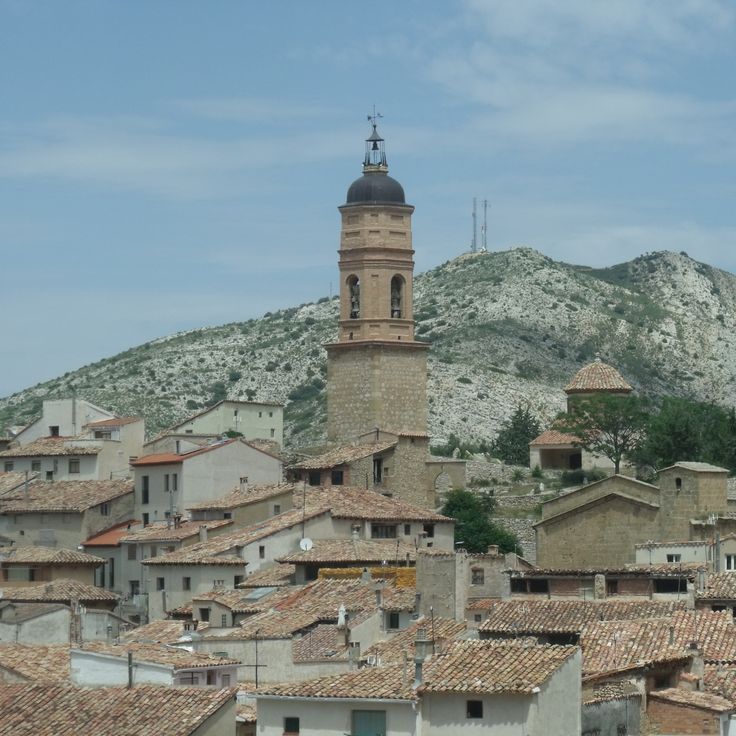
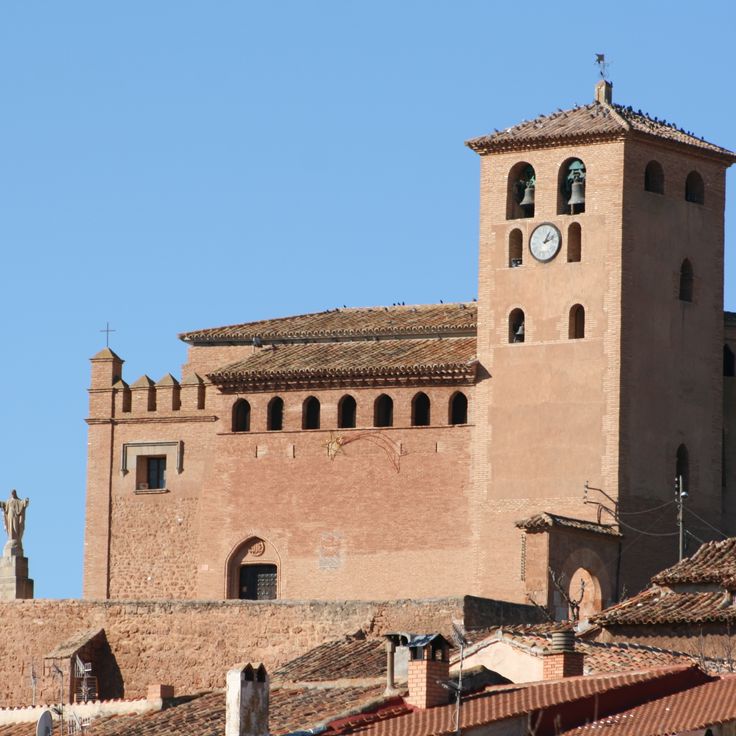
This parish church dates from the 16th century and displays a rectangular bell tower with brick and ceramic decorations characteristic of historic religious buildings in the Aragon region. The church of Santa Tecla combines functional architecture with decorative elements that reflect the craft traditions of the period.
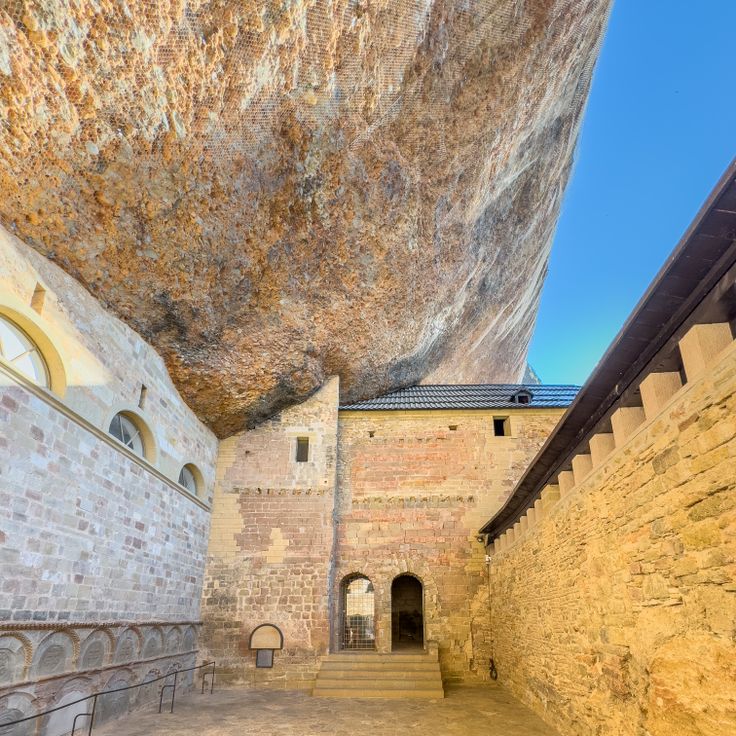
This monastery was built beneath a rock overhang in the 10th century and houses Romanesque frescoes and royal tombs. San Juan de la Peña served for centuries as a pantheon for the kings of Aragon and Navarre. The upper church dates from the 11th century, while the vaulted cloister with its carved capitals was completed in the 12th century. The position under the cliff face provided protection from Moorish raids during the Reconquista.
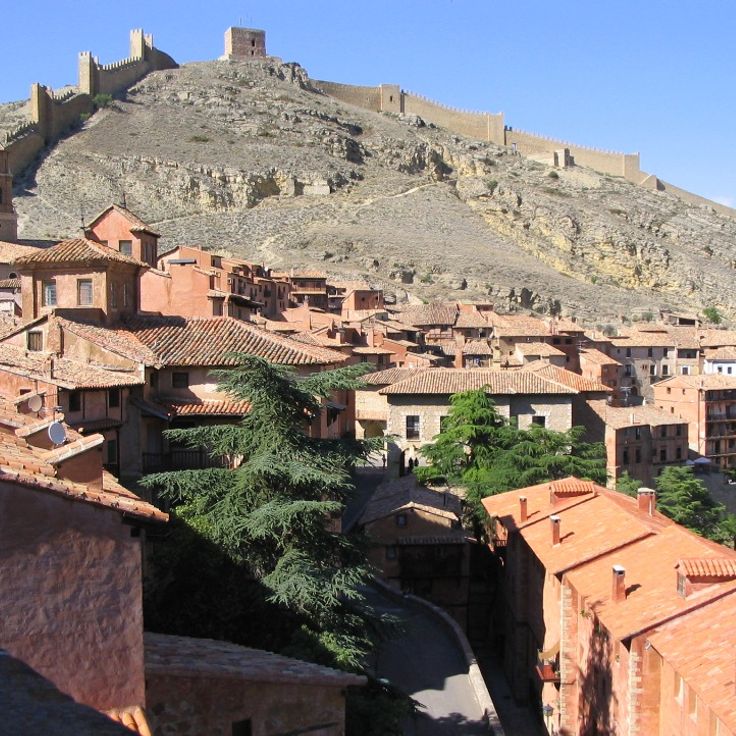
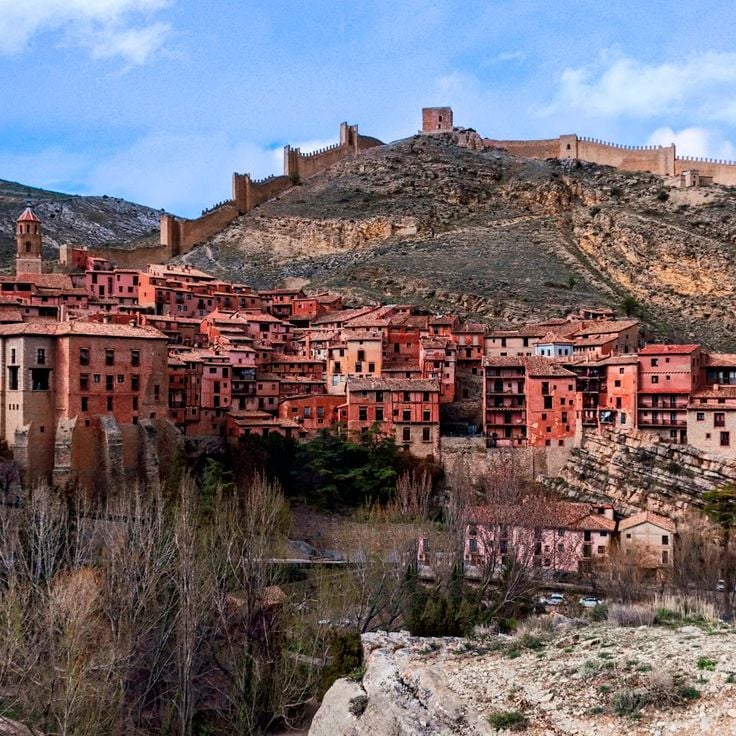
This medieval defense wall encircles the town on a hill and extends for several kilometers. The walls of Albarracín rank among the significant historic structures in this Spanish region and demonstrate military architecture from the medieval period. Visitors can walk along the fortifications and gain insights into the defense systems of both Moorish and Christian epochs that shape the architectural heritage of Aragon.
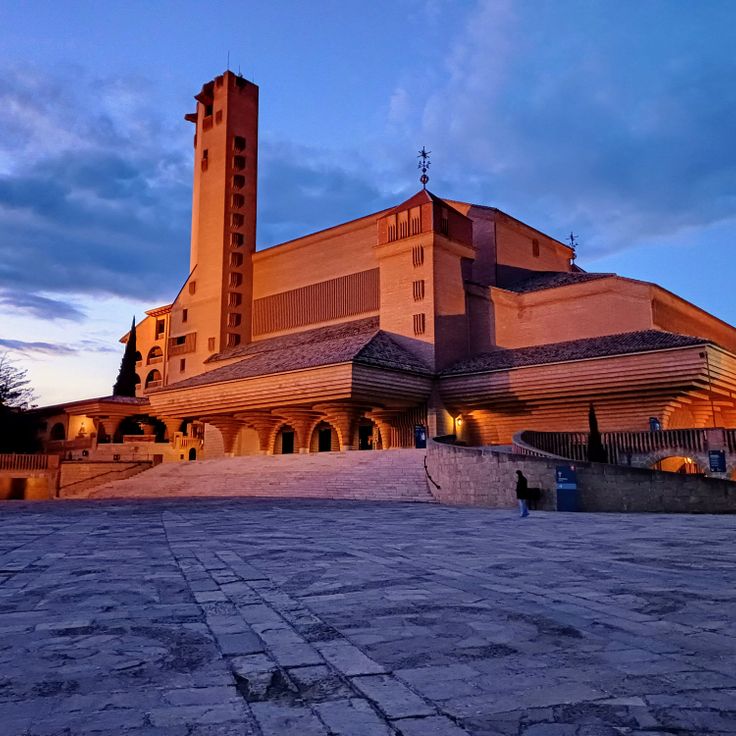
This 20th-century pilgrimage site occupies elevated ground above the El Grado reservoir in Huesca province. Santuario de Torreciudad was built during the 1970s and houses a chapel containing an 11th-century Romanesque statue of Mary along with modern liturgical spaces. The complex draws Catholic pilgrims from across Spain and provides views over the water reservoir and surrounding Pyrenean foothills.
This cultural park encompasses several sites with prehistoric rock paintings and archaeological remains from various periods in Teruel province. The locations lie in the mountains southwest of Albarracín and display representations of animals and human figures created between 8000 and 3000 BC.
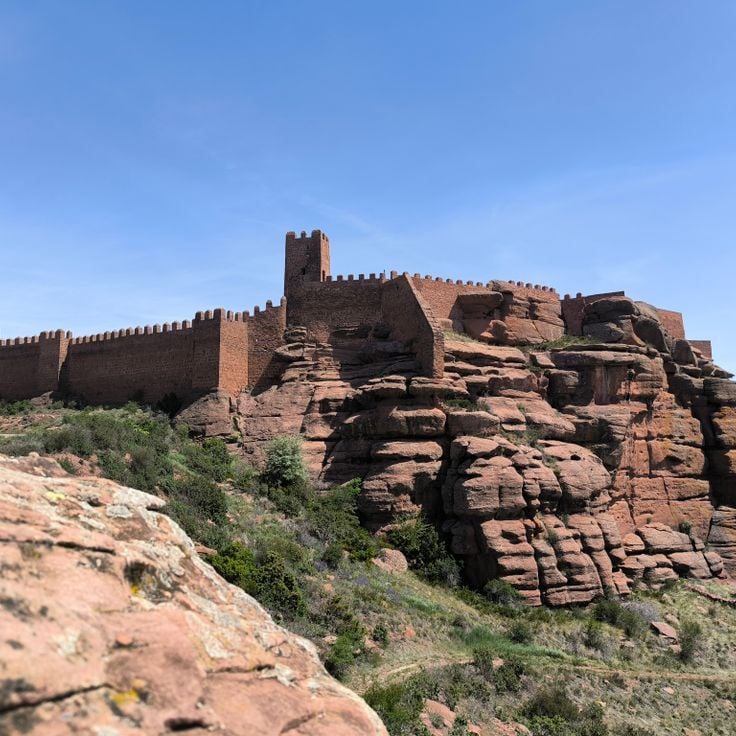
This medieval fortress stands on a sandstone outcrop with walls showing the same red coloring as the ground, extending across multiple levels. The Castle of Peracense in Teruel ranks among the historic sites of Aragon and displays military architecture from the 14th century. The complex includes several towers, interior courtyards and a walkway along the outer walls. The upper fortifications offer views across the surrounding landscape of pine forests.
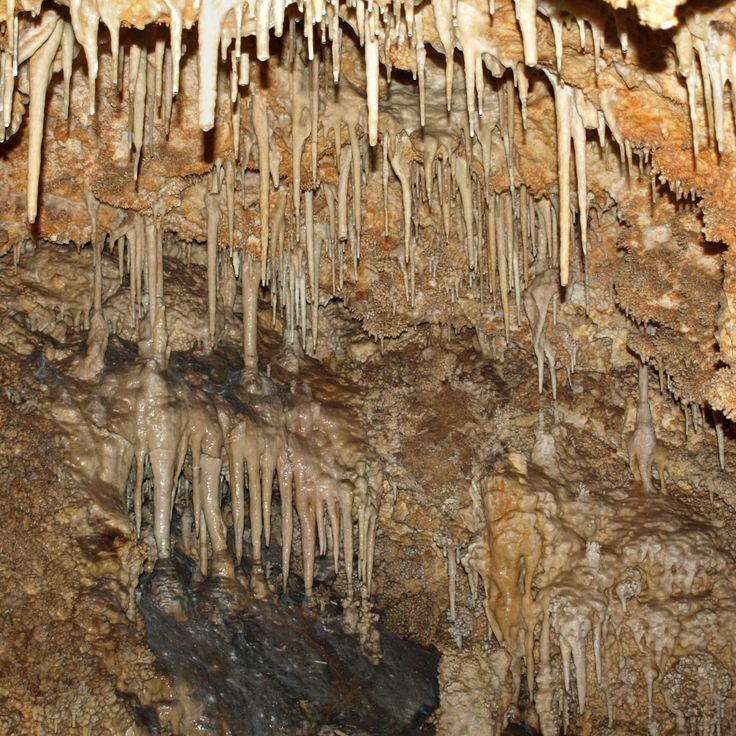
These limestone caverns extend over 2,000 feet (620 meters) beneath the mountain surface, displaying mineral formations and underground galleries. The Molinos cave system ranks among the geological attractions of Teruel province, offering insight into the karst landscape of Aragon. The caves formed through water erosion in limestone rock and contain stalactite formations and multiple chambers. Guided tours through the underground passages last approximately one hour and require sturdy footwear.
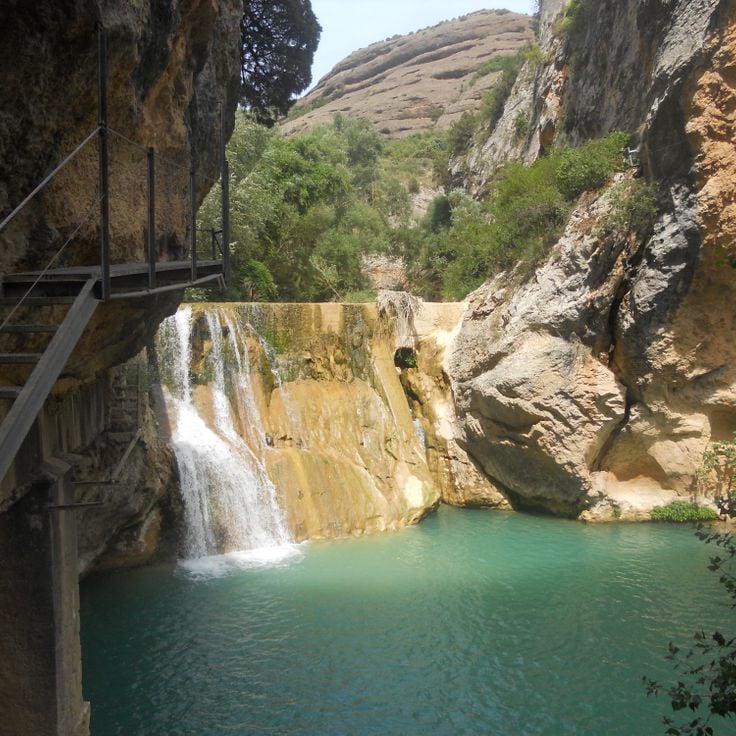
These metal walkways follow the limestone walls of the Vero River canyon and allow visitors to traverse the gorge. The route extends approximately 1.2 miles (2 kilometers) through the canyon, part of Aragon's natural landscapes.
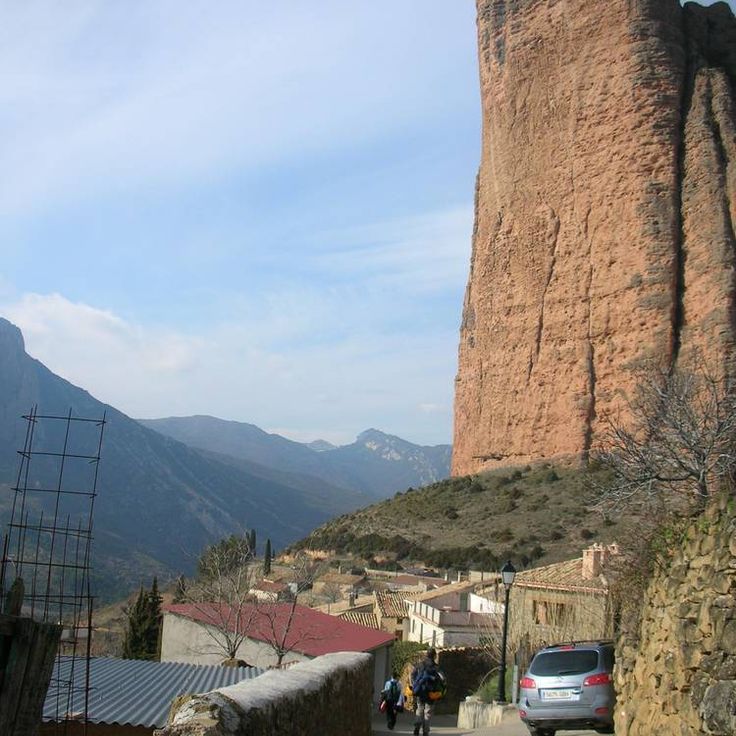
These vertical rock walls rise 980 feet (300 meters) near the village of Riglos and rank among the most distinctive geological formations in Aragon. The red conglomerate formations attract rock climbers year round and demonstrate the diverse natural landscapes of this Spanish region.
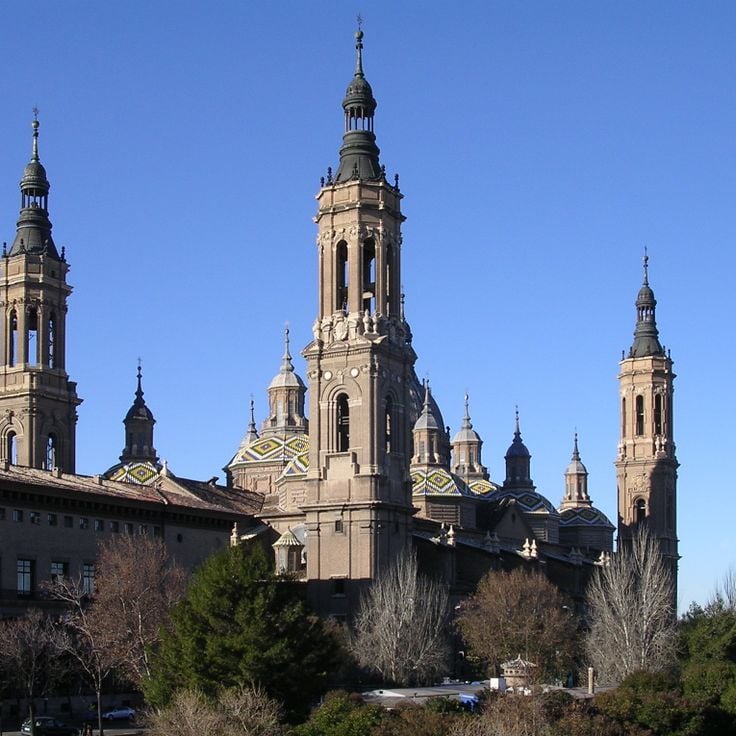
This baroque basilica from the 17th century extends 130 meters (426 feet) in length with four towers reaching 90 meters (295 feet) high. The interior contains painted domes that represent characteristic works of Aragonese church architecture. As a major religious structure in Zaragoza, the Pilar Basilica stands among the historic sites of this Spanish region, documenting medieval and early modern building traditions alongside the monasteries, castles and churches that define the architectural heritage of Aragon's three provinces.
This valley in southeastern Teruel preserves a series of historic villages along the river of the same name. The Matarraña features stone architecture from medieval times, narrow lanes and bridges set across a wooded landscape. The area connects Aragonese heritage with river terrain suitable for hiking and exploring rural settlements.
This natural park in Aragon contains canyons and cliffs that support canyoning and bird watching. The Sierra de Guara is a limestone massif with trails that pass through steep valleys. Vultures and other raptors nest in the rock faces, while rivers have carved canyons including the Mascún gorge.
This geological park spans the mountainous terrain south of the Pyrenees and presents karst formations, fossil-bearing strata and rock exposures from several geological periods. The Maestrazgo Geological Park documents tectonic activity and marine deposits from the Mesozoic era and displays caves, canyons and limestone plateaus in one of Aragon's most geologically diverse zones.
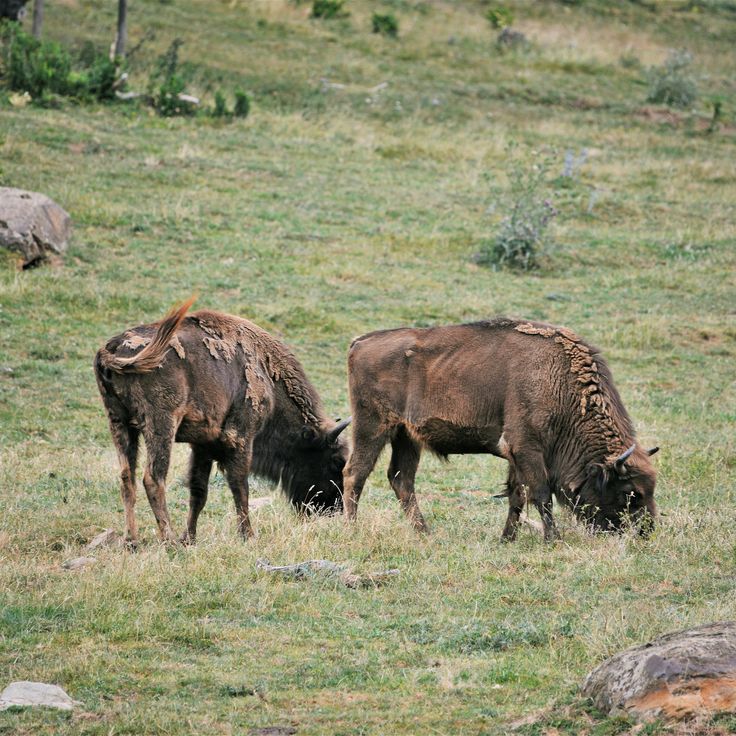
This wildlife park in northwest Huesca houses native animals in forested enclosures that allow for semi-free roaming. Parque Faunístico Lacuniacha sits at approximately 4,430 feet (1,350 meters) elevation and covers roughly 75 acres (30 hectares) of woodland. Visitors follow a walking circuit of about 2.5 miles (4 kilometers) through the grounds, observing species including brown bears, wolves, lynxes, deer and wild boar in settings that approximate their natural habitats. The facility focuses on animal species that historically inhabited or still inhabit the Aragonese Pyrenees.
This 13th century monastery sits within a park featuring waterfalls and caves in Zaragoza province. The medieval complex displays Cistercian architecture with cloisters, churches and monastic buildings. The surrounding park uses the waters of the Piedra River, which flows through tufa limestone formations and feeds several waterfalls. Visitors can tour the monastery rooms and follow walking paths through the park that lead to grottos and viewpoints overlooking the water cascades.
This medieval settlement sits on a rock outcrop above Vero Canyon and developed around a 9th century castle. Alquézar grew as a fortified site under Muslim rule and later expanded under Christian kingdoms. The narrow stone streets lead to the castle complex with its Romanesque cloister and Collegiate Church of Santa María la Mayor. The position provides access to canyon trails where prehistoric cave paintings appear on several rock faces. The settlement ranks among the historic sites in Aragon, combining architectural heritage with the Sierra de Guara landscape.
This town in Zaragoza province preserves 13th century city walls that encircle Mudéjar churches and a Renaissance college. Daroca stands along a historic trade route between Valencia and the Ebro valley, showing architectural influences from medieval Aragon. The fortifications extend roughly 2.5 miles (4 kilometers) and include more than a hundred towers. Within the walls stand several Mudéjar churches with preserved brick decoration and the 16th century Santo Domingo college.
This municipality in southeastern Teruel preserves structures from several periods, including stone portals from the Gothic and Renaissance eras and a Baroque church. Calaceite sits in a rural area near the border with Catalonia and displays typical features of local construction with narrow streets and stone buildings from past centuries.
This location in Teruel province preserves a church from the 12th century with original Romanesque elements, surrounded by olive groves and mountains. Torre de Arcas represents the medieval architecture found across Aragon, where Romanesque construction is documented in rural communities. The church displays characteristic features of this period within an agricultural mountain landscape.
This medieval village in northwestern Aragon preserves its historic character through cobblestone streets, Gothic churches and stone houses dating from the 12th century. Sos del Rey Católico is the birthplace of King Ferdinand II of Aragon, who was born in 1452 at the Sada family palace. The settlement sits on a hillside near the Navarre border and displays examples of medieval defensive architecture alongside Romanesque and Gothic structures.
This municipality in southern Aragon sits among pine forests and red sandstone formations. The historic buildings of Rodenas use ochre-colored stone quarried from surrounding outcrops. The landscape covers roughly 27 square miles (70 square kilometers) and displays erosion patterns typical of the region. Walking trails connect the village to rock formations and forested slopes in the surrounding terrain.
This mountain village sits at the entrance to the natural park where limestone cliffs form the Els Ports massif. Beceite occupies a valley position below rocky formations that rise above 3,900 feet (1,200 meters). Historical paper mills along the Matarraña River document a craft tradition extending to the 15th century. Trails lead to waterfalls and through gorges where griffon vultures nest.
This village sits in a valley between rock faces in Zaragoza province. The surrounding landscape consists of agricultural fields and gardens that maintain the traditional rural character of the area. The setting demonstrates the characteristic relationship between historic settlements and natural topography in Aragon, where communities adapted to the geological conditions.
This village preserves several manor houses from the 16th century featuring characteristic Aragonese architecture. Anciles sits in Huesca province, a region known for its medieval monasteries, castles, nature parks and geological formations. The historic buildings display traditional stone construction with regional details. The settlement forms part of the cultural heritage that includes Romanesque churches, Gothic bridges and Moorish architecture across the provinces of Huesca, Zaragoza and Teruel.
This village was restored and rebuilt after decades of flooding by a reservoir. Lanuza sits in the Tena Valley of Huesca province and was abandoned from the 1970s through the 1990s. The preserved medieval structure of stone houses and cobbled lanes has been rehabilitated using traditional Aragonese construction methods. The settlement documents the fate of Pyrenean villages cleared for hydroelectric projects and their later revival as cultural heritage.
This medieval settlement preserves its original stone walls and narrow lanes from the 11th century. Montfalcó Murallat stands among Huesca's protected historic sites, demonstrating the defensive architecture of the period. The village sits atop an elevation from which residents once monitored the surrounding valleys. The structures document medieval settlement patterns in the Aragonese Pyrenean foothills.
Valderrobres rises on a hill near the Catalan border, where Gothic and Renaissance elements converge in a compact historic center. The fourteenth-century stone bridge leads to a castle and church perched above the Matarraña River. Narrow streets with arcades connect ochre-toned buildings constructed from local materials. This settlement in the Matarraña valley represents the historic sites and natural areas of Aragon, illustrating architectural evolution in a border zone during the transition from medieval to early modern periods.
This Romanesque fortress occupies a hilltop position in Huesca province and represents one of medieval Aragon's most substantial fortified complexes. Castillo de Loarre was built in the 11th century and combines military architecture with a collegiate church. The site includes stone towers, chapels and defensive ramparts that document the transition from the Caliphate to Christian kingdoms and offers broad views across the pre-Pyrenean landscape.
This village sits in the Maestrazgo mountains in Teruel and serves as the gateway to the Grutas de Cristal, a cave system featuring calcite formations, underground galleries and stalactites. The caves extend several hundred yards through the limestone and can be visited on guided tours that provide insights into the geological processes of the region.
Cantavieja sits on a rocky plateau above a ravine in Teruel province and preserves medieval structures from its time as a Templar town. This settlement in Aragon displays Gothic architecture, stone arcades around the main plaza and remnants of the old fortifications. The streets follow the steep terrain, and several viewpoints offer views across the rugged landscape of the Maestrazgo region.
This mountain village in the eastern Maestrazgo hills shares its name with a cheese produced in the region since medieval times. Tronchón is known for its traditional sheep milk cheese, made according to recipes passed down through generations and shaped into a characteristic form. The cheese production defines the local economy and identity, with methods preserved by families working in the trade. The village sits at roughly 4,600 feet (1,400 meters) elevation and provides access to walking trails through the surrounding limestone ranges.
This 13th century wall encircles the historic center of Mirambel for 2625 feet (800 meters) and stands as a well-preserved example of medieval military architecture in Aragon. The fortifications include gates and towers that protected the settlement during centuries of territorial conflict. The defensive structure illustrates the strategic importance of Teruel province towns during the Reconquista period and remains largely intact today.
This parish church dates from the 16th century and displays a rectangular bell tower with brick and ceramic decorations characteristic of historic religious buildings in the Aragon region. The church of Santa Tecla combines functional architecture with decorative elements that reflect the craft traditions of the period.
This monastery was built beneath a rock overhang in the 10th century and houses Romanesque frescoes and royal tombs. San Juan de la Peña served for centuries as a pantheon for the kings of Aragon and Navarre. The upper church dates from the 11th century, while the vaulted cloister with its carved capitals was completed in the 12th century. The position under the cliff face provided protection from Moorish raids during the Reconquista.
This medieval defense wall encircles the town on a hill and extends for several kilometers. The walls of Albarracín rank among the significant historic structures in this Spanish region and demonstrate military architecture from the medieval period. Visitors can walk along the fortifications and gain insights into the defense systems of both Moorish and Christian epochs that shape the architectural heritage of Aragon.
This 20th-century pilgrimage site occupies elevated ground above the El Grado reservoir in Huesca province. Santuario de Torreciudad was built during the 1970s and houses a chapel containing an 11th-century Romanesque statue of Mary along with modern liturgical spaces. The complex draws Catholic pilgrims from across Spain and provides views over the water reservoir and surrounding Pyrenean foothills.
This cultural park encompasses several sites with prehistoric rock paintings and archaeological remains from various periods in Teruel province. The locations lie in the mountains southwest of Albarracín and display representations of animals and human figures created between 8000 and 3000 BC.
This medieval fortress stands on a sandstone outcrop with walls showing the same red coloring as the ground, extending across multiple levels. The Castle of Peracense in Teruel ranks among the historic sites of Aragon and displays military architecture from the 14th century. The complex includes several towers, interior courtyards and a walkway along the outer walls. The upper fortifications offer views across the surrounding landscape of pine forests.
These limestone caverns extend over 2,000 feet (620 meters) beneath the mountain surface, displaying mineral formations and underground galleries. The Molinos cave system ranks among the geological attractions of Teruel province, offering insight into the karst landscape of Aragon. The caves formed through water erosion in limestone rock and contain stalactite formations and multiple chambers. Guided tours through the underground passages last approximately one hour and require sturdy footwear.
These metal walkways follow the limestone walls of the Vero River canyon and allow visitors to traverse the gorge. The route extends approximately 1.2 miles (2 kilometers) through the canyon, part of Aragon's natural landscapes.
These vertical rock walls rise 980 feet (300 meters) near the village of Riglos and rank among the most distinctive geological formations in Aragon. The red conglomerate formations attract rock climbers year round and demonstrate the diverse natural landscapes of this Spanish region.
This baroque basilica from the 17th century extends 130 meters (426 feet) in length with four towers reaching 90 meters (295 feet) high. The interior contains painted domes that represent characteristic works of Aragonese church architecture. As a major religious structure in Zaragoza, the Pilar Basilica stands among the historic sites of this Spanish region, documenting medieval and early modern building traditions alongside the monasteries, castles and churches that define the architectural heritage of Aragon's three provinces.
This valley in southeastern Teruel preserves a series of historic villages along the river of the same name. The Matarraña features stone architecture from medieval times, narrow lanes and bridges set across a wooded landscape. The area connects Aragonese heritage with river terrain suitable for hiking and exploring rural settlements.
This natural park in Aragon contains canyons and cliffs that support canyoning and bird watching. The Sierra de Guara is a limestone massif with trails that pass through steep valleys. Vultures and other raptors nest in the rock faces, while rivers have carved canyons including the Mascún gorge.
This geological park spans the mountainous terrain south of the Pyrenees and presents karst formations, fossil-bearing strata and rock exposures from several geological periods. The Maestrazgo Geological Park documents tectonic activity and marine deposits from the Mesozoic era and displays caves, canyons and limestone plateaus in one of Aragon's most geologically diverse zones.
This wildlife park in northwest Huesca houses native animals in forested enclosures that allow for semi-free roaming. Parque Faunístico Lacuniacha sits at approximately 4,430 feet (1,350 meters) elevation and covers roughly 75 acres (30 hectares) of woodland. Visitors follow a walking circuit of about 2.5 miles (4 kilometers) through the grounds, observing species including brown bears, wolves, lynxes, deer and wild boar in settings that approximate their natural habitats. The facility focuses on animal species that historically inhabited or still inhabit the Aragonese Pyrenees.
This 13th century monastery sits within a park featuring waterfalls and caves in Zaragoza province. The medieval complex displays Cistercian architecture with cloisters, churches and monastic buildings. The surrounding park uses the waters of the Piedra River, which flows through tufa limestone formations and feeds several waterfalls. Visitors can tour the monastery rooms and follow walking paths through the park that lead to grottos and viewpoints overlooking the water cascades.
This medieval settlement sits on a rock outcrop above Vero Canyon and developed around a 9th century castle. Alquézar grew as a fortified site under Muslim rule and later expanded under Christian kingdoms. The narrow stone streets lead to the castle complex with its Romanesque cloister and Collegiate Church of Santa María la Mayor. The position provides access to canyon trails where prehistoric cave paintings appear on several rock faces. The settlement ranks among the historic sites in Aragon, combining architectural heritage with the Sierra de Guara landscape.
This town in Zaragoza province preserves 13th century city walls that encircle Mudéjar churches and a Renaissance college. Daroca stands along a historic trade route between Valencia and the Ebro valley, showing architectural influences from medieval Aragon. The fortifications extend roughly 2.5 miles (4 kilometers) and include more than a hundred towers. Within the walls stand several Mudéjar churches with preserved brick decoration and the 16th century Santo Domingo college.
This municipality in southeastern Teruel preserves structures from several periods, including stone portals from the Gothic and Renaissance eras and a Baroque church. Calaceite sits in a rural area near the border with Catalonia and displays typical features of local construction with narrow streets and stone buildings from past centuries.
This location in Teruel province preserves a church from the 12th century with original Romanesque elements, surrounded by olive groves and mountains. Torre de Arcas represents the medieval architecture found across Aragon, where Romanesque construction is documented in rural communities. The church displays characteristic features of this period within an agricultural mountain landscape.
This medieval village in northwestern Aragon preserves its historic character through cobblestone streets, Gothic churches and stone houses dating from the 12th century. Sos del Rey Católico is the birthplace of King Ferdinand II of Aragon, who was born in 1452 at the Sada family palace. The settlement sits on a hillside near the Navarre border and displays examples of medieval defensive architecture alongside Romanesque and Gothic structures.
This municipality in southern Aragon sits among pine forests and red sandstone formations. The historic buildings of Rodenas use ochre-colored stone quarried from surrounding outcrops. The landscape covers roughly 27 square miles (70 square kilometers) and displays erosion patterns typical of the region. Walking trails connect the village to rock formations and forested slopes in the surrounding terrain.
This mountain village sits at the entrance to the natural park where limestone cliffs form the Els Ports massif. Beceite occupies a valley position below rocky formations that rise above 3,900 feet (1,200 meters). Historical paper mills along the Matarraña River document a craft tradition extending to the 15th century. Trails lead to waterfalls and through gorges where griffon vultures nest.
This village sits in a valley between rock faces in Zaragoza province. The surrounding landscape consists of agricultural fields and gardens that maintain the traditional rural character of the area. The setting demonstrates the characteristic relationship between historic settlements and natural topography in Aragon, where communities adapted to the geological conditions.
This village preserves several manor houses from the 16th century featuring characteristic Aragonese architecture. Anciles sits in Huesca province, a region known for its medieval monasteries, castles, nature parks and geological formations. The historic buildings display traditional stone construction with regional details. The settlement forms part of the cultural heritage that includes Romanesque churches, Gothic bridges and Moorish architecture across the provinces of Huesca, Zaragoza and Teruel.
This village was restored and rebuilt after decades of flooding by a reservoir. Lanuza sits in the Tena Valley of Huesca province and was abandoned from the 1970s through the 1990s. The preserved medieval structure of stone houses and cobbled lanes has been rehabilitated using traditional Aragonese construction methods. The settlement documents the fate of Pyrenean villages cleared for hydroelectric projects and their later revival as cultural heritage.
This medieval settlement preserves its original stone walls and narrow lanes from the 11th century. Montfalcó Murallat stands among Huesca's protected historic sites, demonstrating the defensive architecture of the period. The village sits atop an elevation from which residents once monitored the surrounding valleys. The structures document medieval settlement patterns in the Aragonese Pyrenean foothills.
Valderrobres rises on a hill near the Catalan border, where Gothic and Renaissance elements converge in a compact historic center. The fourteenth-century stone bridge leads to a castle and church perched above the Matarraña River. Narrow streets with arcades connect ochre-toned buildings constructed from local materials. This settlement in the Matarraña valley represents the historic sites and natural areas of Aragon, illustrating architectural evolution in a border zone during the transition from medieval to early modern periods.
This Romanesque fortress occupies a hilltop position in Huesca province and represents one of medieval Aragon's most substantial fortified complexes. Castillo de Loarre was built in the 11th century and combines military architecture with a collegiate church. The site includes stone towers, chapels and defensive ramparts that document the transition from the Caliphate to Christian kingdoms and offers broad views across the pre-Pyrenean landscape.
This village sits in the Maestrazgo mountains in Teruel and serves as the gateway to the Grutas de Cristal, a cave system featuring calcite formations, underground galleries and stalactites. The caves extend several hundred yards through the limestone and can be visited on guided tours that provide insights into the geological processes of the region.
Cantavieja sits on a rocky plateau above a ravine in Teruel province and preserves medieval structures from its time as a Templar town. This settlement in Aragon displays Gothic architecture, stone arcades around the main plaza and remnants of the old fortifications. The streets follow the steep terrain, and several viewpoints offer views across the rugged landscape of the Maestrazgo region.
This mountain village in the eastern Maestrazgo hills shares its name with a cheese produced in the region since medieval times. Tronchón is known for its traditional sheep milk cheese, made according to recipes passed down through generations and shaped into a characteristic form. The cheese production defines the local economy and identity, with methods preserved by families working in the trade. The village sits at roughly 4,600 feet (1,400 meters) elevation and provides access to walking trails through the surrounding limestone ranges.
This 13th century wall encircles the historic center of Mirambel for 2625 feet (800 meters) and stands as a well-preserved example of medieval military architecture in Aragon. The fortifications include gates and towers that protected the settlement during centuries of territorial conflict. The defensive structure illustrates the strategic importance of Teruel province towns during the Reconquista period and remains largely intact today.
This parish church dates from the 16th century and displays a rectangular bell tower with brick and ceramic decorations characteristic of historic religious buildings in the Aragon region. The church of Santa Tecla combines functional architecture with decorative elements that reflect the craft traditions of the period.
This monastery was built beneath a rock overhang in the 10th century and houses Romanesque frescoes and royal tombs. San Juan de la Peña served for centuries as a pantheon for the kings of Aragon and Navarre. The upper church dates from the 11th century, while the vaulted cloister with its carved capitals was completed in the 12th century. The position under the cliff face provided protection from Moorish raids during the Reconquista.
This medieval defense wall encircles the town on a hill and extends for several kilometers. The walls of Albarracín rank among the significant historic structures in this Spanish region and demonstrate military architecture from the medieval period. Visitors can walk along the fortifications and gain insights into the defense systems of both Moorish and Christian epochs that shape the architectural heritage of Aragon.
This 20th-century pilgrimage site occupies elevated ground above the El Grado reservoir in Huesca province. Santuario de Torreciudad was built during the 1970s and houses a chapel containing an 11th-century Romanesque statue of Mary along with modern liturgical spaces. The complex draws Catholic pilgrims from across Spain and provides views over the water reservoir and surrounding Pyrenean foothills.
This cultural park encompasses several sites with prehistoric rock paintings and archaeological remains from various periods in Teruel province. The locations lie in the mountains southwest of Albarracín and display representations of animals and human figures created between 8000 and 3000 BC.
This medieval fortress stands on a sandstone outcrop with walls showing the same red coloring as the ground, extending across multiple levels. The Castle of Peracense in Teruel ranks among the historic sites of Aragon and displays military architecture from the 14th century. The complex includes several towers, interior courtyards and a walkway along the outer walls. The upper fortifications offer views across the surrounding landscape of pine forests.
These limestone caverns extend over 2,000 feet (620 meters) beneath the mountain surface, displaying mineral formations and underground galleries. The Molinos cave system ranks among the geological attractions of Teruel province, offering insight into the karst landscape of Aragon. The caves formed through water erosion in limestone rock and contain stalactite formations and multiple chambers. Guided tours through the underground passages last approximately one hour and require sturdy footwear.
These metal walkways follow the limestone walls of the Vero River canyon and allow visitors to traverse the gorge. The route extends approximately 1.2 miles (2 kilometers) through the canyon, part of Aragon's natural landscapes.
These vertical rock walls rise 980 feet (300 meters) near the village of Riglos and rank among the most distinctive geological formations in Aragon. The red conglomerate formations attract rock climbers year round and demonstrate the diverse natural landscapes of this Spanish region.
This baroque basilica from the 17th century extends 130 meters (426 feet) in length with four towers reaching 90 meters (295 feet) high. The interior contains painted domes that represent characteristic works of Aragonese church architecture. As a major religious structure in Zaragoza, the Pilar Basilica stands among the historic sites of this Spanish region, documenting medieval and early modern building traditions alongside the monasteries, castles and churches that define the architectural heritage of Aragon's three provinces.
This valley in southeastern Teruel preserves a series of historic villages along the river of the same name. The Matarraña features stone architecture from medieval times, narrow lanes and bridges set across a wooded landscape. The area connects Aragonese heritage with river terrain suitable for hiking and exploring rural settlements.
This natural park in Aragon contains canyons and cliffs that support canyoning and bird watching. The Sierra de Guara is a limestone massif with trails that pass through steep valleys. Vultures and other raptors nest in the rock faces, while rivers have carved canyons including the Mascún gorge.
This geological park spans the mountainous terrain south of the Pyrenees and presents karst formations, fossil-bearing strata and rock exposures from several geological periods. The Maestrazgo Geological Park documents tectonic activity and marine deposits from the Mesozoic era and displays caves, canyons and limestone plateaus in one of Aragon's most geologically diverse zones.
This wildlife park in northwest Huesca houses native animals in forested enclosures that allow for semi-free roaming. Parque Faunístico Lacuniacha sits at approximately 4,430 feet (1,350 meters) elevation and covers roughly 75 acres (30 hectares) of woodland. Visitors follow a walking circuit of about 2.5 miles (4 kilometers) through the grounds, observing species including brown bears, wolves, lynxes, deer and wild boar in settings that approximate their natural habitats. The facility focuses on animal species that historically inhabited or still inhabit the Aragonese Pyrenees.