Monasterio de Santa María de la Rábida, Gothic monastery in Palos de la Frontera, Spain
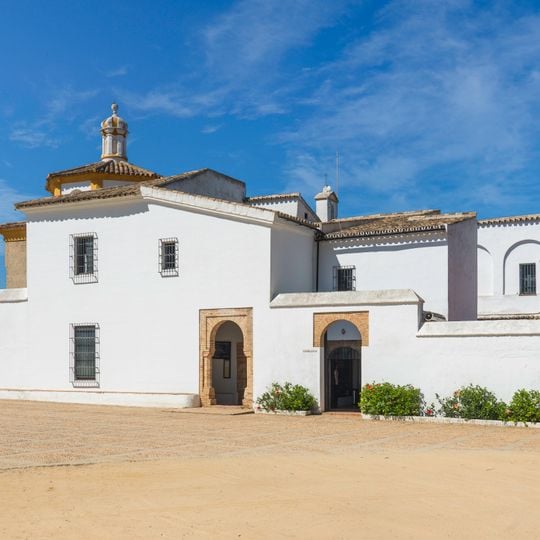
Santa María de la Rábida is a Franciscan monastery located south of Palos de la Frontera, around 8 miles (13 kilometers) from Huelva. Its irregular layout centers around a cloister and combines Gothic pointed arches with Mudejar mud-brick walls.
Documented foundation dates to a papal bull of Benedict XIII on 7 December 1412, granting Friar Juan Rodríguez and companions, resident at the hermitage since 1403, permission to form a community; friars rebuilt much of the convent in the early 15th century. Christopher Columbus stayed here around 1485 and again in 1490, when the guardian and Francisco Jiménez de Cisneros helped him gain a royal hearing. The Lisbon earthquake of 1755 forced major repairs, and restoration began in 1855 under the Duke of Montpensier.
The name comes from the Arabic ribat, a fortified monastery on the frontier; the site passed from a Muslim ribat to the Knights Templar and then to the Franciscans. Inside, the church holds a 13th-century alabaster carving of Our Lady of Miracles, the devotion that gives the friary its name. The museum keeps objects commemorating the discovery of the Americas.
The friary stands on a bluff above the meeting of the Tinto and Odiel rivers, 13 km south of Huelva, with the entrance marked by a small sign reading "ENTRADA". The complex has an irregular plan of about 2,137 m², so allow time to move between the church, cloister and museum. Parts of the visit cross several levels and uneven floors.
In the sacristy hang old navigation charts and reproductions of documents recalling the final discussions before the three caravels departed. These charts show how people pictured the world in the late 1400s and reveal how vague the intended destination really was.
The community of curious travelers
AroundUs brings together thousands of curated places, local tips, and hidden gems, enriched daily by 94,850 contributors worldwide.