Obelisk of Axum, Ancient obelisk in Axum, Ethiopia
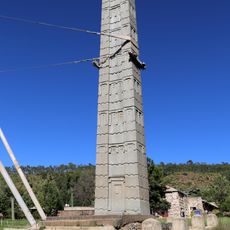
The Obelisk of Axum is a 24-metre phonolite stele in Axum, Ethiopia, carved from a single block and weighing 160 tonnes. Its four flat faces are divided into stacked sections of recessed, window-like panels, with two false doors at the base and a semi-circular top.
The stone was erected in the early fourth century CE over a burial chamber, during a time when the Kingdom of Axum rose to become one of the most important trading centres in ancient Africa. This period also marks the region's transition to Christianity, which reshaped its political and religious structures.
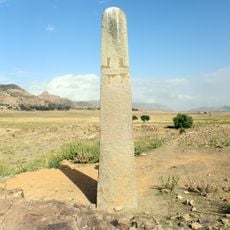
Locals call the stele hawelti in Tigrinya and Geʽez. Its carved false doors and window rows imitate a multi-storey building, a design reserved for royal burial markers; smaller, plainer steles stood for lesser nobles. The semicircular top once held metal frames.
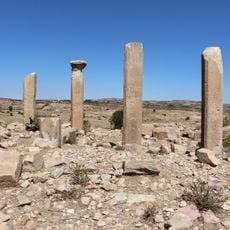
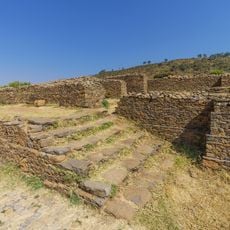
The stele stands in the Northern Stelae Field in Axum, beside King Ezana's Stele, where it was re-erected in 2008. Visitors walk between the upright and fallen stelae on open, uneven ground; the site is in a seismic zone and the stones are not to be touched or climbed. The stele is 24 metres tall and weighs 160 tonnes.
The stele was cut into three pieces in November 2003 under Giorgio Croci of Sapienza University of Rome. The runway at Axum Airport was lengthened specifically so an Antonov An-124 could land, and the middle section flew home on 19 April 2005. Re-erection was celebrated on 4 September 2008.
The community of curious travelers
AroundUs brings together thousands of curated places, local tips, and hidden gems, enriched daily by 95,134 contributors worldwide.