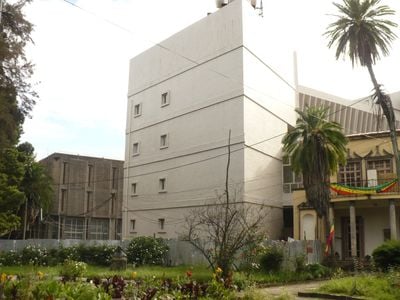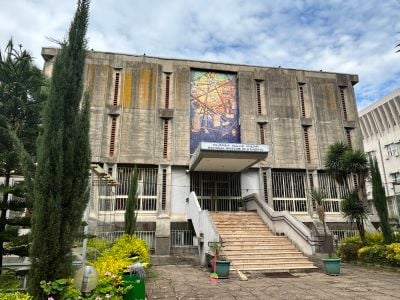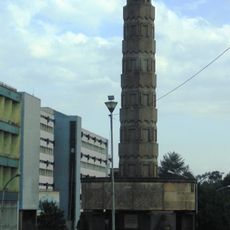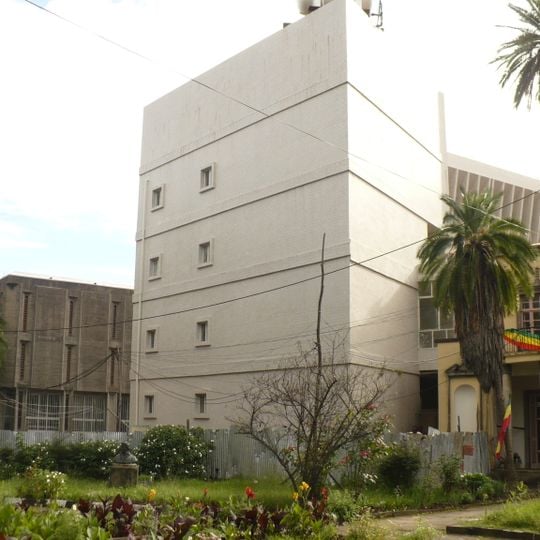
National Museum of Ethiopia, National museum in Addis Ababa, Ethiopia
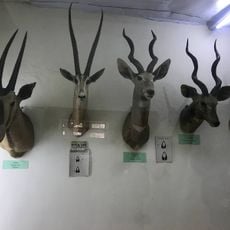
The National Museum of Ethiopia spans four exhibition floors with archaeological finds, historical artifacts, traditional art collections, and ethnographic displays. The basement holds fossil remains and skeletal specimens, while upper floors feature artworks and royal objects.
The institution arose from a 1936 exhibition of ceremonial dress from the Solomonic dynasty and became an official museum in 1958. This development shows how Ethiopia systematically preserved its historical legacy.
The museum displays Ethiopian traditions through handcrafted objects, musical instruments, and religious items that represent different regions and periods. Visitors can see how these things played a role in daily life and ceremonies.
Trained guides with English skills offer tours through the exhibits and help with navigation. It is wise to allow enough time for multiple floors, especially if you are interested in prehistoric or artistic collections.
The museum houses Lucy, the 3.2 million year old skeleton of an Australopithecus afarensis that changed our understanding of human evolution. This fossil specimen is one of the oldest known human ancestors and draws visitors from around the world.
The community of curious travelers
AroundUs brings together thousands of curated places, local tips, and hidden gems, enriched daily by 92,632 contributors worldwide.