Cayenne's Prison, Former penal colony in French Guiana
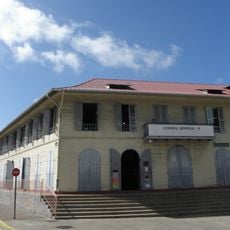
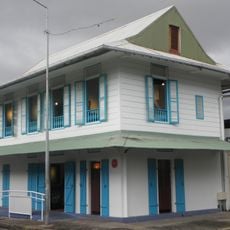
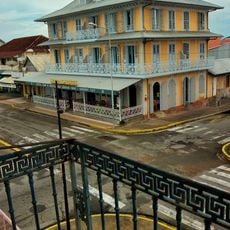
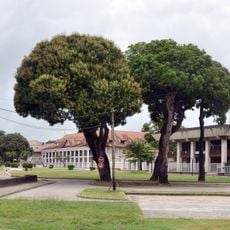
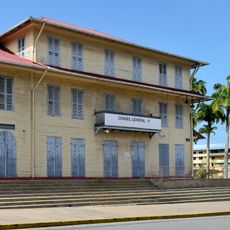
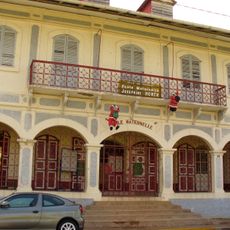
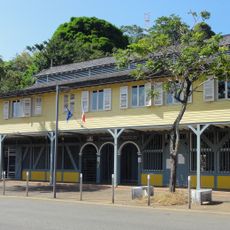
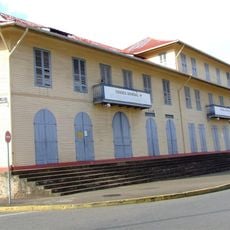
The Bagne de Cayenne stood on the Anse du Chaton near the Pointe de Buzaré in Cayenne. Its installations were three barrack camps named "Europe", "Africa" and "Asia", with four dormitories, 19 prisons, 77 cells, an infirmary, kitchens and staff housing. The surviving two-storey building has cream walls, a dark low-pitched roof and a brown-railed gallery on square pillars.
Founded in 1852 under Louis-Napoleon Bonaparte on the Anse du Chaton near the Pointe de Buzaré, the colony first held 3,000 political deportees after Napoleon III's coup. The law of 27 May 1885 sent repeat offenders, while Albert Londres's 1923 report in Le Petit Parisien undermined the institution. Officially abolished in 1938, it closed only in 1946, and the last convicts returned to France in 1953.
The penal colony entered French public memory through Albert Londres's report in Le Petit Parisien from 8 August 1923, which put the institution on hold. It also appears in the film Le Bluff and in the novel and film Papillon. The nickname "dry guillotine" referred to the punishments, malaria and violence there.
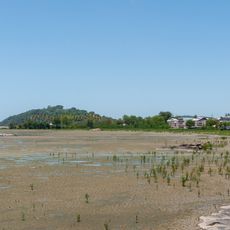
The site lies on the Anse du Chaton, near the Pointe de Buzaré in Cayenne, so it is reached on foot within the town rather than by boat. The compound was organised as three barracks named Europe, Africa and Asia, with four dormitories, 19 prisons and 77 cells, plus an infirmary, kitchens and staff housing. Look for the two-storey cream building with the brown-railed gallery and the plaque marked 25.
The nickname "dry guillotine" came from the violence, punishment and malaria that killed most convicts: of 17,000 men sent to Cayenne between 1854 and 1867, only 7,000 survived, and average life expectancy in the colony was three to five years.
The community of curious travelers
AroundUs brings together thousands of curated places, local tips, and hidden gems, enriched daily by 94,293 contributors worldwide.