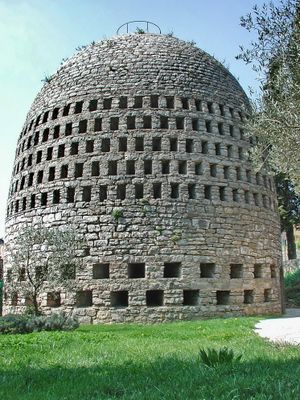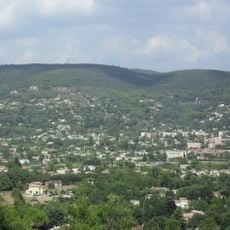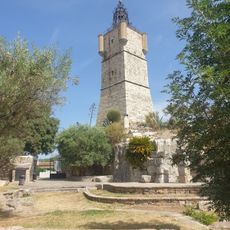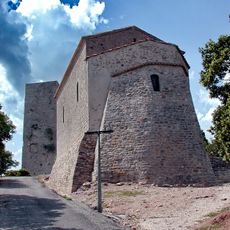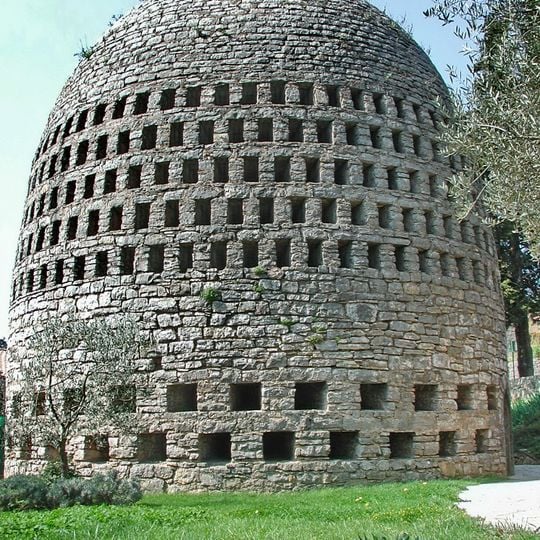
Trans-en-Provence air well, Historical air well in Trans-en-Provence, France.
The Trans-en-Provence air well is a monument to atmospheric water collection, featuring a central concrete column surrounded by thick walls made from porphyry and cement. The structure stands about 12 meters tall and displays a carefully engineered design with slate surfaces.
The structure was built in 1931 by Belgian engineer Achille Knapen after he presented his concept at a water congress in Algiers. It gained official recognition as a French historical monument in 1983.
The structure takes its name from the village where it stands and represents a creative response to water scarcity in arid regions. It shows how people once sought practical solutions by working with nature rather than against it.
The monument stands at Montée de la Cotte in the village and can be explored on foot while taking in the surrounding landscape. The best time to visit is on clear days when the structure is fully visible in natural light.
The structure employs a sophisticated system of slate tiles positioned at precise angles to capture moisture from the air and channel it into a central collection chamber. This approach was groundbreaking for its era and relied on careful observation of how nature handles water movement.
The community of curious travelers
AroundUs brings together thousands of curated places, local tips, and hidden gems, enriched daily by 90,791 contributors worldwide.