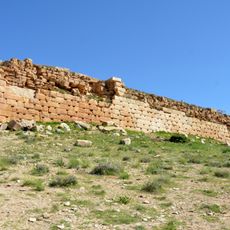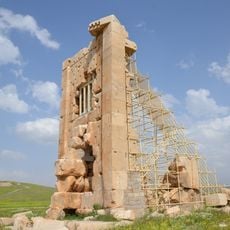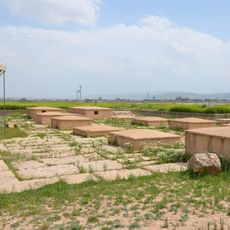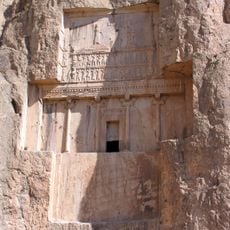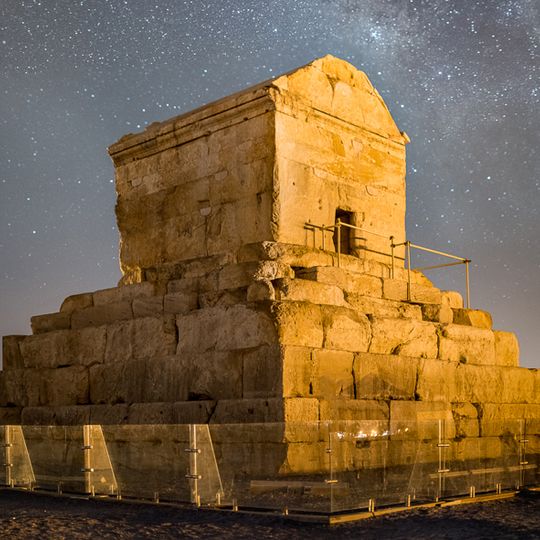
Tomb of Cyrus the Great, Ancient limestone mausoleum in Pasargadae, Iran.
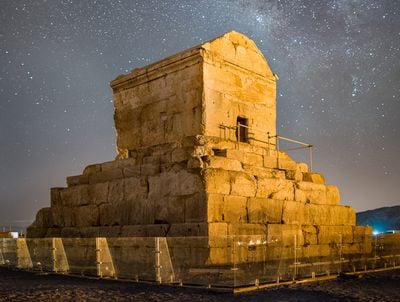
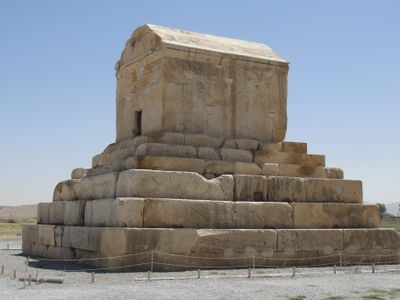
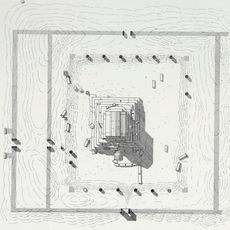
The Tomb of Cyrus the Great is a mausoleum in Pasargadae in Fars Province, Iran, standing on a six-step platform made of limestone. The burial chamber with its gabled roof sits on this wide base and reaches a total height of over eleven meters.
The burial site was created between 530 and 540 BCE for the founder of the first great Persian empire. Soldiers of Alexander looted the chamber in 330 BCE and damaged parts of the interior.
The structure bears the name of the Persian ruler who founded the empire and whose final resting place this was. Visitors see a plain burial chamber without decorations, showing how Persians honored their leaders.
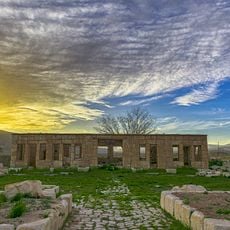
The tomb stands in a wide archaeological area and is accessible throughout the year. Spring offers comfortable temperatures for exploring the ruins on the plain.
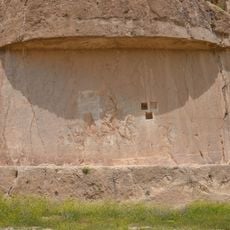
The six-tiered platform is described as the oldest known base-isolated structure: the stacked steps let the building shift slightly during earthquakes. The chamber walls are up to 1.5 metres thick, and the entrance is only 78 centimetres wide and 140 centimetres tall. A carved flower once filled the triangle above the doorway; only half survives, recorded in a 1638 drawing by Johan Albrecht von Mandelslo.
The community of curious travelers
AroundUs brings together thousands of curated places, local tips, and hidden gems, enriched daily by 93,353 contributors worldwide.