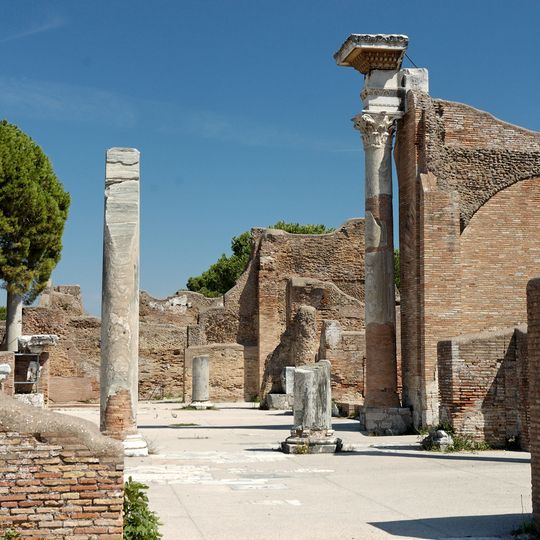
Ostia, Archaeological site in Lido di Ostia, Italy
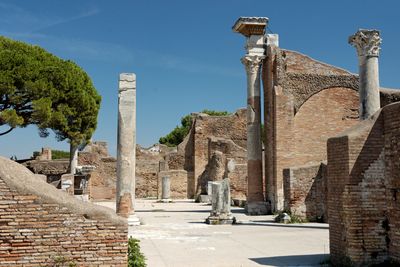
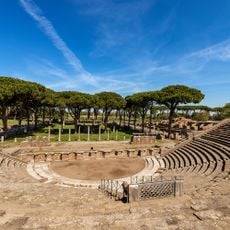
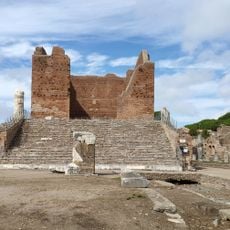
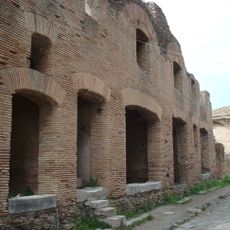
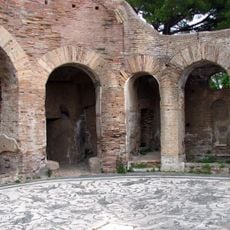
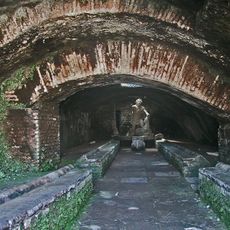
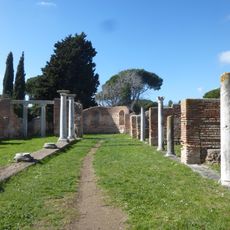
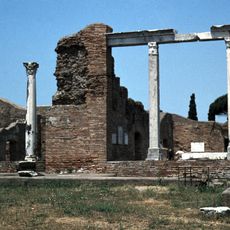
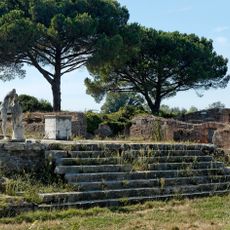
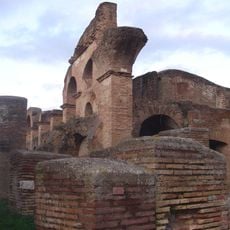
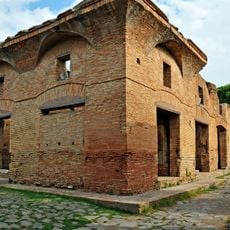
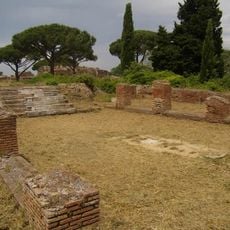
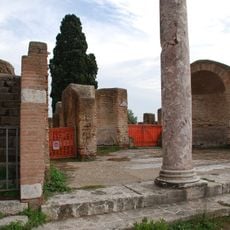
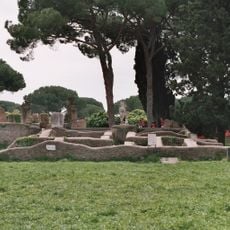
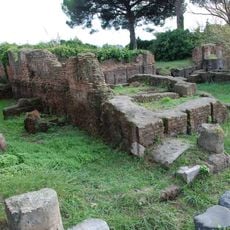
Ostia is an excavated Roman port city in Lido di Ostia, with remains that show streets, shops, houses, warehouses, theaters and public baths along the Decumanus Maximus. The ruins cover a wide area where visitors walk between ancient buildings and follow the layout of a Roman town.
The settlement began in the 7th century BCE at the Tiber mouth as a naval base and later grew into Rome's main trade harbor. Over the centuries the city expanded, then was gradually abandoned after the fall of the Roman Empire.
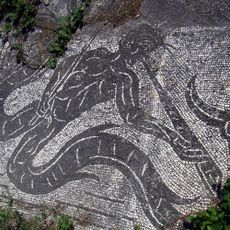
Merchants from across the Mediterranean stored goods in the large warehouses before transport to Rome, and mosaics on many building facades still show which trades worked there: shipowners, bakers, grain sellers or ropemakers left their marks. The port district attracted people from many regions, and their presence shaped the daily rhythm of the streets.
The site is large, so visitors should plan several hours and wear comfortable shoes, as paths can be uneven. In summer a morning visit is advisable, since it gets very hot later and shade is limited.
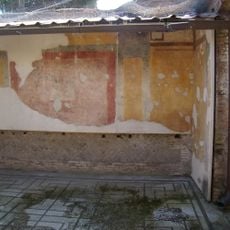
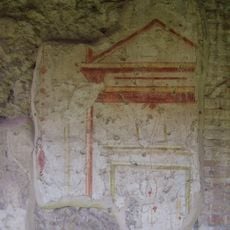
After the city was abandoned, sand covered the buildings and protected many mosaics, frescoes and structures over the centuries. This natural preservation allows visitors today to see details often lost at other Roman sites.
Location: Roma Capitale
Website: https://ostiaantica.beniculturali.it
GPS coordinates: 41.75417,12.28750
Latest update: December 4, 2025 19:05
Italy holds archaeological sites spanning several millennia, offering insights into Etruscan, Greek and Roman civilizations. These locations include necropolises with thousands of tombs, well-preserved Roman villas and ancient settlements along the Mediterranean coast. Many of these sites lie beyond the more familiar destinations and document different aspects of Italian history. The Necropolis of Pantalica near Sortino contains approximately 5,000 rock-cut tombs from the Sicilian Bronze Age, while the Villa of the Mysteries in Pompeii is known for its wall paintings from the first century BCE. Villa del Casale near Piazza Armerina displays Roman floor mosaics covering more than 37,500 square feet (3,500 square meters). Etruscan burial sites like the Tomb of the Orcus in Tarquinia preserve frescoes from the fourth century BCE. The Archaeological Park of Elea-Velia near Ascea includes remains of a Greek colony founded in the sixth century BCE.
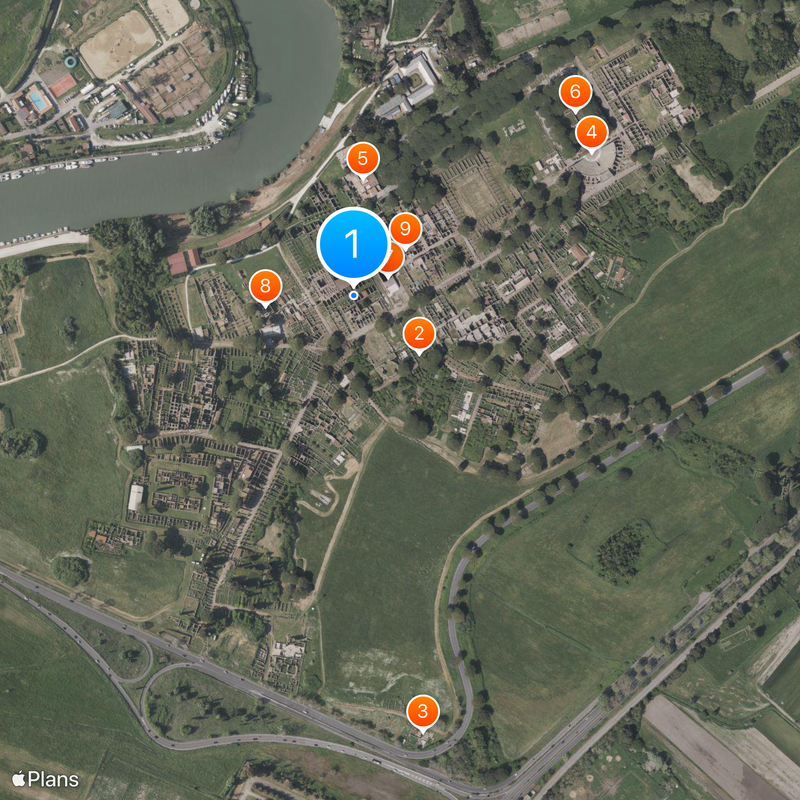
Ostia Antica
117 m
Ostia Synagogue
595 m
Roman Theatre of Ostia
375 m
Museo Archeologico Ostiense
159 m
Piazzale delle Corporazioni
389 m
Capitolium
52 m
House of Cupid and Psyche
121 m
Domus di Giove e Ganimede
93 m
Barracks of the Vigiles
489 m
Terme dei Sette Sapienti
223 m
Mithraeum at the Baths of Mithra
208 m
House of the Muses
284 m
Basilica Cristiana
154 m
Porta Marina
381 m
Tomb of Caius Cartilius Poplicola
457 m
Museo ostia antica
141 m
Temple of Hercules at Ostia
124 m
Forum Baths, Ostia
163 m
House of Annius
302 m
Caseggiato degli Aurighi
241 m
Campus of the Magna Mater
330 m
Schola del Traiano
202 m
Temple of the Ship Carpenters
205 m
Caseggiato di Diana (I,III,3-4)
132 m
Temple of Roma and Augustus, Ostia
117 m
House of the Shops with Show-windows
238 m
Square of Porta Marina
401 m
Maritime Baths (III,VIII,2)
208 mReviews
Visited this place? Tap the stars to rate it and share your experience / photos with the community! Try now! You can cancel it anytime.
Discover hidden gems everywhere you go!
From secret cafés to breathtaking viewpoints, skip the crowded tourist spots and find places that match your style. Our app makes it easy with voice search, smart filtering, route optimization, and insider tips from travelers worldwide. Download now for the complete mobile experience.
A unique approach to discovering new places❞
— Le Figaro
All the places worth exploring❞
— France Info
A tailor-made excursion in just a few clicks❞
— 20 Minutes