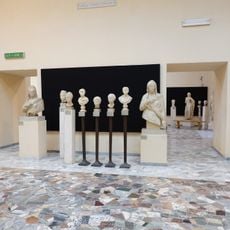
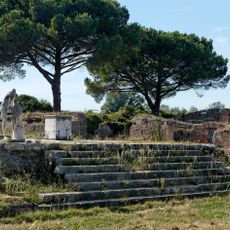
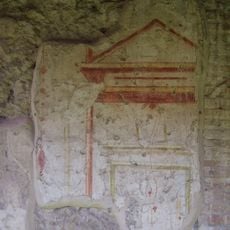
Roman Theatre of Ostia, Roman theatre in Ostia, Italy
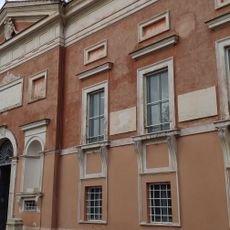
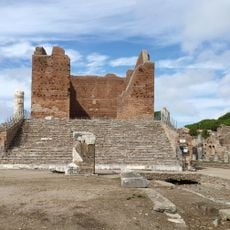
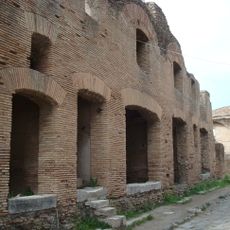
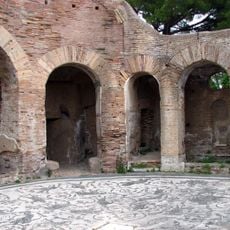
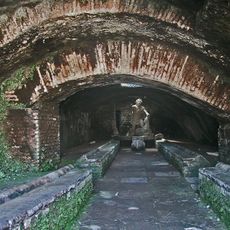
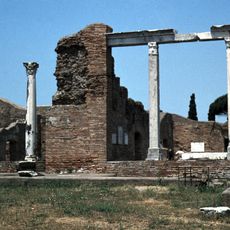
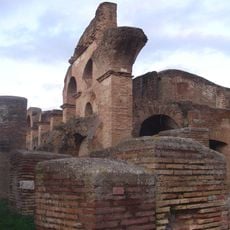
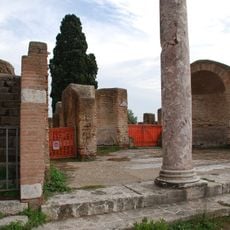
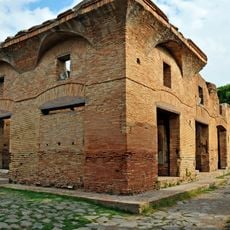
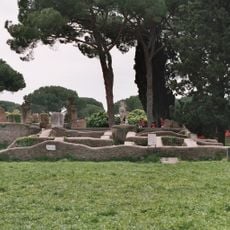
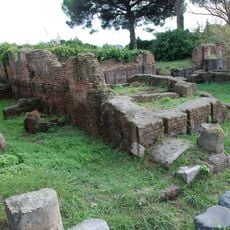
The Roman Theatre of Ostia (II,VII,2) was built under Agrippa in opus reticulatum and tufa opus quadratum, with a portico of two arcaded orders topped by an attic with windows. Behind the arcades ran a concentric corridor giving onto sixteen radial shops with back rooms and mezzanines, alternating with the central entrance and four staircases. The stage front carried niches framed by small columns and theatrical masks.
The theatre was built between 19 and 12 BC under the patronage of Marcus Vipsanius Agrippa, friend and son-in-law of Augustus, as recorded in fragments of the dedicatory inscription found during excavation. It originally seated 3,000 spectators. A second inscription from the stage, dated 196 AD, credits Septimius Severus and Caracalla with a reconstruction, though brick stamps show work had begun under Commodus; capacity then reached 4,000.
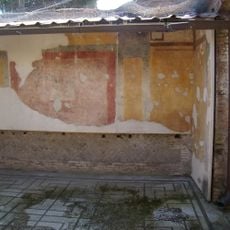
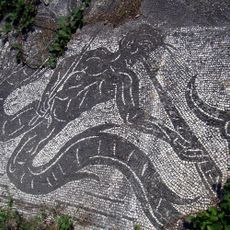
The decorative elements throughout the structure reveal how performances were staged, with stucco work adorning the corridors and columned niches framing the stage. Walking through, you can see how the design guided spectators' attention toward the theatrical action.
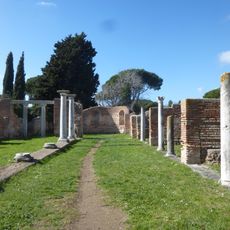
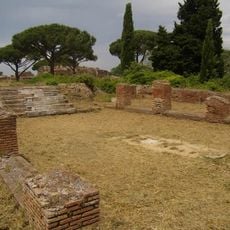
The excavation site can be visited during regular opening hours as part of the larger Ostia Antica Archaeological Park. Visitors should expect uneven ground and wear comfortable shoes, as there is considerable walking involved.
The orchestra area contained mechanisms that allowed water-based performances, transforming the space into a venue for aquatic displays. This technical sophistication reveals how Roman engineers created spectacular entertainment options.
The community of curious travelers
AroundUs brings together thousands of curated places, local tips, and hidden gems, enriched daily by 93,873 contributors worldwide.