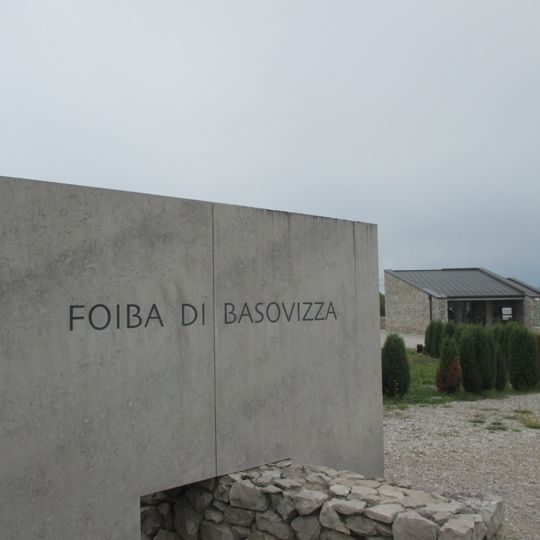
Foiba of Basovizza
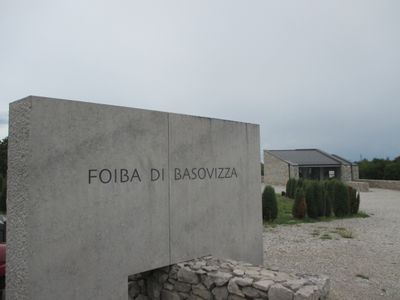
The Foiba of Basovizza is a natural karst sinkhole on the plateau east of Trieste, officially recognized as a national memorial site. A stone monument stands at the edge of the opening, which is covered by a steel frame that allows visitors to look down into the shaft below.
The shaft was first used as part of a coal mine, then after 1945 it became a place where hundreds of people, mostly Italians, were killed by Yugoslav partisans and thrown into the pit. The site was officially recognized decades later, and in 1992 it was declared a national monument by the Italian state.
The word foiba comes from Latin fovea, meaning pit, and was used in this region to name the natural sinkholes of the karst plateau. Today the site is visited as a place of mourning, and a large steel grate covers the opening of the pit, giving visitors a direct view into the void below.
The site sits on the edge of the village of Basovizza, east of Trieste's city center, and is clearly signposted from the main road. A short visit is possible, but taking time to read the memorial panels around the opening gives a much fuller sense of the place.
For decades after the war, the events at this site were barely discussed in public in Italy, partly because they were entangled in the political tensions of the Cold War era. The national day of remembrance for all foibe victims was only established in 2004, more than half a century after the killings.
The community of curious travelers
AroundUs brings together thousands of curated places, local tips, and hidden gems, enriched daily by 91,603 contributors worldwide.