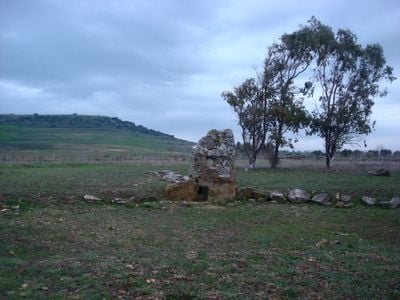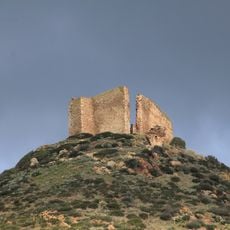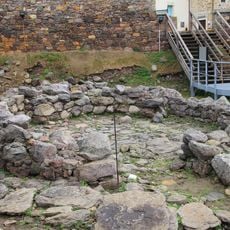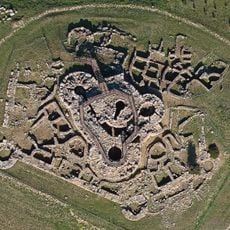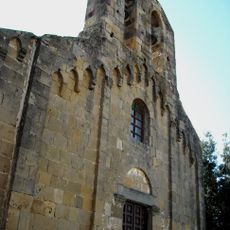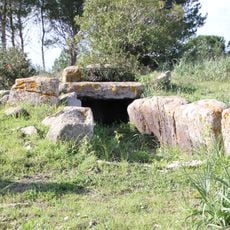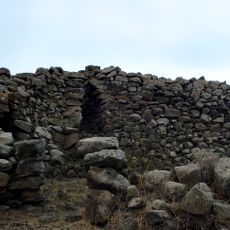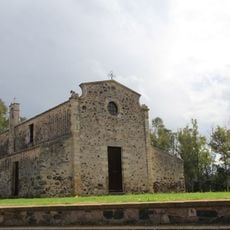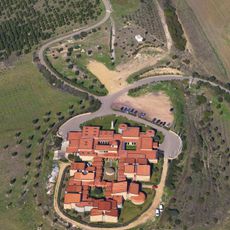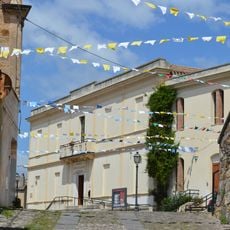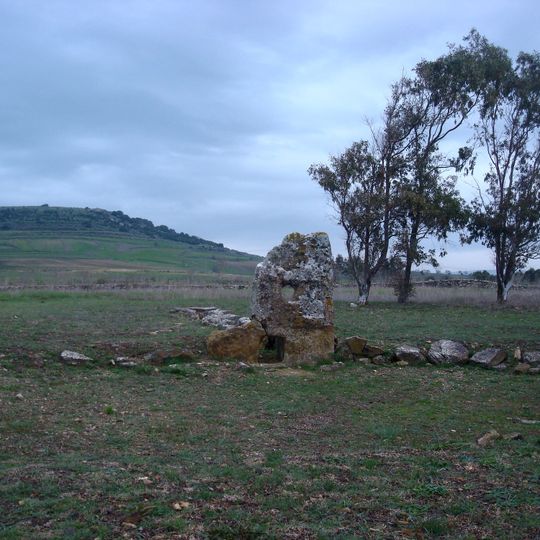
Tomba dei giganti di Su cuaddu 'e Nixias, Bronze Age burial site in Lunamatrona, Italy.
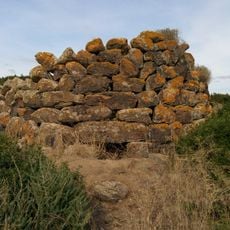
This burial monument consists of an underground chamber accessed by a roughly 10-meter passageway built from local marly stone and roofed with flat stone slabs. A distinctive stone marker featuring a curved niche stands at the entrance and defines the structure's appearance.
The burial site originated during the Late Eneolithic period between 2400 and 2100 BC as a simple stone cist surrounded by four slabs. It was later enlarged and transformed into a more elaborate underground chamber structure over subsequent generations.
The site reveals how ancient Sardinians honored their dead and organized collective burial spaces within their communities. The prominent stone marker with its curved design served as a lasting monument that connected the living to their ancestors.
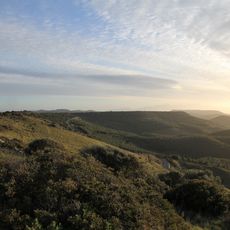
The site is located in open countryside and can be reached on foot from the village, though sturdy shoes help navigate the uneven terrain. The artifacts recovered from excavations are displayed at the Genna Maria Archaeological Museum in nearby Villanovaforru.
A circular opening in the upper part of the stone marker inspired the site's name Su cuaddu e Nixias, rooted in a local tale about tethering horses. This distinctive perforation in the monument itself connects directly to the legend that shaped its identity.
The community of curious travelers
AroundUs brings together thousands of curated places, local tips, and hidden gems, enriched daily by 92,569 contributors worldwide.