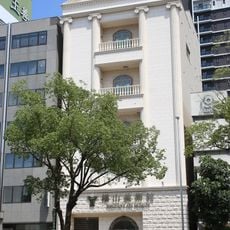
Cultural Path Shumokukan, Traditional residence in Nagoya, Japan.
The Imoto Tamesaburō House is a traditional Japanese residence in Nagoya with a dual design that joins a Western building to classical Japanese rooms. The structure combines modern materials with crafted details that display the family's private quarters and gathering spaces.
Tamesaburō Imoto, a ceramics processor and wholesaler who headed the Nagoya Ceramic Trade and Industry Association, built the residence around 1926. It survived the Nagoya air raids of World War II, although the former Third Higher Girls' School facing it was bombed. Vacant and neglected afterwards, it was rented by a citizens' group from 1996 to 2002 and used as a cultural salon.
The residence blends Western stained glass accents with traditional Japanese rooms featuring tatami mats and sliding doors. This combination shows how prosperous families of that era lived between two cultural worlds.
Visitors can explore the study areas, living quarters, and guest rooms through guided tours that explain the house's history and the family's life. The tours help you understand how each room was used in daily living.
During the 1945 Nagoya air raids, most of the city centre burned, including the former Third Higher Girls' School facing the house, yet this building survived. It then stood derelict until a citizens' group rented it from 1996 to 2002 and ran it as a cultural salon for plays, concerts and fashion shows.
The community of curious travelers
AroundUs brings together thousands of curated places, local tips, and hidden gems, enriched daily by 94,640 contributors worldwide.