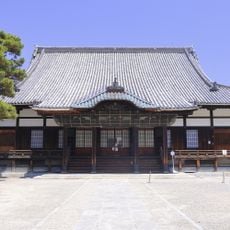
Chōkyū-ji, Nagoya, Buddhist temple in Higashi-ku, Nagoya, Japan.
Chōkyū-ji is a Shingon-shū Chizan-ha temple in Shirakabe, Higashi-ku, Nagoya. Its mountain name is Tōgakuzan and its main image is Fudō Myōō. The temple was founded in 1601 and moved to its present site in 1610, when Tokugawa Yoshinao entered Nagoya Castle.
The temple was founded in 1600, when Matsudaira Tadayoshi moved to Kiyosu Castle in Owari Province and the following year invited Jukei from Chōkyū-ji in Musashi Province to serve as founding abbot. In 1610, when Tokugawa Yoshinao entered Nagoya Castle, it was relocated to its present site. It became a prayer temple of the Owari Tokugawa family, and a Shingi Shingon school was established there.
The temple belongs to the Chizan school of Shingon Buddhism and is dedicated to Fudō Myōō as its main image. It became a prayer temple of the Owari Tokugawa family, and a school for the Shingi Shingon tradition was set up on the grounds. A Keōtō stone tower dated to 1668 is a municipal designated folk cultural property.
Chōkyū-ji stands at 3-24-47 Shirakabe, Higashi-ku, Nagoya, in the Shirakabe district east of Nagoya Castle. The temple belongs to the Chizan school of Shingon Buddhism and is dedicated to Fudō Myōō. Look for the Kōshin tower dated to 1668, a folk cultural property designated by the city of Nagoya.
The temple's only designated cultural property is a kōshintō stone tower dated to 1668 (Kanbun 8), registered as a municipal tangible folk cultural property of Nagoya. Such towers were raised for Kōshin observances; the date is carved on the stone itself.
The community of curious travelers
AroundUs brings together thousands of curated places, local tips, and hidden gems, enriched daily by 94,021 contributors worldwide.