Konyō Shrine, Shinto shrine in Hanamigawa-ku, Chiba, Japan
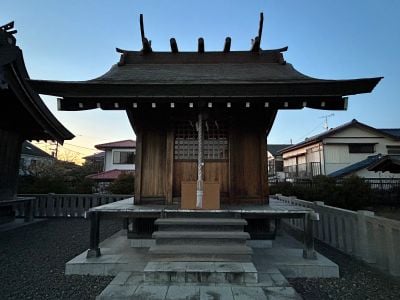
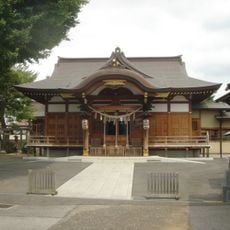
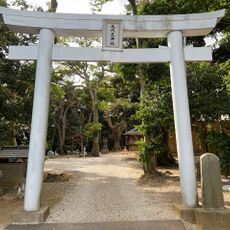
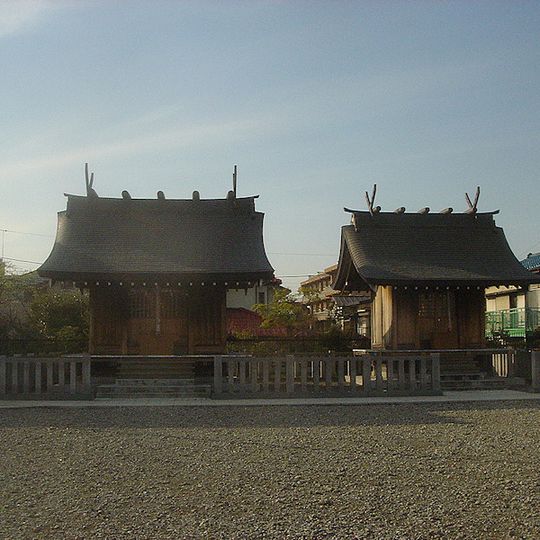
Konyō-jinja is a small Shinto shrine in Makuhari, Hanamigawa-ku, Chiba, rebuilt in 2004. Two unpainted wooden shrine buildings stand side by side on a low stone foundation, each with a steep dark roof whose ridge carries crossed wooden poles and a row of small white pendants under the eaves. A low fence of upright wooden slats runs in front of both.
The shrine was founded to honour Aoki Kon'yō, the scholar who proposed sweet potato cultivation to the shogun's minister Ōoka Tadasuke as famine relief. Trial plots were set at Musashi-Koishikawa, Makuhari in Shimōsa and Fudō in Kazusa; the Makuhari plot saved the area during the Tenmei famine. The present building dates from 2004, when it was rebuilt because of work closing a level crossing beside Keisei Makuhari Station.
Aoki Kon'yō, who introduced sweet potato cultivation here in the mid-Edo period, is worshipped as the "imo-gami" (potato deity). The shrine stands next to the Akiba Shrine, deity of fire, and local people still pray to Kon'yō for protection from famine and poor harvests.
The shrine sits within walking distance of main streets and is easy to find with simple signs marking the way. Visitors can enter freely at any time and walk around without worrying about tickets or scheduled hours.
The shrine was rebuilt in 2004 because of work to close a level crossing beside Keisei Makuhari Station that never opened to let pedestrians through. Aoki Kon'yō, who introduced sweet potato cultivation here, is honoured as the "potato deity" and is still worshipped by local people.
The community of curious travelers
AroundUs brings together thousands of curated places, local tips, and hidden gems, enriched daily by 94,818 contributors worldwide.