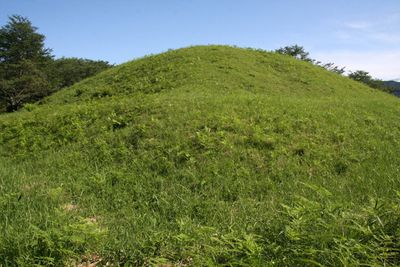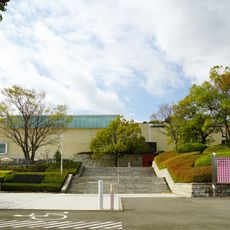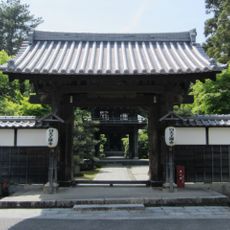
Akeai Kofun, Square kofun in Ano, Tsu, Japan
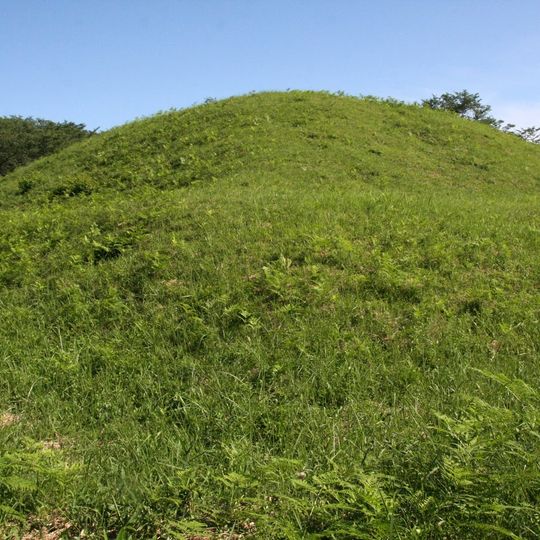
Akeai Kofun is a square-shaped burial mound in Tsu City measuring approximately 81 meters long, 60 meters wide, and 10 meters in height. The structure is composed of compacted earth and displays the typical form of tombs from the Kofun period.
The mound was built in the first half of the 5th century, in the early Middle Kofun period, as the largest chiefly tomb in the Ano River basin. It was found in 1949 by the history club of Tsu High School and surveyed by scholars including Toshio Suzuki and Suetaka Umehara. On 11 October 1952 it was designated a National Historic Site.
The name Akeai comes from the former Akeai village in Ano, Tsu. The mound's hourglass-like shape, with extensions north and south, led some scholars to call it a sōhōchū-hōfun, though today it is generally classed as a square tomb with ceremonial platforms. Visitors can see reconstructed fukiishi stones and haniwa figures in the historic park.
The site is accessible by foot from a nearby bus stop, with the final part of the visit involving a walk through the local area. The location is outdoors, so visitors should be prepared for weather conditions and wear appropriate footwear.
The mound's hourglass outline comes from two extensions, north and south, added to the square core; with them the tomb runs 81 metres long and 10 metres high. Five small square tombs, probably satellite burials, survive around it, and traces of a platform between the main mound and tomb No. 2 may mark a ritual site.
The community of curious travelers
AroundUs brings together thousands of curated places, local tips, and hidden gems, enriched daily by 93,469 contributors worldwide.