Nagano Castle, Japanese castle in Tsu, Japan.
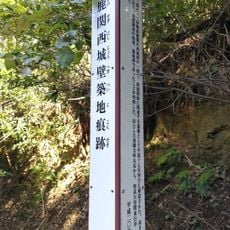
Nagano Castle is a ruined Muromachi-period yamashiro on a 520 m mountain in the Misato area of Tsu, Mie Prefecture. Its main enclosure has earthen ramparts on three sides and stepped terraces below, while the Higashi-no-jo, Naka-no-jo and Nishi-no-jo outworks lie on a ridge at about 230 m. Dry moats and overlapping semi-circular earthworks surround each enclosure; only overgrown remnants and a monument at the summit remain.
Nagano Castle was built in 1274 by Kudō Sukefuji as the base of the Nagano branch of the Kudō clan, who held much of Anno and Anki districts. The Kitabatake clan captured it in 1346, and the Kudō retook it in 1352. From 1360 Niki Yoshinaga, in revolt against the Muromachi shogunate, held it through a siege of more than two years. In 1569 Oda Nobunaga made peace and had his brother Nobukane adopted into the clan; Nobukane moved to Ueno Castle in 1570 and Nagano Castle was abandoned.
The castle's name comes from the Nagano clan, a branch of the Kudō who held Anno and Anki districts of Ise. The site is now a National Historic Site, and a monument stands at the top of the mountain. Visitors see only overgrown traces of moats and earthworks, with no buildings left standing.
The ruins sit on a 520 m summit reached by mountain trail, with the outlying Nishi-no-jō on a lower ridge at 230 m; there are no buildings, only overgrown moats, earthworks and a monument at the top. The site is about 45 minutes by car from Tsu Station on the Kintetsu Nagoya Line. Wear sturdy shoes and carry water; the climb is steep and the paths uneven.
The castle's name passed to a cadet branch of the Kudō clan, the Nagano clan, who ruled most of Anno and Anki districts of Ise Province in the early Muromachi period. The site is a National Historic Site since 16 January 1982, together with the Higashi-no-jō, Naka-no-jō and Nishi-no-jō enclosures.
The community of curious travelers
AroundUs brings together thousands of curated places, local tips, and hidden gems, enriched daily by 93,603 contributors worldwide.