Lake Shumarinai, Artificial reservoir in northern Hokkaido, Japan
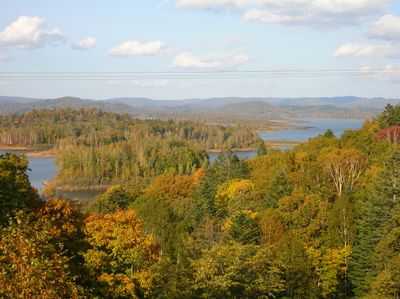
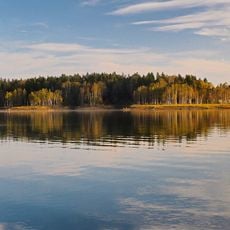
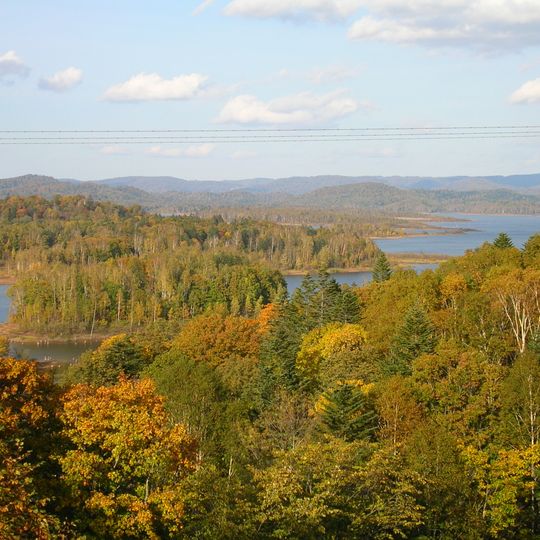
Lake Shumarinai is an artificial reservoir on the upper Uryu River in Horokanai, Hokkaido, formed in 1943 by the Uryu First Dam. Its flooded valley left a deeply indented shoreline of narrow inlets and rounded coves winding between low wooded land, with a long low island or peninsula near the centre and further narrow channels to the right.
Lake Shumarinai formed in 1943 when the Uryu First Dam was completed on the upper Uryu River. Its surface covers 2,373 hectares, the largest reservoir area in Japan, and its total storage capacity remained the country's largest until the postwar Sakuma Dam. Flooding the valley created the indented shoreline and the small islands seen today.
The name Shumarinai comes from the place name, itself of Ainu origin, though the sources record several competing explanations. Today the lake draws canoeists, boaters and anglers; the rare ito, called the phantom fish, is occasionally caught. In winter smelt fishing through the ice keeps the frozen surface busy.
The lake lies at 282 m in a basin that is among Hokkaido's coldest spots, so pack for low temperatures even outside winter. Winter ice fishing for smelt draws anglers, while canoeing, boating and fishing fill the open-water months. In May 2023 a fisherman was killed by a brown bear on the shore, so carry bear precautions.
The lake's cold, high-altitude basin (surface at 282 m) is one of Hokkaido's chilliest spots; in good conditions diamond dust can be seen over the water in winter. The reservoir was Japan's largest by surface area (2,373 ha) when the Urayu No. 1 Dam was completed in 1943.
The community of curious travelers
AroundUs brings together thousands of curated places, local tips, and hidden gems, enriched daily by 93,658 contributors worldwide.