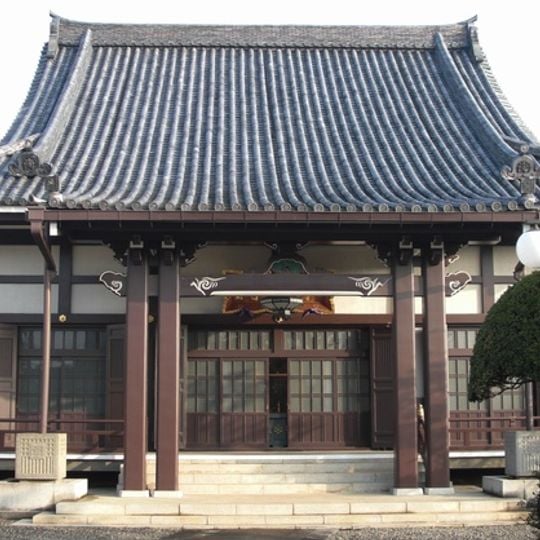
Honmyō-ji Temple, Buddhist temple in Sugamo, Japan
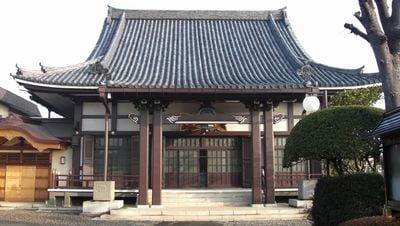
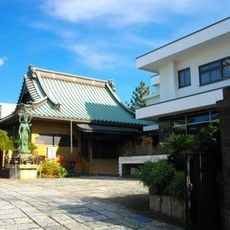
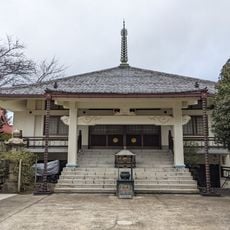
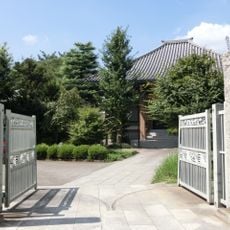
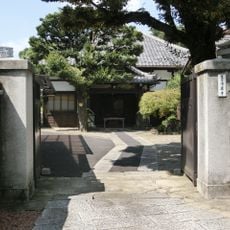
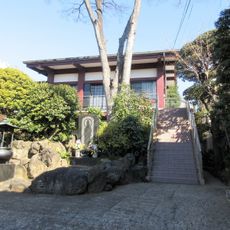
Honmyō-ji is a single-storey wooden temple building with a hipped gable roof of grey-blue ridged tiles and upturned eaves. Four dark brown square pillars on a raised stone base divide the white facade with dark timber framing; three wide stone steps lead to a central entrance flanked by glazed doors and windows.
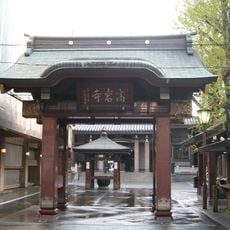
Founded in 1572 by the monk Nichikei at the request of Kuze Hironobu and other Tokugawa vassals, the temple moved several times in Edo before settling at Hongō Maruyama, where it stood for about 270 years. In 1908 it began a three-year move to Sugamo, linked to rebuilding its head temple Honjō-ji after an 1893 fire. In 1945 the Tokyo air raids destroyed all but the bell tower and one side of the gate.
The temple belongs to the Hokke-shū Jimon branch and is the betsuin (branch temple) of Honjō-ji in Sanjō, Niigata. Its graves include that of Tōyama Kagemoto, the Edo city magistrate who inspired the TV hero "Tōyama no Kin-san", and of the Hon'inbō go family and shogi master Amano Sōho. A memorial tower for the Great Meiwa fire stands behind the main hall.
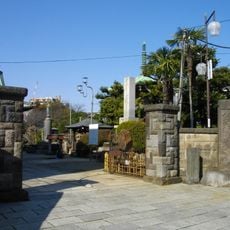
The temple is located in Toshima ward and is easily accessible to visitors. Handwritten calligraphy stamps and other souvenirs are available at the temple office beside the main hall.
The temple grounds hold a memorial tower for the Great Ansei earthquake beside one for the 1657 Meireki fire. The Meireki fire was long blamed on this temple, and the senior councillor Abe Tadaaki sent 15 bales of rice yearly as a memorial fee, a payment continued until the 1923 Great Kantō earthquake.
The community of curious travelers
AroundUs brings together thousands of curated places, local tips, and hidden gems, enriched daily by 94,843 contributors worldwide.