Honzen-ji, Buddhist temple in Togane, Japan
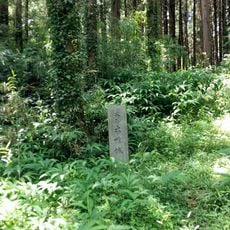
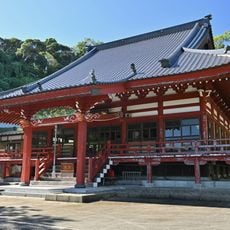
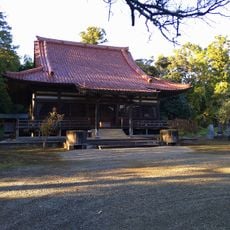
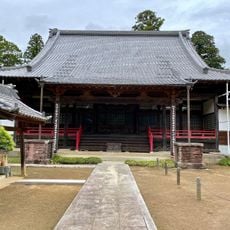
Honzen-ji is a Hokke (Myomanji-ha) temple on the slopes of Mount Hozan in Togane, Chiba Prefecture, and the family temple of the Togane-Sakai clan. It was originally a Soto Zen temple called Gumyo-ji in Matsunogo, then converted to the Myomanji-ha and renamed; the Sakai moved it to its present site during the Sengoku period. Its grounds hold the tomb of the monk Nichiin, a designated historic site of Togane.
Honzen-ji's founding date is unknown; it began as a Sōtō Zen temple called Gumyōzan Ganjō-ji in Matsunogō, then converted to the Myōman-ji branch of Hokke and was renamed Kotokuzan Honzen-ji. The Sakai clan, lords of Tōgane Castle, moved it to its present site in the Sengoku period. In the Edo period it was one of the ten Kantō temples of the Myōman-ji branch, and in 2016 it left the Kenpon Hokke sect to become independent.
The temple is the family temple (bodai-ji) of the Togane-Sakai clan, the warrior family that ruled Togane Castle and moved the temple to its present site. Its mountain name, Hozan, and its status as head temple of the Joshi-ryo line of the Myomanji school are part of its identity. The grave of the monk Nichiin, a Togane City-designated historic site, stands on the grounds.
Honzen-ji stands at 1423 Togane, Togane City, Chiba Prefecture, a short walk or bus ride from JR Togane Station on the Togane Line. It is an active temple of the Hokke (Myomanji) school, so visitors time their look around the halls to avoid services. The grave of the monk Nichiin, a Togane City historic site, lies on the grounds.
The temple holds the grave of the monk Nichiin, designated a historic site by the city of Togane. It is the family temple of the Sakai clan, lords of Togane Castle, who moved the temple to its present location during the Sengoku period.
The community of curious travelers
AroundUs brings together thousands of curated places, local tips, and hidden gems, enriched daily by 94,112 contributors worldwide.