Hibita Shrine, Shinto shrine in Japan
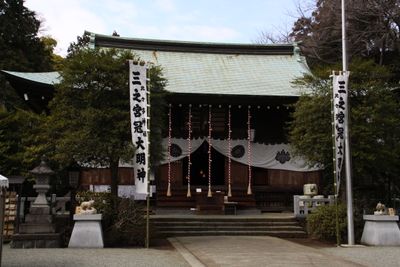
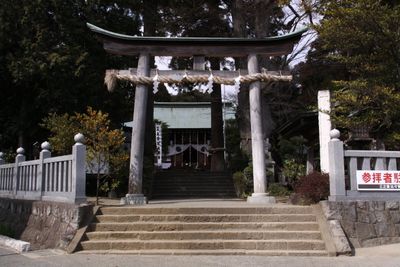
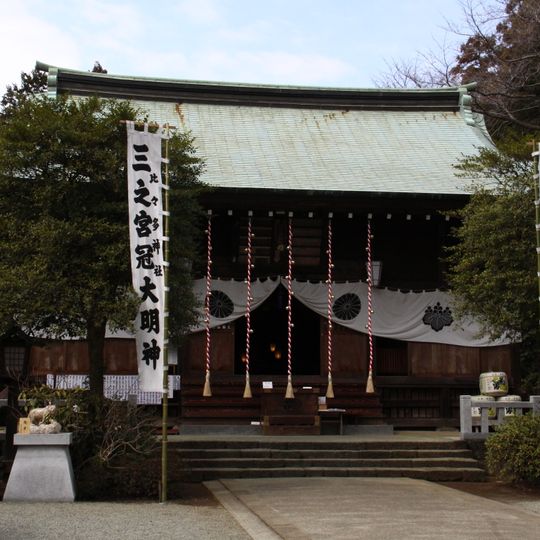
Hibita Shrine stands at the foot of Mount Ōyama in Isehara. A stone torii gate tops a broad stairway, hung with a twisted straw rope and white zigzag streamers. Beyond it, a second flight of steps leads to a wooden worship hall with a low-pitched metal roof and a white cloth canopy bearing two black-and-white crests.
Listed in the 927 Engishiki shrine register as Hihita Shrine of Sagami Province, it was one of five shrines serving the provincial capital and ranked as the province's third shrine. In 1184 Minamoto no Yoritomo rebuilt its halls, and in 1192 he prayed here for Hōjō Masako's safe childbirth. The shrine lost its lands to fire around 1492–1501 and was moved to its present site in the early 1570s; Tokugawa Ieyasu granted it a 10-koku charter in 1591.
The shrine's name appears in the 927 Engishiki register as Hihita Jinja, and it was also called Kanmuri Daimyōjin, a title granted by Emperor Junna in 832. It is one of the Sagami Five Shrines taking part in the Kōnomachi festival on 5 May at Kōzu, where it is known for the chimaki rice-cake throwing and the wild mikoshi procession.
Hibita Shrine is reached from Isehara Station's north exit by Kanagawa Chuo Kotsu bus: take the I16 for Kurihara and get off at the Hibita-jinja stop, a 2-minute walk, or the I41 for Isehara Shako and walk 7 minutes from Sannomiya. The main festival on 21–22 April draws crowds for the three mechanical-doll floats.
The shrine's grounds hold a Middle Jōmon period stone setting excavated on site, which the shrine regards as evidence of mountain worship going back some ten thousand years. A museum founded in 1953 by former priest Nagai Sanji stands next to the shrine.
The community of curious travelers
AroundUs brings together thousands of curated places, local tips, and hidden gems, enriched daily by 93,467 contributors worldwide.