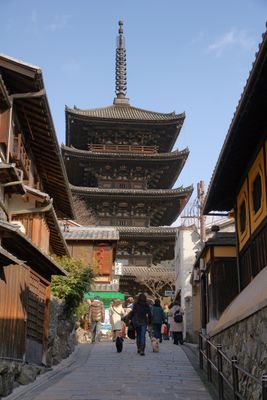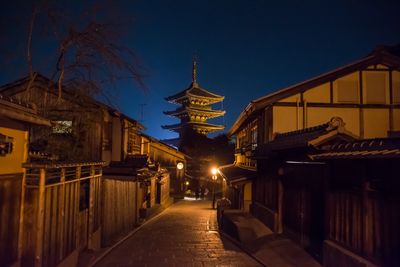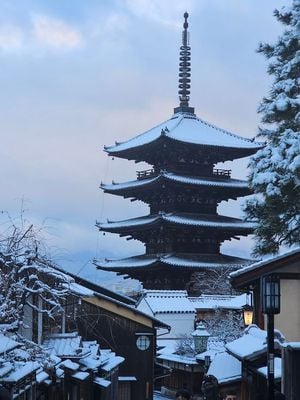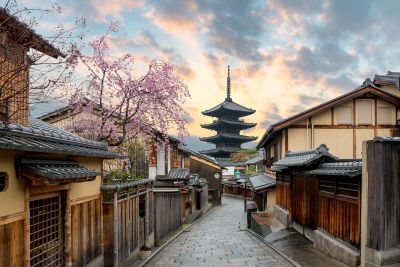
Hōkan-ji Temple, Buddhist temple with five-storied pagoda in Higashiyama district, Kyoto, Japan
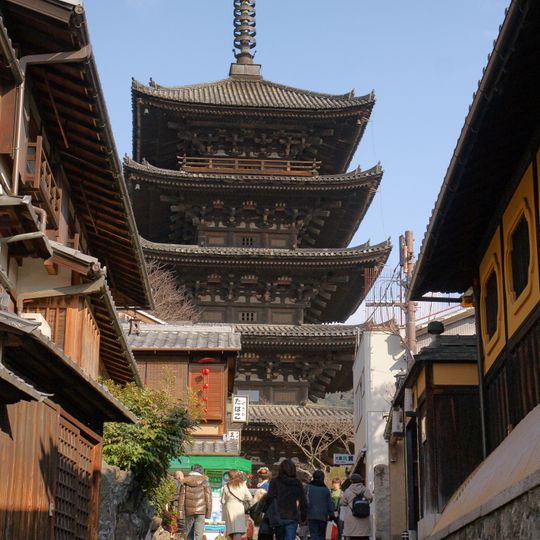
Hōkan-ji is a Buddhist temple site with a five-story pagoda in the Higashiyama district of Kyoto. The wooden structure rises 46 meters and displays multiple layers of curved roofs and decorative elements along the exterior.
Founded in the 7th century, Hōkan-ji is counted among Kyoto's oldest temples; archaeological finds of 7th-century tiles and brick Buddhas support an origin under the Tenmu court. Burnt in 1179 amid a feud between Gion Shrine and Kiyomizu-dera, the pagoda was rebuilt in 1191 with funds from Minamoto no Yoritomo. The present tower dates from 1440, rebuilt by shogun Ashikaga Yoshinori after the 1436 fire.
The name Yasaka comes from Yasaka village, where Goguryeo settlers who became the Yasaka no Miyatsuko clan helped build the temple, first called Yasaka-dera. It took its present name, Hōkan-ji, in 1240 when the Zen monk Saiō Shōkyū of Kennin-ji revived it. In the Sengoku period, warlords entering Kyoto flew banners with their family crests from the pagoda to announce who now ruled.
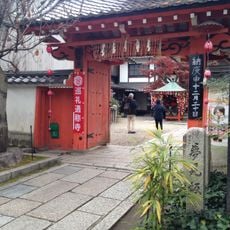
The pagoda stands in a small temple compound in Higashiyama, about a 25-minute walk from Kiyomizu-Gojo Station on the Keihan line. Interior viewing is irregular, arranged only on days convenient to temple staff, so call ahead to confirm. The steep stairs to the second floor are off-limits to children under junior high school age.
This tower is the only remaining building from the original temple compound and has survived wars and natural disasters. The wooden construction demonstrates the resilience of old Japanese building techniques across many centuries.
The community of curious travelers
AroundUs brings together thousands of curated places, local tips, and hidden gems, enriched daily by 93,468 contributors worldwide.